
 E-Paper



Photos: Ageing Japan resorts to vertical farming to increase productivity
With the average age of a farmer in Japan at 67 and few candidates to replace those dying out, the country has been forced to become a pioneer in so-called vertical farming. Traditional farming faces a double threat from the ageing population and migration towards the cities, paving the way for alternate agriculture practices. Machines shift the lettuces around the factory to areas where the light, temperature and humidity are ideal for that stage of growth. The process works without soil or pesticide, and only a dozen or so humans are employed to collect the lettuce at the end. Even though the practice consumes more energy as compared to production using the sun, it yields greater productivity.
Updated on: Jan 2, 2020 8:25 PM IST


Share via


Copy link

1/8

 View Photos in a new improved layout
Updated on Jan 2, 2020 8:25 PM
An employee inspects lettuce growing in a facility that uses vertical farming techniques, in Kyoto, Japan. Under artificial light and with barely any human intervention, 30,000 heads of lettuce grow daily inside this “vegetable factory”. Using the latest vertical farming techniques, this facility is part of a trend born out of necessity in Japan, where traditional farming faces a double threat from the ageing population and migration towards the cities. (Charly Triballeau / AFP)
2/8
 View Photos in a new improved layout
Updated on Jan 2, 2020 8:25 PM
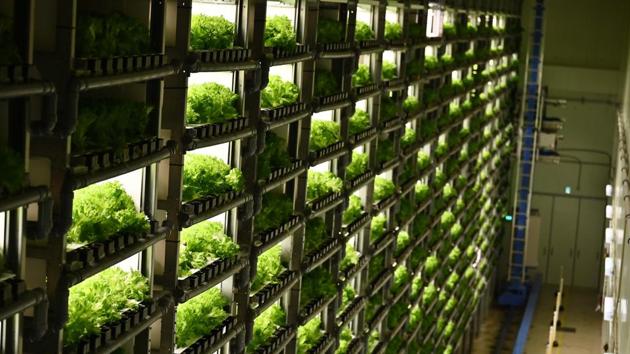
Lettuce grows in a facility that uses vertical farming techniques, in Kyoto. One of the few companies to turn a quick profit, Spread produces 11 million heads of lettuce annually from its latest factory in Kyoto, a vast sterile area where the vegetables are stacked on shelves several metre high. (Charly Triballeau / AFP)
3/8
 View Photos in a new improved layout
Updated on Jan 2, 2020 8:25 PM
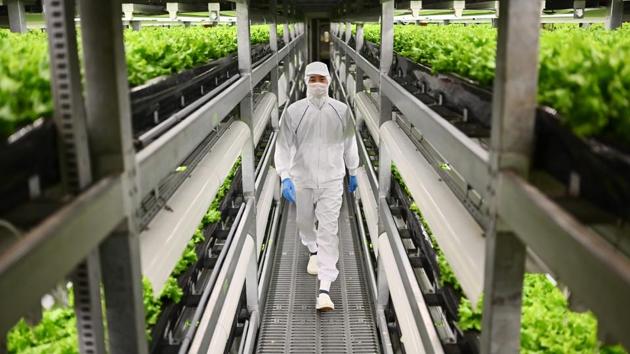
An employee walks down an aisle past lettuce growing in the facility. With the average age of a farmer in Japan at 67 and few candidates to replace those dying out, the country has been forced to become a pioneer in so-called vertical farming. (Charly Triballeau / AFP)
4/8
 View Photos in a new improved layout
Updated on Jan 2, 2020 8:25 PM
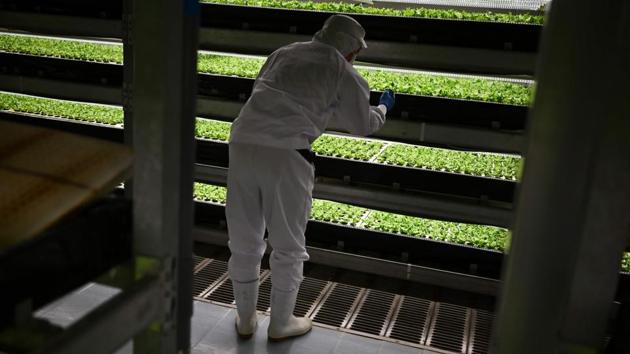
An employee inspects young lettuce growing at the facility. Machines shift the lettuces around the factory to areas where the light, temperature and humidity are ideal for that stage of growth. The process works without soil or pesticide, and only a dozen or so humans are employed to collect the lettuce at the end. (Charly Triballeau / AFP)
5/8
 View Photos in a new improved layout
Updated on Jan 2, 2020 8:25 PM
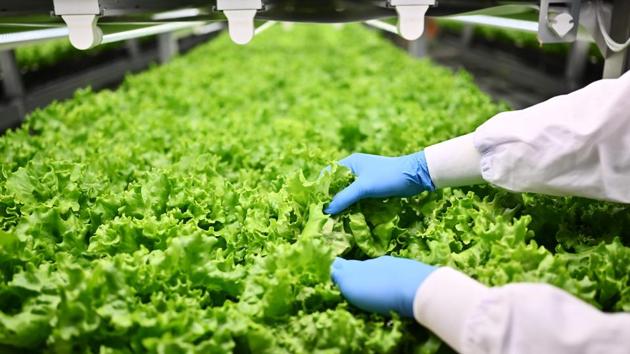
Other countries have employed vertical farming techniques -- notably in Denmark and the United States -- but Japan’s population crisis means the farmers are dying out, with question marks over how the world’s third-biggest economy will feed itself. “Given the lack of manpower and decline in agricultural production, I felt a new system was needed,” Shinji Inada, Spread’s boss, told AFP. (Charly Triballeau / AFP)
6/8
 View Photos in a new improved layout
Updated on Jan 2, 2020 8:25 PM
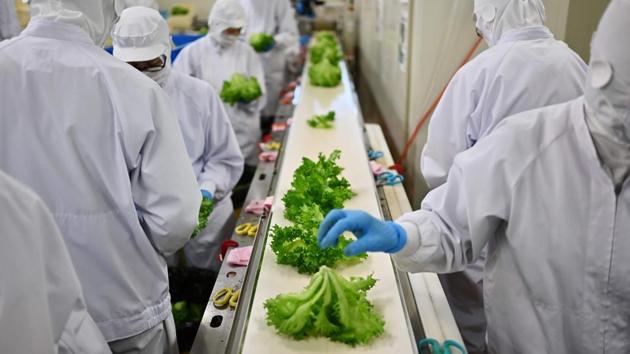
Employees work along a sorting and packing line at the facility. Spread has taken some time to make the process nearly fully automated: an older factory in Kyoto still employs several dozen humans to move the lettuce -- a “difficult task”, admits one staff member. But the advantages are clear: “We can produce in large quantities and at a stable rate all year round, without being affected by temperature changes,” said Inada. (Charly Triballeau / AFP)
7/8
 View Photos in a new improved layout
Updated on Jan 2, 2020 8:25 PM
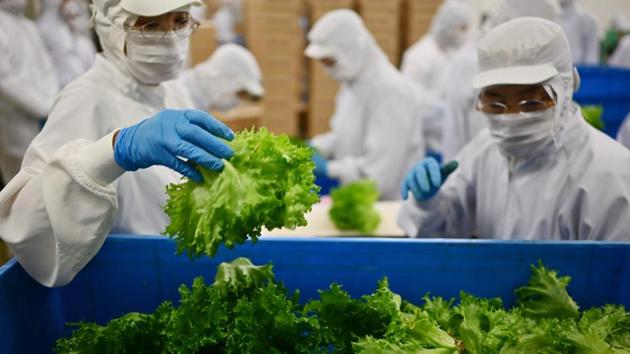
Employees work along a sorting and packing line at the facility. Inada said he hesitated before launching the concept over the question of this system being environmentally friendly, but finally reasoned the pros outweighed the cons. “It’s true that we use more energy compared to production using the sun, but on the other hand our productivity is higher over a similar surface area,” he said. (Charly Triballeau / AFP)
8/8
 View Photos in a new improved layout
Updated on Jan 2, 2020 8:25 PM


