
 E-Paper



Photos: Baghdad tunnel becomes a museum for Iraq’s protest movement
In Iraq, the Saadoun Tunnel has become an ad hoc museum for the massive anti-government protest movement. Along its walls, young artists draw murals, portraits and graffiti that illustrate the country’s tortured past and the Iraq they aspire to. The protests erupted Oct. 1 over longstanding grievances at corruption, unemployment and a lack of basic services and quickly escalated into calls to sweep aside Iraq’s sectarian system imposed after the 2003 U.S. invasion and its entire political elite.
Updated on: Nov 22, 2019 12:19 PM IST


Share via


Copy link

1/8
 View Photos in a new improved layout
Updated on Nov 22, 2019 12:19 PM
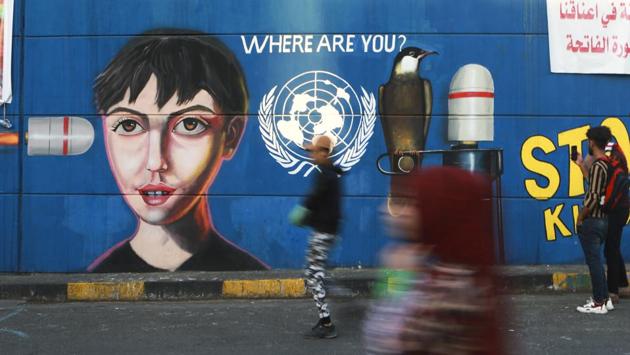
People pass by graffiti at the Saadoun tunnel, in Baghdad, Iraq. The Saadoun Tunnel has become an ad hoc museum for Iraq’s massive anti-government protest movement. Along its walls, young artists draw murals, portraits and graffiti that illustrate the country’s tortured past and the Iraq they aspire to. (Hadi Mizban / AP)
2/8
 View Photos in a new improved layout
Updated on Nov 22, 2019 12:19 PM
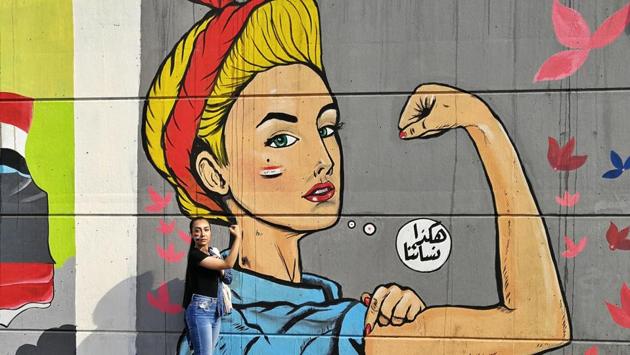
A woman poses for a photo in front of graffiti at the Saadoun tunnel. “We want a nation, not a prison,” says one painting that depicts a man bursting free from behind bars. “Plant a revolution, and you will harvest a nation,” reads another showing a hand flashing the victory sign over protesters heads. Some of the messages are less sentimental. “Look at us, Americans, this is all your fault,” declares one. (Khalid Mohammed / AP)
3/8
 View Photos in a new improved layout
Updated on Nov 22, 2019 12:19 PM
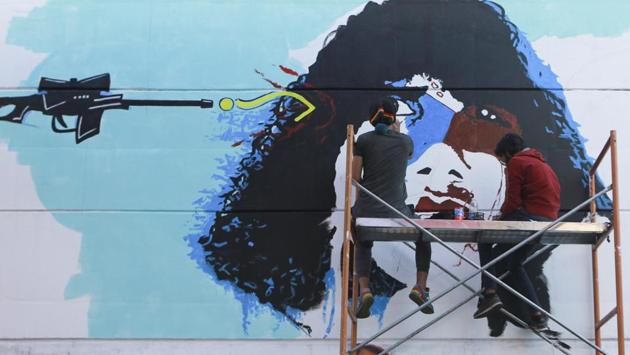
Iraqi artists draw graffiti at the Saadoun Tunnel. The tunnel passes under Baghdad’s Tahrir Square, the epicenter of the protests where thousands of people are camped out in a giant sit-in that has taken on the feel of a vibrant mini-city. (Hadi Mizban / AP)
4/8
 View Photos in a new improved layout
Updated on Nov 22, 2019 12:19 PM
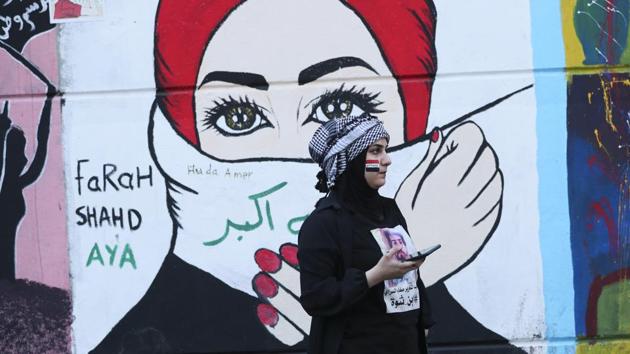
Saadoun Tunnel, the tuk tuks, the square and a nearby 14-story Saddam Hussein-era building on the Tigris that protesters took over have all become symbols of what has become the largest grassroots protest movement Iraq has seen. The protests erupted Oct. 1 over longstanding grievances at corruption, unemployment and a lack of basic services and quickly escalated into calls to sweep aside Iraq’s sectarian system imposed after the 2003 U.S. invasion and its entire political elite. (Hadi Mizban / AP)
5/8
 View Photos in a new improved layout
Updated on Nov 22, 2019 12:19 PM
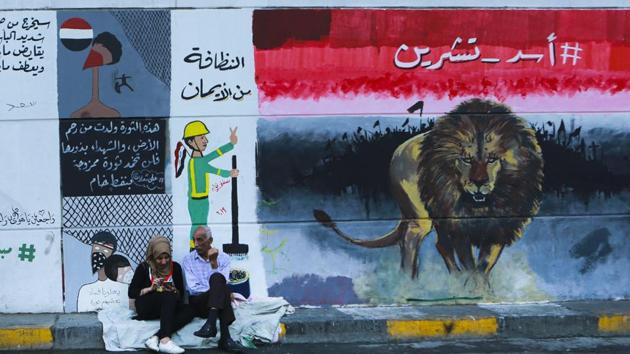
Young protesters, men and women, throng the tunnel — actually a long underpass, most of which is open to the air except for enclosed portions directly beneath Tahrir — and pass time there hanging out or taking selfies in front of the murals. Caricatures on the walls mock Iraqi politicians; other paintings praise the tuk tuks; a woman with an Iraqi flag on her cheek flexes her bicep, recreating the famed U.S. “We Can Do It” poster; faces in drawings shout in anger or pain. (Hadi Mizban / AP)
6/8
 View Photos in a new improved layout
Updated on Nov 22, 2019 12:19 PM
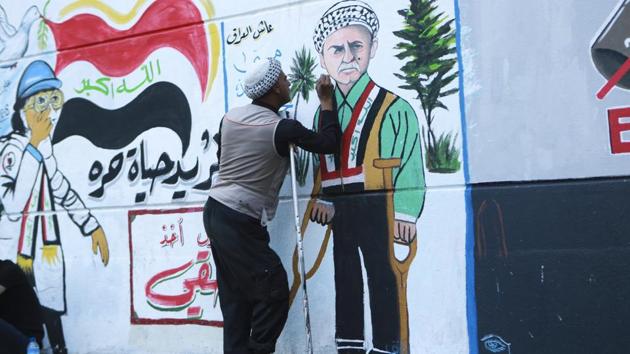
A protestor adds some details and facial expressions to graffiti at the Saadoun Tunnel. Haydar Mohammed said he and a group of other medical students were partly responsible for the murals. They met in Tahrir and saw the tunnels walls were a perfect medium to send a message to those who are suspicious of the protesters, he said. “We are life-makers not death-makers,” he said. “We decided to draw simple paintings to support our protester brothers and to express our message, which is a peace message.” (Hadi Mizban / AP)
7/8
 View Photos in a new improved layout
Updated on Nov 22, 2019 12:19 PM
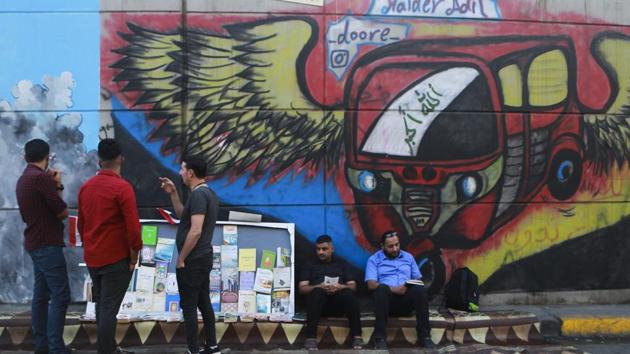
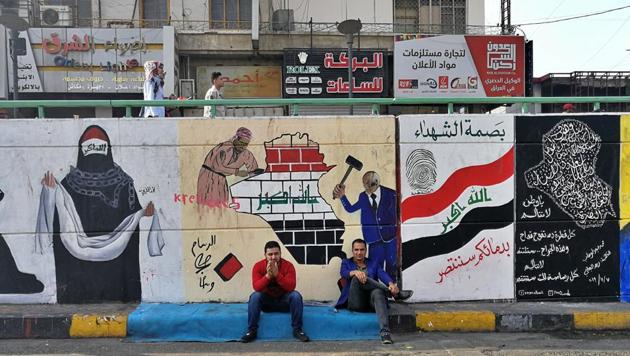
Many of the murals carry calls for anti-sectarianism, peace and a free Iraq. In one painting, a little girl cries, declaring “They killed my dream,” referring to the group of men behind her, some in religious clothes. Another shows an Iraqi protester wearing a helmet against tear gas with the Arabic words: “In the heart is something that cannot be killed by guns, which is the nation.” Nearby is scrawled, in English, “All What I want is life.” (Hadi Mizban / AP)
8/8
 View Photos in a new improved layout
Updated on Nov 22, 2019 12:19 PM


