
 E-Paper



Photos| ‘Harry Potter: A History of Magic’ reveals folklore behind books
'Harry Potter: A History of Magic' displays rare books, manuscripts and magical objects from the British Library collection, capturing folklore and magic from across the world, which are at the heart of the Potter series. Currently on view in London, it'll travel to New York in October this year.
Updated on: Jan 23, 2018 9:45 AM IST

Share via


Copy link

1/8
 View Photos in a new improved layout
Updated on Jan 23, 2018 9:45 AM
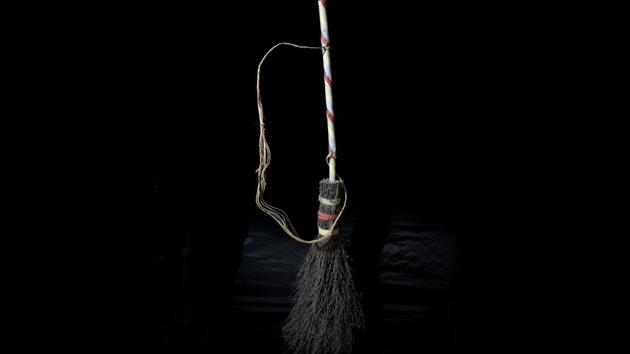
A broomstick belonging to Olga Hunt, a Devonshire resident. On a full moon night, legend has it that Hunt was spotted leaping around Haytor Rocks. The exhibition is based on the subjects studied at the Hogwarts School of Witchcraft and Wizardry, including Potions, Herbology, Divination, Care of Magical Creatures and Defence Against the Dark Arts. (Museum of Witchcraft, Boscastle)
2/8
 View Photos in a new improved layout
Updated on Jan 23, 2018 9:45 AM
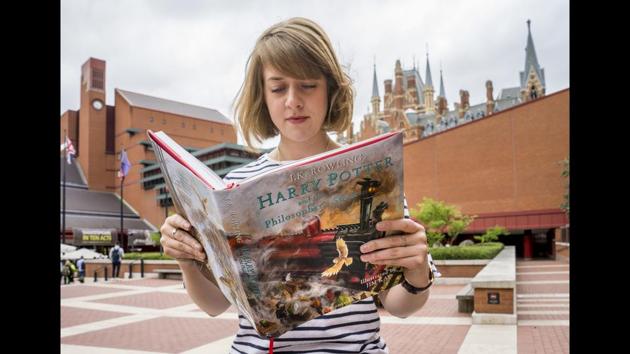
A reader engrossed in the illustrated version of J.K. Rowling’s ‘Harry Potter and the Philosopher’s Stone’ by Jim Kay outside the British Library, London. (Tony Antoniou)
3/8
 View Photos in a new improved layout
Updated on Jan 23, 2018 9:45 AM
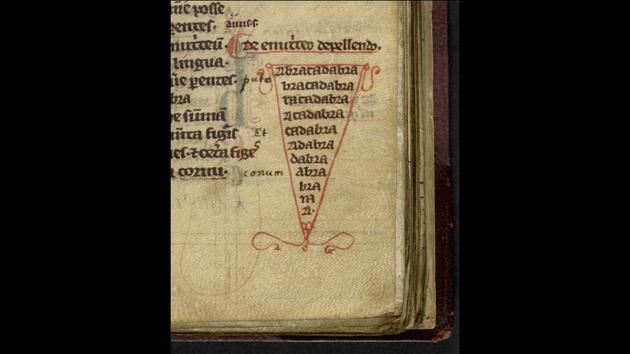
Close-up of the first recorded mention of ‘abracadabra’, as a cure for malaria, in Quintus Serenus, Liber medicinalis. The word then became popular among magicians over the centuries. (British Library Board)
4/8
 View Photos in a new improved layout
Updated on Jan 23, 2018 9:45 AM
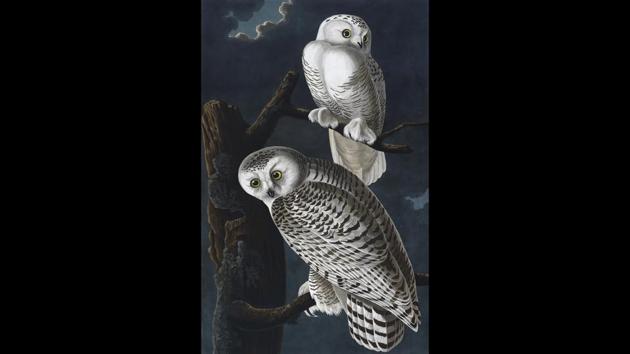
The snowy owl, in John James Audubon’s ‘The Birds of America,’ 1827-38-- a clear inspiration behind Harry Potter’s owl, Hedwig. (British Library Board)
5/8
 View Photos in a new improved layout
Updated on Jan 23, 2018 9:45 AM
The Ripley Scroll, England, 16th century. This detailed scroll, named after English alchemist George Ripley, comprises six metres of 16th century spells and illustrations, and is generous with tips for making one’s own Philosopher’s Stone. (British Library Board)
6/8
 View Photos in a new improved layout
Updated on Jan 23, 2018 9:45 AM
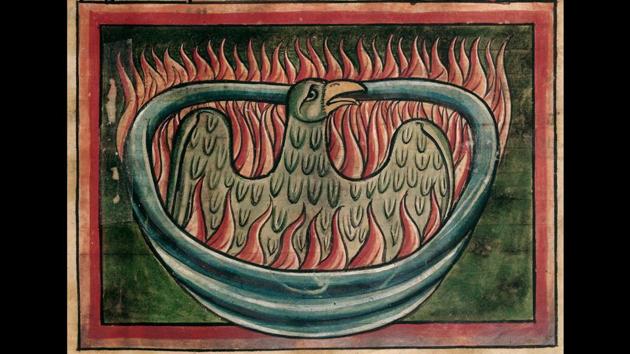
Detail of a phoenix rising from the ashes in a 13th-century bestiary. The 13th-century manuscript depicts a phoenix creating its own funeral pyre from branches and plants before being consumed by the fire. On day nine, it rises from the ashes, as does Albus Dumbledore’s phoenix, Fawkes, in the Potter books. (British Library)
7/8
 View Photos in a new improved layout
Updated on Jan 23, 2018 9:45 AM
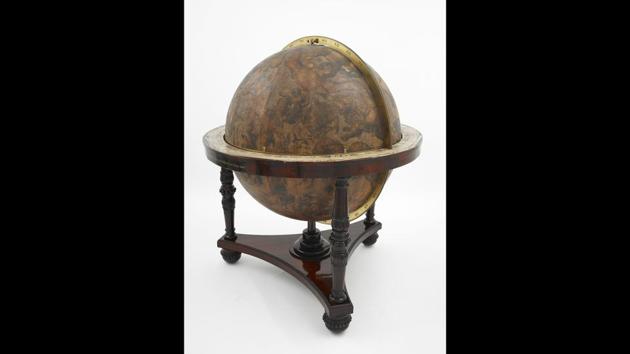
Celestial Globe, Vincenzo Coronelli, Orbis Coelestis Typus. Using augmented reality technology in collaboration with Google Arts & Culture, visitors can virtually spin the globe to explore ancient constellations. (British Library Board)
8/8
 View Photos in a new improved layout
Updated on Jan 23, 2018 9:45 AM


