
 E-Paper



Photos: Imports and climate change leave Vietnam’s farmers salty
At Vietnam’s Hon Khoi region in the Khanh Hoa province, farmers have been harvesting salt for generations. The seesawing demand of the salt, caused by foreign imports, and increasingly unpredictable weather patterns, has led to the rise of an unstable income for these farmers. On top of this, the changing climate pattern has prevented them from planning for the future. Since the salt industry remains their main employer, many of them are just taking a gamble on the sector.
Updated on: May 21, 2019 2:23 PM IST

Share via


Copy link

1/9
 View Photos in a new improved layout
Updated on May 21, 2019 2:23 PM
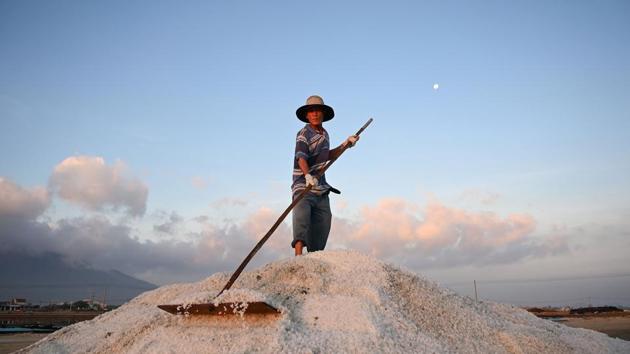
A worker harvests salt in southern Vietnam's Hon Khoi salt fields. Like their ancestors, the salt farmers of the area rise before dawn each day, fan out across shallow seawater pools o harvest the precious mineral, in the hope for a better season than the last. Amid punishing work and unstable incomes, the farmers work under increasingly unpredictable weather patterns to make a living. (Manan Vatsyayana / AFP)
2/9
 View Photos in a new improved layout
Updated on May 21, 2019 2:23 PM
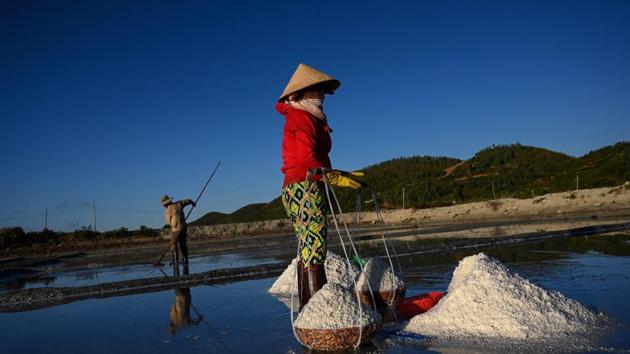
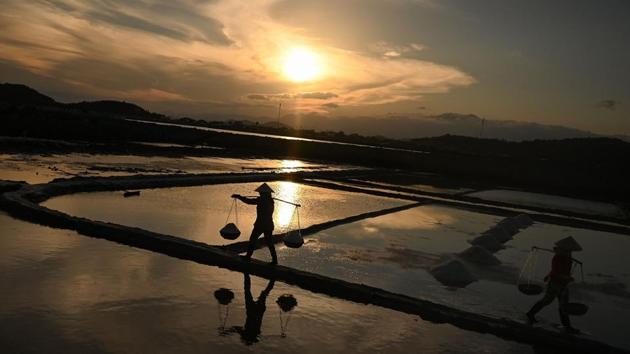
Many people in the sleepy seaside town of Hon Khoi in Khanh Hoa province have worked much of their lives in the salt fields -- an Instagram hotspot where workers wearing conical hats ferry mountains of the saline crystals in bamboo baskets along reflective ponds against a setting sun. (Manan Vatsyayana / AFP)
3/9
 View Photos in a new improved layout
Updated on May 21, 2019 2:23 PM
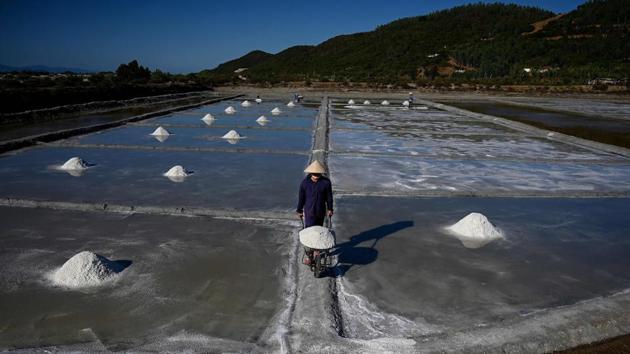
The farmers say life is tough on the fields where they toil during the annual harvesting season from January to June. “This job is no fun at all, we have to work so hard in the sun and then during the cool season we are off,” said Nguyen Thanh Lai, his tan skin weathered from nearly four decades working in the fields. (Manan Vatsyayana / AFP)
4/9
 View Photos in a new improved layout
Updated on May 21, 2019 2:23 PM
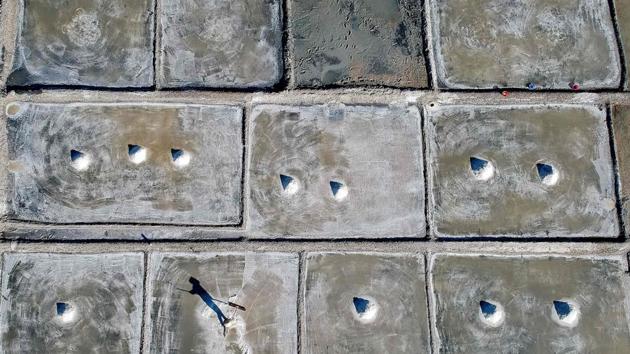
“In the past we didn’t make losses in salt production, now there are losses,” the 60-year-old Lai said. As a technical supervisor, he typically earns around $360 a month during the harvesting season -- more than double what most salt workers take home. But his income zigzags depending on demand, which itself fluctuates based on imports from abroad. (Manan Vatsyayana / AFP)
5/9
 View Photos in a new improved layout
Updated on May 21, 2019 2:23 PM
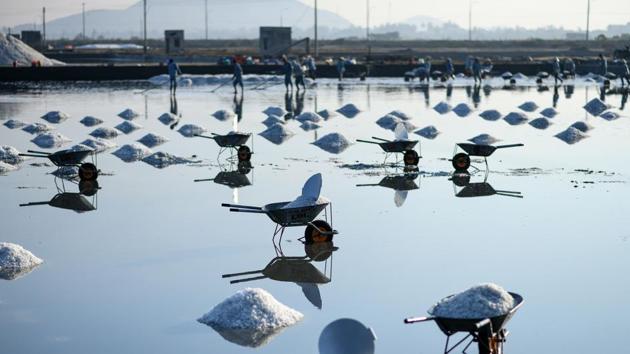
Vietnam produced about one million tonnes of salt in 2015, according to the latest official data, and often clocks surpluses, but it still ships salt in, mostly from China and India. The country imported 500,000 tonnes of the mineral in 2017 despite a 147,000-tonne surplus of domestic production. (Manan Vatsyayana / AFP)
6/9
 View Photos in a new improved layout
Updated on May 21, 2019 2:23 PM
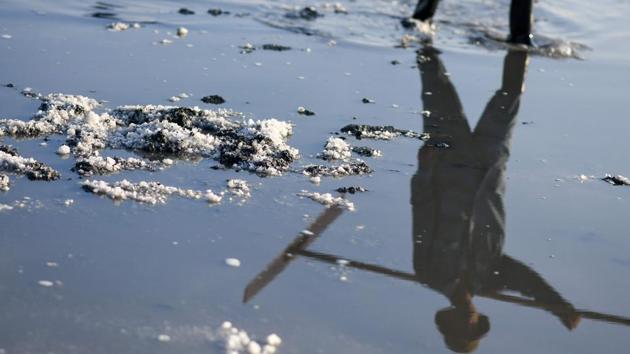
Unpredictable demand is not all Vietnam’s salt farmers are up against. In Hon Khoi -- a popular tourist destination for throngs of visitors who pack its white sandy beaches -- farmers are also contending with climate change. Shifting weather patterns have upended work in an industry that depends on sunny, dry days for maximum production. (Manan Vatsyayana / AFP)
7/9
 View Photos in a new improved layout
Updated on May 21, 2019 2:23 PM
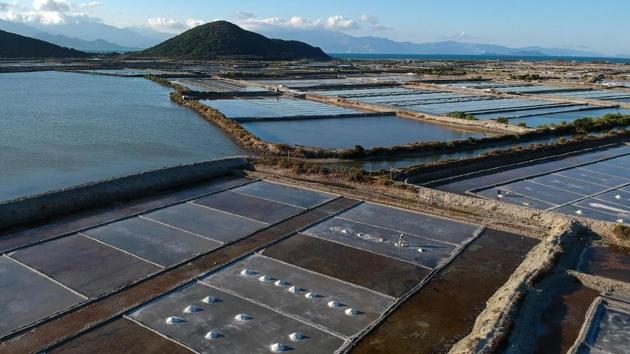
“If the weather is good, we can work for six months. If it rains, we all go hungry.Climate change really has had an impact because salt production needs stable weather,” said 57-year-old Nguyen Quang Anh, who has laboured in the fields for two decades. The UN says climate change has “undermined” the lives of farmers in Vietnam, where the wet season has come earlier or brought in heavier rains in recent years. (Manan Vatsyayana / AFP)
8/9
 View Photos in a new improved layout
Updated on May 21, 2019 2:23 PM
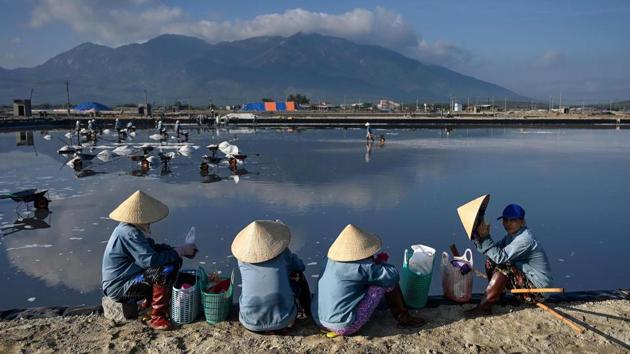
Workers take a break from harvesting salt in Hon Khoi salt fields. Vietnamese authorities vowed to reform the sector in 2014, rolling out a 15-year plan to modernise the industry in a bid to help struggling farmers like Anh. The blueprint called for production to triple by 2030, promised new technology, and called on local officials to support farmers hit by fluctuating weather patterns. (Manan Vatsyayana / AFP)
9/9
 View Photos in a new improved layout
Updated on May 21, 2019 2:23 PM


