
 E-Paper



Photos: Never too old for school say Thailand’s elderly
Thailand, together with China, is ageing faster than its regional neighbours. By 2040, it is expected to have the highest share of elderly people of any developing country in East Asia. Traditionally, ageing Thais lived at home and were cared for by their children. But with many leaving the countryside for work, the elderly are increasingly being left alone. Schools like this one in Ayutthaya, offerring weekly classes are the government's way of offering some relief from the stresses of living alone.
Updated on: May 10, 2018 1:30 PM IST

Share via


Copy link

1/11

 View Photos in a new improved layout
Updated on May 10, 2018 1:30 PM
Poonsri Seangnual, 63, leaves her house wearing her school uniform. “I really like going to school. I gained knowledge and it's really fun. I have a lot of friends, know a lot more people,” said Seangnual. “I feel lonely whenever I don't go to school, I want to go back and meet my friends. I miss the classroom.” (Athit Perawongmetha / REUTERS)
2/11
 View Photos in a new improved layout
Updated on May 10, 2018 1:30 PM
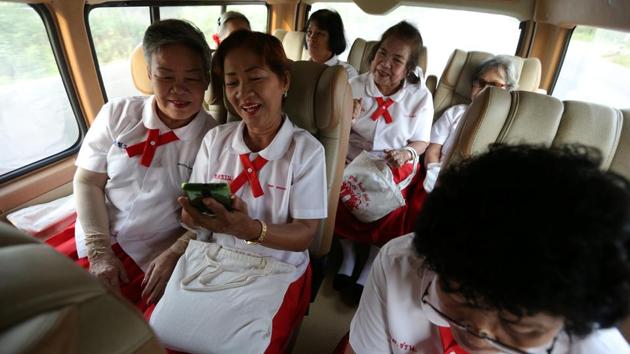
Wearing crisp red-and-white uniforms, a group of 60-year-olds pile into a bus, smiling broadly as they make their way to the School for the Elderly in Chiang Rak Noi subdistrict in Ayutthaya, a province in Thailand. (Athit Perawongmetha / REUTERS)
3/11
 View Photos in a new improved layout
Updated on May 10, 2018 1:30 PM
For this group, and others across the country, going back to school offers a way to fight loneliness at a time when changing demographics mean more elderly people are living alone. (Athit Perawongmetha / REUTERS)
4/11
 View Photos in a new improved layout
Updated on May 10, 2018 1:30 PM
Somjit Teeraroj (L), 77, and Poonsri Seangnual (R), spend time with each other at a shop. After the death of her husband of 40 years, and her children visiting occasionally, Somjit said it was the school that helped her recover from her loss. Her story is emblematic of a larger problem in Thailand --a rapidly ageing population. (Athit Perawongmetha / REUTERS)
5/11
 View Photos in a new improved layout
Updated on May 10, 2018 1:30 PM
Together with China, Thailand is ageing faster than its regional neighbours. Thailand has 7.5 million people aged 65 and over, a figure projected to swell to 17 million by 2040 - more than a quarter of the expected population and the highest share of elderly people of any developing country in East Asia, according to the World Bank. (Athit Perawongmetha / REUTERS)
6/11
 View Photos in a new improved layout
Updated on May 10, 2018 1:30 PM
Chaluay Suriyon (R), 84, is visited by her cousins at her home. “I used to be unhealthy with bad blood pressure. I enjoyed going to the classes, joined the activities and danced with my friends,” Suriyon said. After graduation, She’s back to being lonely again says her health has gone back to how it was. (Athit Perawongmetha / REUTERS)
7/11
 View Photos in a new improved layout
Updated on May 10, 2018 1:30 PM
Students laugh whilst at the School for the Elderly in Chiang Rak Noi. Traditionally, ageing Thais have lived at home with their families where they were cared for by their children. (Athit Perawongmetha / REUTERS)
8/11
 View Photos in a new improved layout
Updated on May 10, 2018 1:30 PM
Somjit Teeraroj, holds a box containing medicines near her house in Ayutthaya. With many among the younger generations leaving the countryside to work in the cities, parents and grandparents are increasingly being left alone. (Athit Perawongmetha / REUTERS)
9/11
 View Photos in a new improved layout
Updated on May 10, 2018 1:30 PM
Students attend a traditional dance class at the School for the Elderly. Schools like the one in Ayutthaya, 80 km north of Bangkok, that offer weekly classes over three months are the government’s way of offering older people relief from the stresses of living alone. (Athit Perawongmetha / REUTERS)
10/11
 View Photos in a new improved layout
Updated on May 10, 2018 1:30 PM
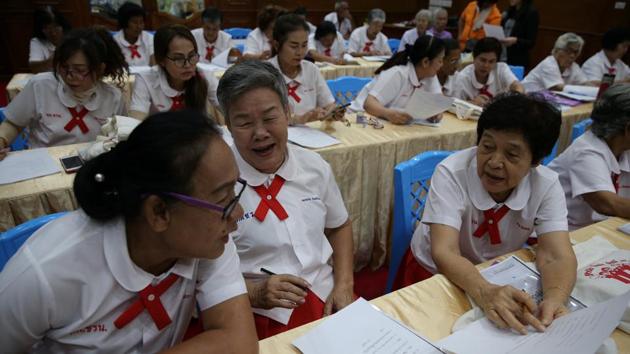
Students attend an English class at the School for the Elderly. “It’s stressful just living day by day,” 63-year-old Choochart Supkerd a student at the school told Reuters. (Athit Perawongmetha / REUTERS)
11/11
 View Photos in a new improved layout
Updated on May 10, 2018 1:30 PM


