
 E-Paper



Photos: Peru’s Machu Picchu welcomes visitors after Covid-19 lockdown
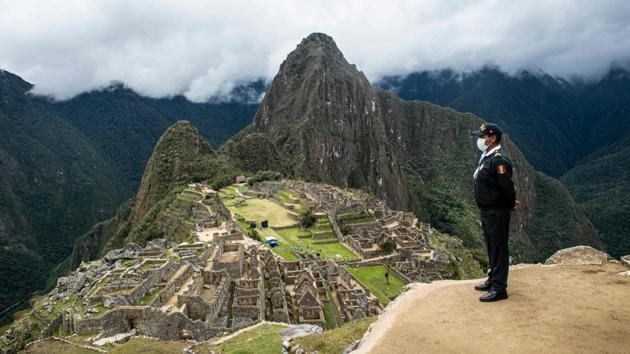
The Inca citadel of Machu Picchu, the crown jewel of Peru's tourism circuit has allowed visitors back in, opening access after a nearly eight-month lockdown. However, for safety reasons only 675 tourists have been allowed access to the site per day -- just 30% of the numbers compared to pre-pandemic days. The long closure of Peru's No. 1 tourist draw, which has hammered the local economy, marked the second time it has been shut down since it opened its doors to tourism in 1948.
Updated on: Nov 3, 2020 11:30 AM IST


Share via


Copy link

1/8
 View Photos in a new improved layout
Updated on Nov 3, 2020 11:30 AM
A policeman is pictured at the archaeological site of Machu Picchu, in Cusco, Peru during its reopening on November 01. The Inca citadel of Machu Picchu, the crown jewel of Peru’s tourist sites, reopened over the weekend with an ancient ritual after a nearly eight-month lockdown due to the novel coronavirus pandemic. (Ernesto Benavides / AFP)
2/8
 View Photos in a new improved layout
Updated on Nov 3, 2020 11:30 AM
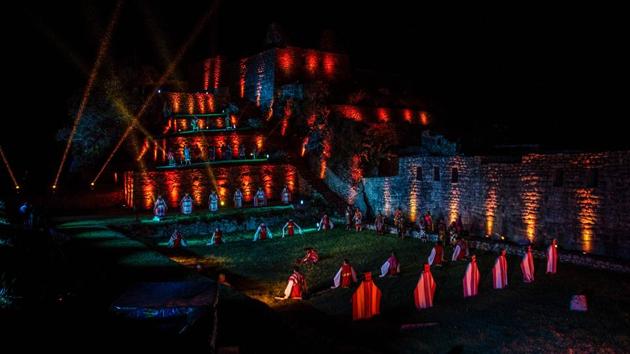
Machu Picchu bathed in lights during a reopening ceremony on November 1. Under a fine drizzle and multicoloured lights, an Inca ritual was heldto thank the gods for facilitating the citadel’s reopening. (Ernesto Benavides / AFP)
3/8
 View Photos in a new improved layout
Updated on Nov 3, 2020 11:30 AM
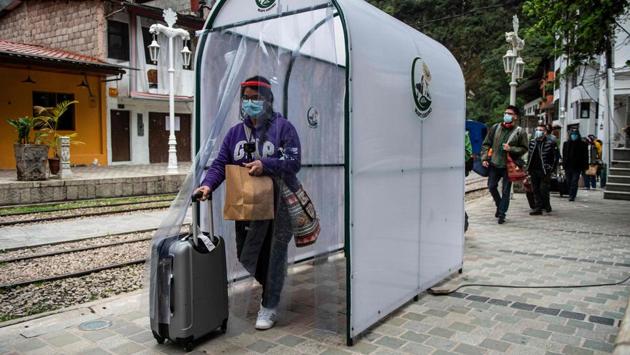
A visitor goes through a disinfection chamber in Aguas Calientes, on her way to Machi Picchu on November 1. For safety reasons, only 675 tourists will be able to access the site per day --just 30% of the number of visitors pre-pandemic. The first train of tourists arrived the same morning as the reopening, at Machu Picchu Pueblo, the village closest to the citadel. (Ernesto Benavides / AFP)
4/8
 View Photos in a new improved layout
Updated on Nov 3, 2020 11:30 AM
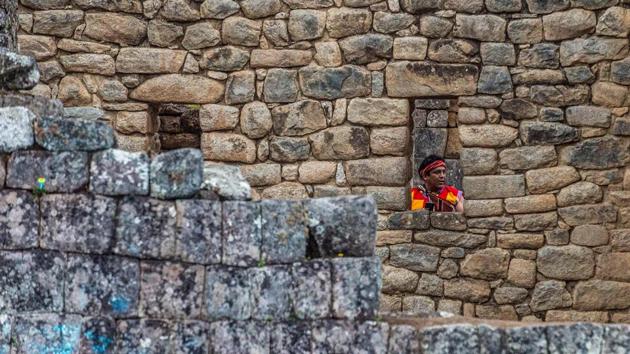
A folk dancer seen at the archaeological site of Machu Picchu on November 1. The coronavirus lockdown has been a body blow to the tens of thousands of people who make their living from the country’s tourism industry, especially those in the mountainous Cusco region where the stone citadel is located. (Ernesto Benavides / AFP)
5/8
 View Photos in a new improved layout
Updated on Nov 3, 2020 11:30 AM
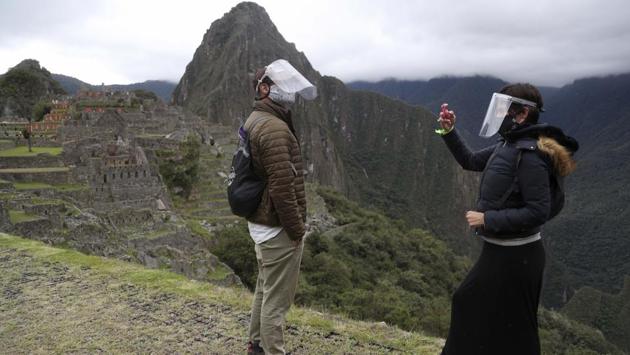
Tourists at the Incan citadel of Machu Picchu on November 1. More than 226,000 people who make crafts or work as waiters, hotel staff and taxi drivers, have been plunged into an economic abyss after tourism crashed. Merchants AP spoke to said they have lost more than two-thirds of their income. (Martin Mejia / AP)
6/8
 View Photos in a new improved layout
Updated on Nov 3, 2020 11:30 AM
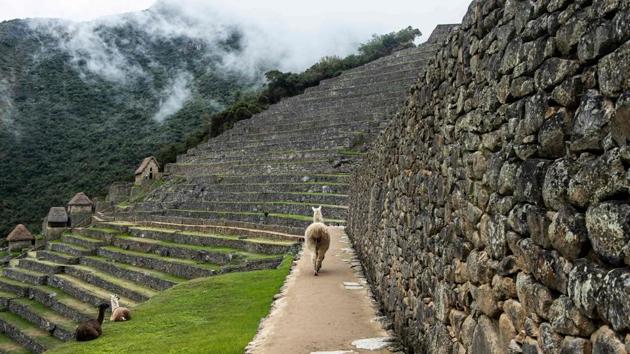
Llamas miling about at Machu Picchu on November 1. The citadel had opened for a brief moment just last month to allow in a single visitor -- a Japanese man stranded in the country and stuck in Peru since March, when he bought a ticket for the tourist site just days before the country declared a health emergency. (Ernesto Benavides / AFP)
7/8
 View Photos in a new improved layout
Updated on Nov 3, 2020 11:30 AM
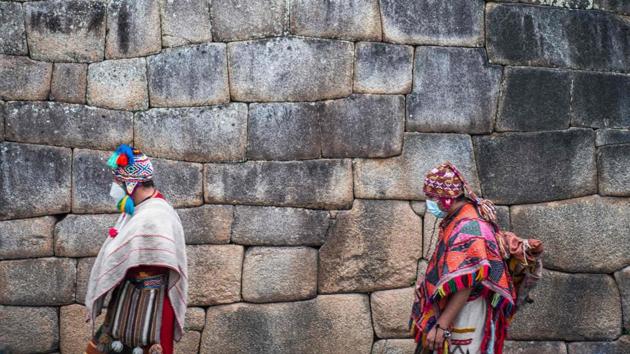
Folk performers are seen at the archaeological site of Machu Picchu on the day of its reopening on November 1. Machu Picchu, which means old mountain in Quechua, is the most enduring legacy of the Inca empire that ruled a large swathe of western South America for 100 years before the Spanish conquest in the 16th century. (Ernesto Benavides / AFP)
8/8
 View Photos in a new improved layout
Updated on Nov 3, 2020 11:30 AM


