
 E-Paper



Photos: Rohingya couple separated by Myanmar violence weds in refugee camp
Seperated by ethnic violence in Myanmar's Rakhine state, in most ways Shofika Begum and Saddam Hussein's wedding mirrors that of couples the world over. The only difference is that the two are living and celebrating this day at Kutupalong refugee camp, one of several sprawling settlements in Bangladesh's Cox's Bazar district.
Updated on: Dec 30, 2017 11:53 AM IST

Share via


Copy link

1/13
 View Photos in a new improved layout
Updated on Dec 30, 2017 11:53 AM
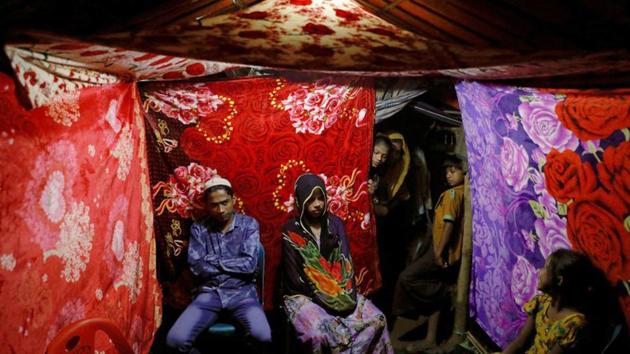
Decorative patterns inked in henna line Shofika Begum’s hands, her groom Saddam Hussein is perfumed and guests feast and dance the night away in a colourful tent. In most ways, the day mirrors that of couples getting married the world over. The difference is the venue --Kutupalong refugee camp in Bangladesh’s Cox’s Bazar, where about 660,000 stateless Rohingya from Myanmar have sought refuge since late August. (Damir Sagolj / REUTERS)
2/13
 View Photos in a new improved layout
Updated on Dec 30, 2017 11:53 AM
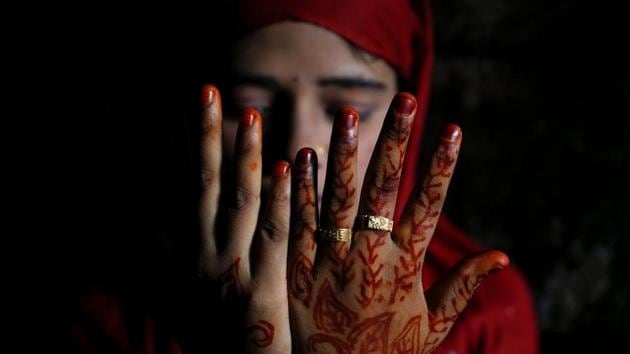
Shofika Begum, 18, shows decoration on her hands on the day she married Saddam Hussein, 23, both Rohingya refugees. The couple, from the village of Foyra Bazar in Maungdaw township that was burnt by the Myanmar military, fled with their families some three months ago. They knew each other prior to escaping Myanmar but managed to wed only now, as refugees in Bangladesh. (Damir Sagolj / REUTERS)
3/13
 View Photos in a new improved layout
Updated on Dec 30, 2017 11:53 AM
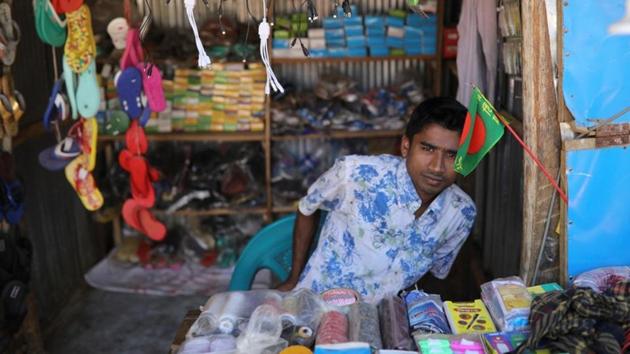
Saddam Hussein, 23, works at his family’s shop at the Kutupalong refugee camp. He lost touch with Shofika for a couple of weeks during the chaos of fleeing Rakhine state to safety in Bangladesh, but was eventually reunited with Shofika in Kutupalong camp. (Marko Djurica / REUTERS)
4/13
 View Photos in a new improved layout
Updated on Dec 30, 2017 11:53 AM
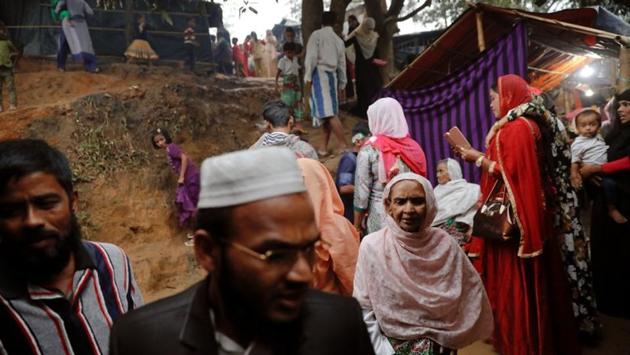
A wedding party arrives for the marriage of Saddam Hussein and Shofika Begum on December 11, 2017. The couple planned to marry even before Rohingya militant attacks on Myanmar security forces on August 25 triggered a brutal counter-attack that the UN has called textbook ethnic cleansing. (Damir Sagolj / REUTERS)
5/13
 View Photos in a new improved layout
Updated on Dec 30, 2017 11:53 AM
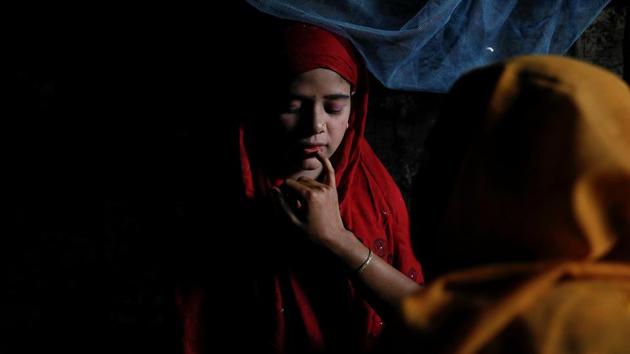
Shofika Begum is helped with bridal make-up by her brother’s wife on the day of her wedding. She spent much of the day cloistered in a separate tent, attended to by female relatives. (Damir Sagolj / REUTERS)
6/13
 View Photos in a new improved layout
Updated on Dec 30, 2017 11:53 AM
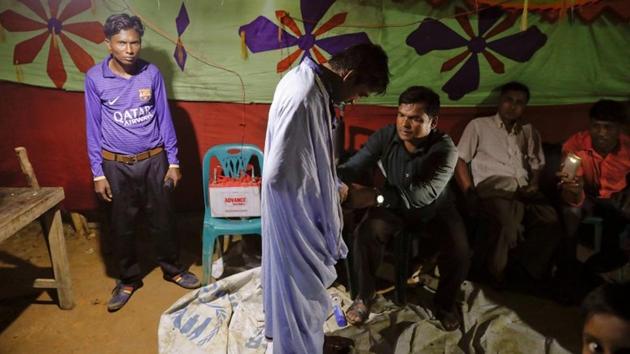
In a nearby tent Saddam Hussein gets dressed in an all-male space decorated by colourful blankets. (Damir Sagolj / REUTERS)
7/13
 View Photos in a new improved layout
Updated on Dec 30, 2017 11:53 AM
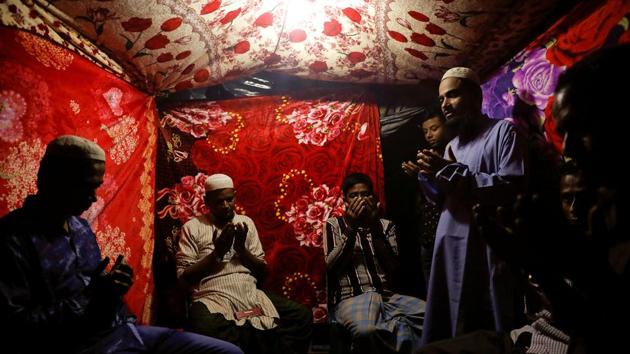
A Muslim cleric (R) officiates the ‘nikah’ ritual first for Saddam Hussein (L), and then Shofika Begum at the Kutupalong camp near Cox’s Bazar. Only men attended this ceremony on Saddam’s side and vice versa. (Damir Sagolj / REUTERS)
8/13
 View Photos in a new improved layout
Updated on Dec 30, 2017 11:53 AM
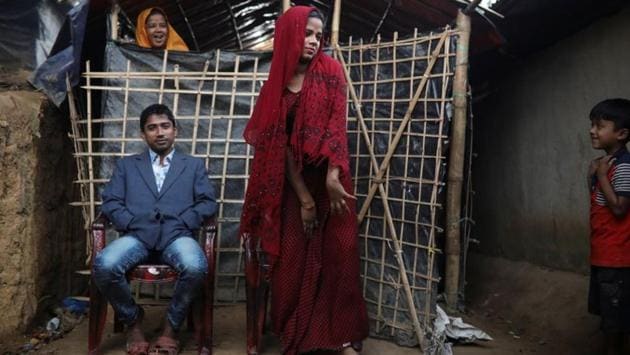
Saddam Hussein, and his newly-wed wife Shofika Begum pose for a photo in front of their temporary shelter after their marriage is solemnised. (Marko Djurica / REUTERS)
9/13
 View Photos in a new improved layout
Updated on Dec 30, 2017 11:53 AM
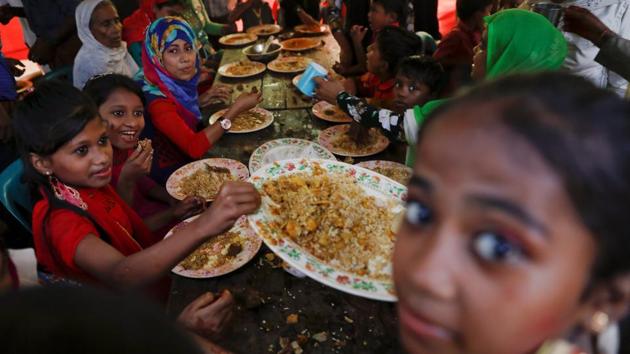
Religious rites out of the way, the party begins shortly after, with a large meal served in a big tent to 20 guests at a time. A cow was slaughtered the day before and a curry prepared for the feast. Men are served first, then the women sit down and lastly, the children eat. (Damir Sagolj / REUTERS)
10/13
 View Photos in a new improved layout
Updated on Dec 30, 2017 11:53 AM
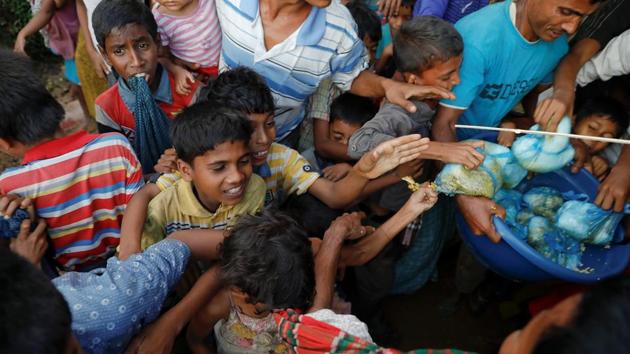
The free meal is distributed to children in plastic bags, but a scuffle that erupts at the camp overflowing with residents vying for scant resources means that some of it ends up in the mud. (Damir Sagolj / REUTERS)
11/13
 View Photos in a new improved layout
Updated on Dec 30, 2017 11:53 AM
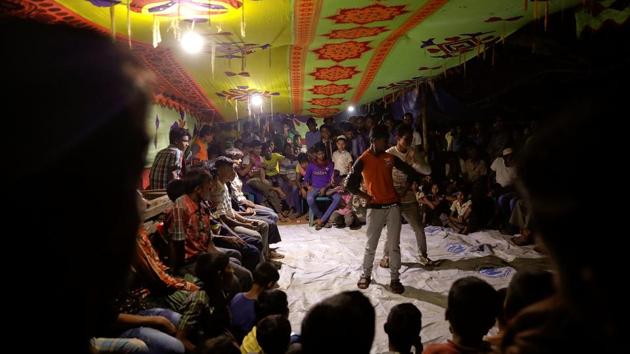
After everyone has had their fill, the long tables and plastic chairs are removed, and a loudspeaker is hooked up. It’s time now for a dance. A professional dancer and his two assistants take to the floor with flashy moves to warm up the crowd. Soon, everyone is clapping and on their feet. (Damir Sagolj / REUTERS)
12/13
 View Photos in a new improved layout
Updated on Dec 30, 2017 11:53 AM
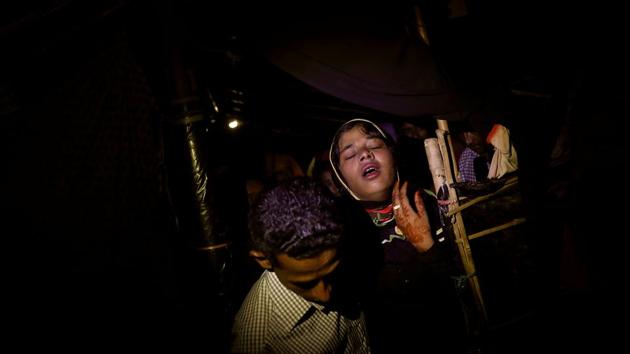
Shofika Begum cries as she leaves her tent to shift in with her husband Saddam Hussein, on their wedding day. “Here, at least, we don’t have to pay”, Saddam says, when asked how he feels about getting married at the camp, explaining that the administrator in their village had asked for a payment of 500,000 kyat ($370) from couples wanting to wed. (Damir Sagolj / REUTERS)
13/13
 View Photos in a new improved layout
Updated on Dec 30, 2017 11:53 AM


