
 E-Paper



Photos | Stretched thin: US-China trade war saps Thai rubber demand
They work in the pre-dawn gloom tapping trees for the "white gold" that has made their country the world's top rubber producer -- but as prices plunge due to the US-China trade war, Thai farmers are giving up the sap. Countries like Vietnam are benefiting as manufacturers migrate from China to avoid punishing tariffs on exports to the US. But in Thailand, the price of rubber has slumped twenty percent since June, as those same tariffs bite hard on demand from Chinese factories --the market for more than half its latex exports.
Updated on: Nov 27, 2018 11:56 AM IST

Share via


Copy link

1/8
 View Photos in a new improved layout
Updated on Nov 27, 2018 11:56 AM
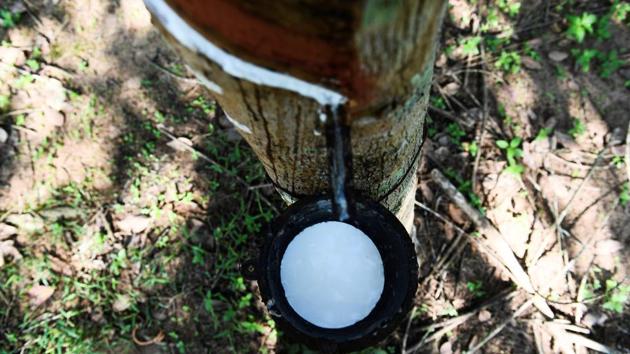
Latex drips from a tree at a rubber plantation in Rayong Province, Thailand. Thai latex makes everything from tyres and condoms to baby pacifiers and surgical gloves, the fruit of the rubber trees cultivated across endless acres of the country. But rubber trade is at a crossroads as a bitter dispute between the world’s two biggest economies ricochets across Southeast Asia. (Jonathan Klein / AFP)
2/8
 View Photos in a new improved layout
Updated on Nov 27, 2018 11:56 AM
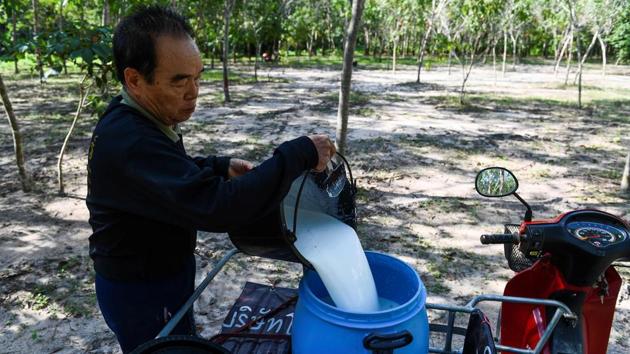
A worker collects latex at a rubber plantation. Countries like Vietnam are benefiting as manufacturers migrate from China to avoid punishing tariffs on exports to the US. But in Thailand, the price of rubber has slumped twenty percent since June, as those same tariffs bite hard on demand from factories in China -- the market for more than half its latex exports. (Jonathan Klein / AFP)
3/8
 View Photos in a new improved layout
Updated on Nov 27, 2018 11:56 AM
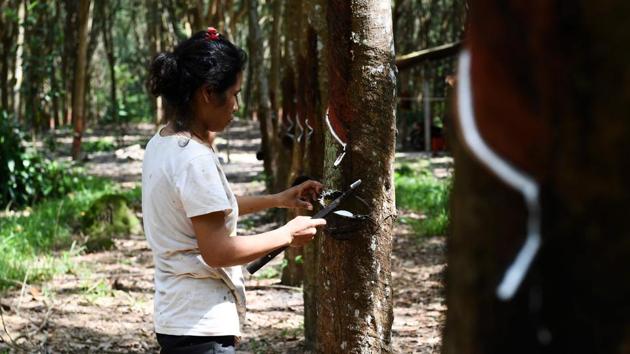
A woman taps a tree to harvest latex. Some of Thailand’s rubber workers are being forced to abandon plantation jobs for factory work. “I couldn’t feed my children anymore,” said Annita, who used to work 10 hours a day harvesting latex in Chiang Rai, northern Thailand, making just $7 a day, less than the minimum wage and half the going rate several years ago. (Jonathan Klein / AFP)
4/8
 View Photos in a new improved layout
Updated on Nov 27, 2018 11:56 AM
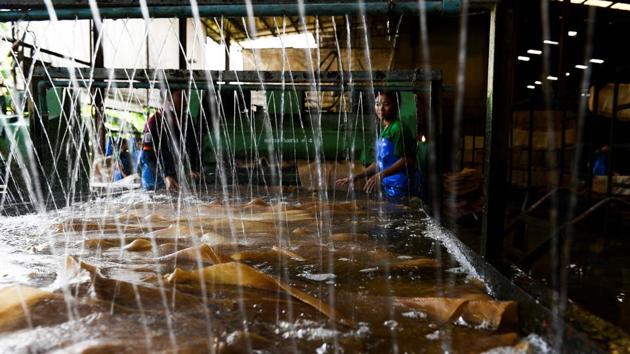
Workers clean raw rubber sheets at a factory. While the plight of US soybean farmers hit by the tariffs grabbed headlines -- they face a 25% levy to access China, the biggest soybean market -- other troubles are quietly brewing across the world. The bottom has fallen out of the once-booming industry as Thai rubber prices plummet to about $1.21 a kilogram -- they were five times that in 2011. (Jonathan Klein / AFP)
5/8
 View Photos in a new improved layout
Updated on Nov 27, 2018 11:56 AM
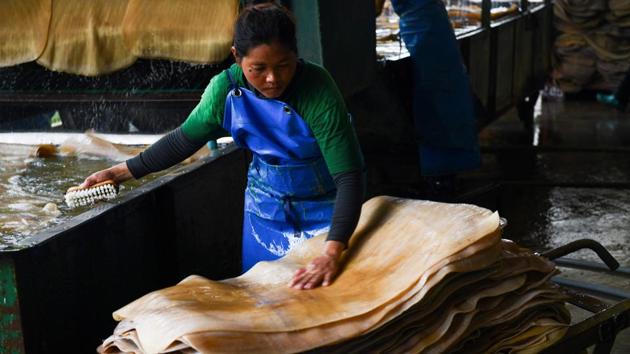
A woman cleans raw rubber sheets at a factory. Around a third of all the rubber in the world comes from Thailand’s forests. The country currently produces about 4.6 million tonnes of rubber a year and the sudden drop in Chinese demand has compounded a longer term global oversupply crisis to push prices off a cliff. (Jonathan Klein / AFP)
6/8
 View Photos in a new improved layout
Updated on Nov 27, 2018 11:56 AM
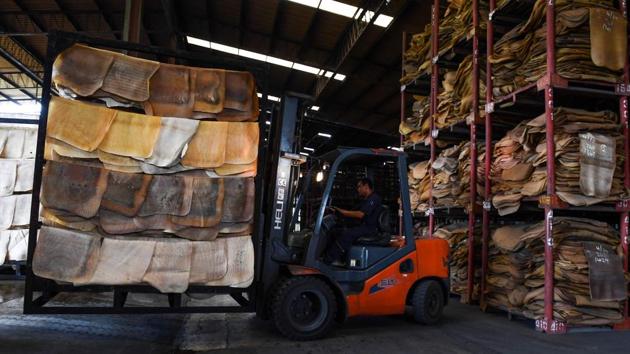
“A climate of uncertainty” pervades the industry after US tariffs hit nearly half of all Chinese imports, according to Karako Kittipol, marketing manager at Thai Hua Rubber. “Chinese companies don’t want to have too much rubber in stock,” he told AFP. The value of the yuan against the US dollar has also dipped, making rubber more expensive for Chinese manufacturers. (Jonathan Klein / AFP)
7/8
 View Photos in a new improved layout
Updated on Nov 27, 2018 11:56 AM
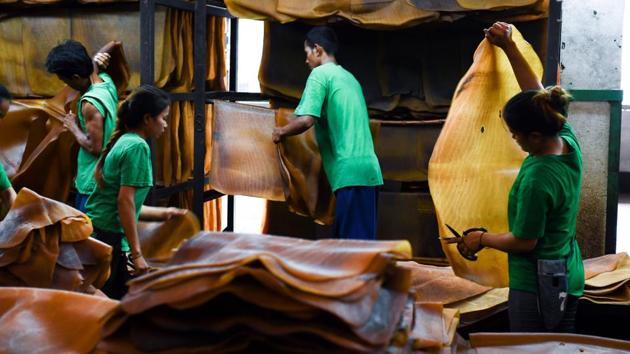
Workers sort out raw rubber sheets. The ruling junta is trying to address supply-side issues and is aiming to reduce the area under cultivation for rubber. At the same time rubber remains an intensely political issue in Thailand. Farmers and tappers -- the majority come from the junta-aligned south -- are notoriously quick to protest when times get tough. (Jonathan Klein / AFP)
8/8
 View Photos in a new improved layout
Updated on Nov 27, 2018 11:56 AM


