
 E-Paper



Photos: The making of steel, from iron ore to tough metal
The fascinating journey of steel making has existed for millennia. In this crucible process of steel making various steps are involved, where the red hot molten iron is formed into the tough and shiny steel.
Updated on: Mar 25, 2018 3:23 PM IST

Share via


Copy link

1/9
 View Photos in a new improved layout
Updated on Mar 25, 2018 3:23 PM
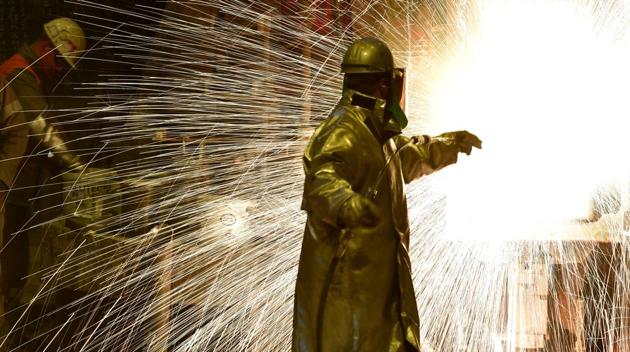
An employee works in front of the blast furnace past rolls of sheet steel at a mill of German steel producer Salzgitter AG. Steel making has existed for millennia, but not on such a massive scale until 19th century. It is a crucible process of producing steel from iron ore and scrap where impurities are removed from raw iron and other elements are added to produce different grades of steel. (Alexander Koerner / Getty Images)
2/9
 View Photos in a new improved layout
Updated on Mar 25, 2018 3:23 PM
Molten iron glows red hot inside a furnace at a mill of Salzgitter AG. To manufacture steel, the producer starts by adding coke and lime in iron ore. These three components are then melted in a blast furnace to get the molten iron. (Alexander Koerner / Getty Images)
3/9
 View Photos in a new improved layout
Updated on Mar 25, 2018 3:23 PM
An employee puts on extra work wear to work in front of the blast furnace at a mill of steel producer. A steelworker has to be equipped with safety gears, to withstand the heat of the metal turning into liquid and back again. The furnaces can even rise to 3000 degrees Fahrenheit. (Alexander Koerner / Getty Images)
4/9
 View Photos in a new improved layout
Updated on Mar 25, 2018 3:23 PM
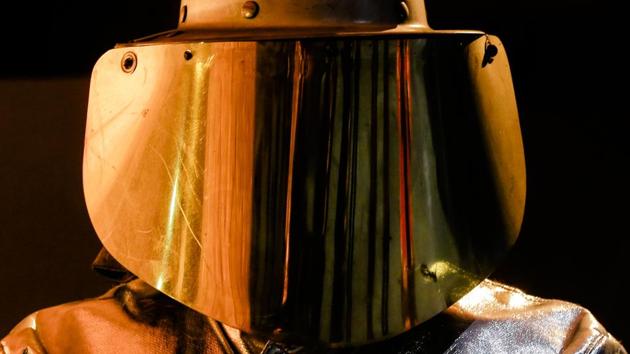
Liquid raw iron is reflected in a protective visor of an employee working at the furnace. In the next step, to reduce the carbon content and strengthen the material, oxygen is blown through the iron. (Markus Schreiber / AP)
5/9
 View Photos in a new improved layout
Updated on Mar 25, 2018 3:23 PM
An employee in protective clothing works at the furnace of the steel producer, the Salzgitter AG. Steel is thousand times stronger than iron, the reason being it is used in everything from the construction of skyscrapers to the finer assembling of a laptop. (Markus Schreiber / AP)
6/9
 View Photos in a new improved layout
Updated on Mar 25, 2018 3:23 PM
To get the desired shape of the steel --mostly slabs, beams, or wires-- the liquified steel is poured into cooled molds of the required. (Alexander Koerner / Getty Images)
7/9
 View Photos in a new improved layout
Updated on Mar 25, 2018 3:23 PM
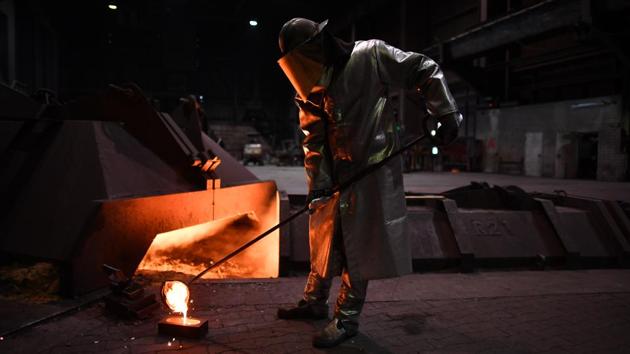
To create stainless steel and other modified versions of it, the steel makers even add other elements like one being nickel. (Alexander Koerner / Getty Images)
8/9
 View Photos in a new improved layout
Updated on Mar 25, 2018 3:23 PM
Steam rises from the German steel producer Salzgitter AG’s plant during the heating process. (Alexander Koerner / Getty Images)
9/9
 View Photos in a new improved layout
Updated on Mar 25, 2018 3:23 PM


