
 E-Paper



Photos: Travelling classroom bridges digital divide in Benin
In times when technology has assumed immense importance, the internet penetration rate in Benin in West Africa is just 42.2 percent. In an attempt to learn about digital technologies, the students of Avrankou-Houeze School are being familiarised with computers in a container. The initiative is being run by a non-profit group called BioLab that is based out of Benin’s largest city Cotonou. As students get familiar with terms like ‘motherboard,’ ‘power supply,’ ‘hard drive,’ etc, they are also learning how to build their own computers.
Updated on: Feb 16, 2019 2:15 PM IST

Share via


Copy link

1/8
 View Photos in a new improved layout
Updated on Feb 16, 2019 2:15 PM
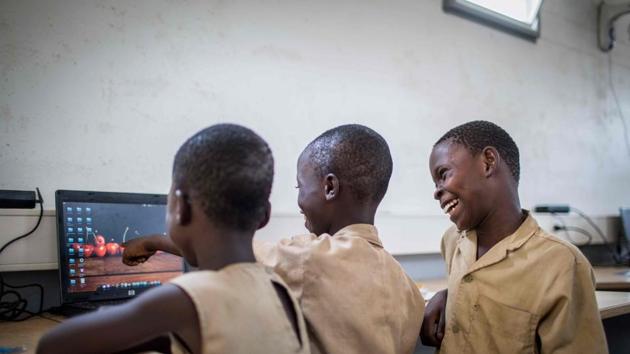
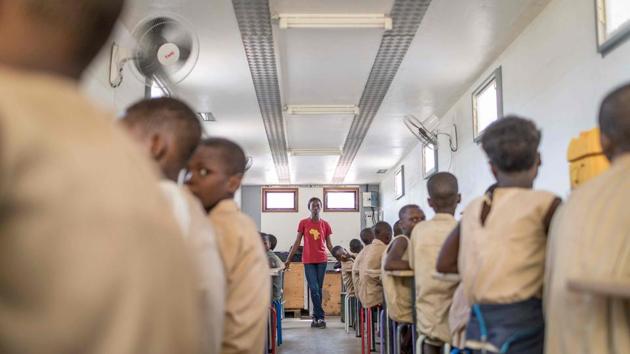
Schoolchildren from Avrankou-Houeze school attend a BloLab training in a container at Avrankou city hall, in Avrankou, south of Benin. Designed by BloLab, a non-profit group based in Benin’s largest city Cotonou, the 13-metre (43-foot) lorry trailer is powered by 12 solar panels and equipped with enough laptops to give rural students a chance to familiarise themselves with computers, which most families cannot afford. (Yanick Folly / AFP)
2/8
 View Photos in a new improved layout
Updated on Feb 16, 2019 2:15 PM
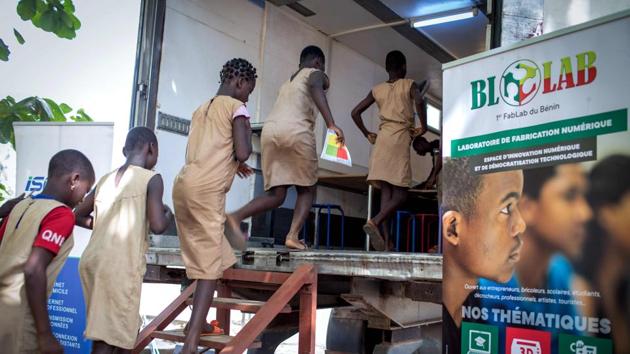
The lorry is loaded with computers -- the kind of technology that few students in the West African country had ever seen, much less touched. Benin’s internet penetration rate is just 42.2 percent, the Regulatory Authority for Electronic and Postal Communication said in a report last year. Among these, almost everyone (96 percent) used a mobile phone for accessing the web. These are the conditions which spawned the idea for a mobile classroom furnished with desks as well as fans to ward off the tropical heat. (Yanick Folly / AFP)
3/8
 View Photos in a new improved layout
Updated on Feb 16, 2019 2:15 PM
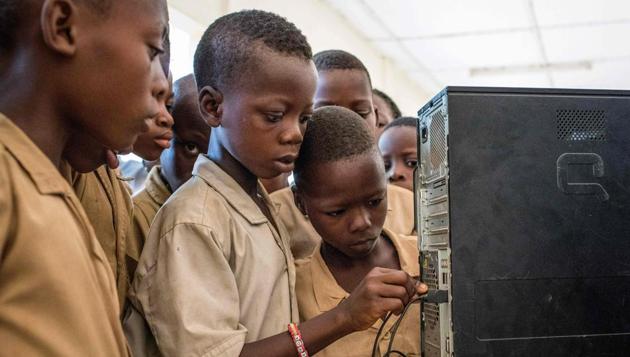
“When the teacher told us that we’d start having computer class again, I quickly finished my work because I was so happy,” said Ambroise, from eastern Benin’s Avrankou district. In his class of 48, only four pupils had even touched a computer before. Ambroise had used one at a photocopy shop, while the other three had a sibling who owned one. (Yanick Folly / AFP)
4/8
 View Photos in a new improved layout
Updated on Feb 16, 2019 2:15 PM
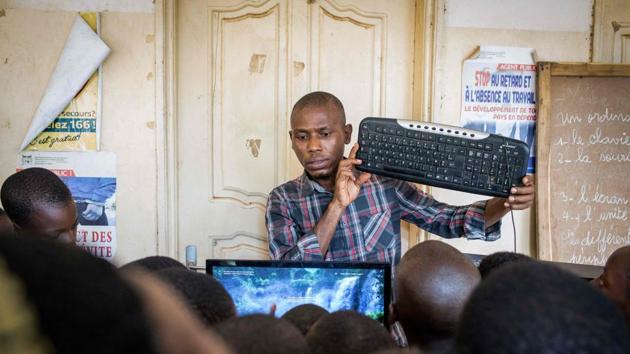
BloLab pays to rent a cab to tow the trailer, which was donated by Swiss-based charity African Puzzle. The classroom, which has visited two communities since last August, stays in one place for a month at a time, providing five two-hour computer skills classes per week, free of charge. (Yanick Folly / AFP)
5/8
 View Photos in a new improved layout
Updated on Feb 16, 2019 2:15 PM
“In the towns, many people have technology, there are cybercafes. But in villages it is rare to find a computer or a smartphone. In Benin, the digital divide is not just a concept but a reality,” BloLab founder Medard Agbayazo told AFP. (Yanick Folly / AFP)
6/8
 View Photos in a new improved layout
Updated on Feb 16, 2019 2:15 PM
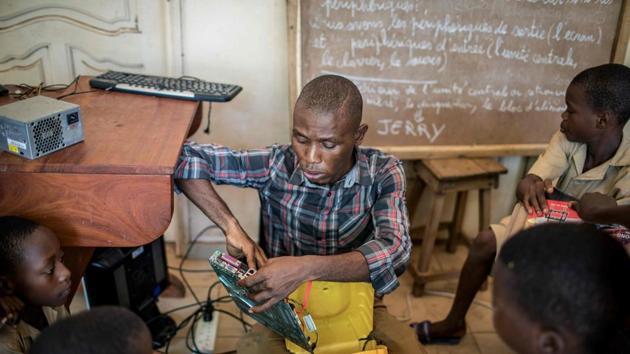
One of two trainers, Raoul Letchede, shows the kids the components they will use to assemble a makeshift computer in a 25-litre (6.6-gallon) yellow plastic container. “This lesson familiarises them with the inside of a computer, demystifies how it works, and shows them that they can make their own even without much money,” Letchede said. (Yanick Folly / AFP)
7/8
 View Photos in a new improved layout
Updated on Feb 16, 2019 2:15 PM
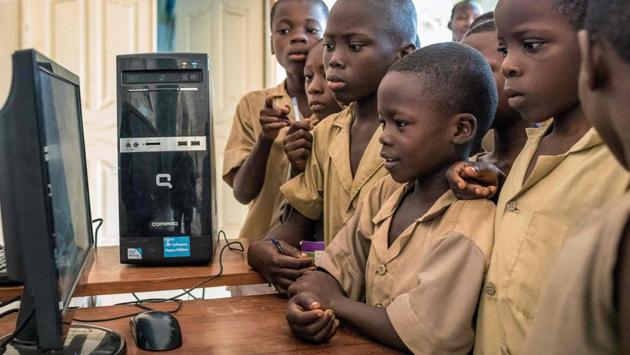
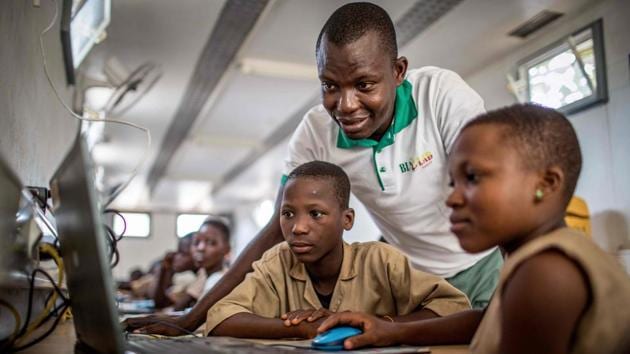
As one group of pupils practice using a word processor on the trailer’s laptops, another works in a corner of the town hall, learning to build computers in jerrycans with recycled components from obsolete machines or donated by businesses and charities in Cotonou. The students are already familiar with terms like “motherboard”, “hard drive”, and “power supply” from a previous lesson. (Yanick Folly / AFP)
8/8
 View Photos in a new improved layout
Updated on Feb 16, 2019 2:15 PM


