
 E-Paper



Photos: Zimbabwe’s slow and dingy trains mirror economic decline
They’re dark, dirty and slow today but the country’s trains were once the preferred mode of transportation by most Zimbabweans. The state of the railway lines now mirrors the decline in the country’s economic fortunes during the last two decades under the leadership of former President Robert Mugabe. Now, many Zimbabweans prefer to make journeys by bus or public taxi which could take half around half the time one would spend in cold, slow overnight train rides, even if it costs only half as much compared to modern means. Apart from being slow these train carriages often lack lighting, water and sanitation.
Updated on: Oct 08, 2018 10:04 AM IST

Share via


Copy link

1/9
 View Photos in a new improved layout
Updated on Oct 08, 2018 10:04 AM
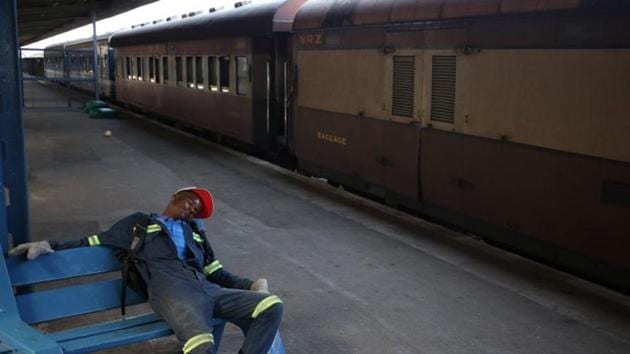
A train mechanic sleeps at a platform after an overnight train journey from Harare, in Bulawayo, Zimbabwe. Dark, dirty and slow, the country’s trains, like much else in the impoverished southern African nation, have seen better days. (Siphiwe Sibeko / REUTERS)
2/9
 View Photos in a new improved layout
Updated on Oct 08, 2018 10:04 AM
Passengers chat as they wait for a train at a station in Harare. It was once the preferred mode of transport for most Zimbabweans. The state-run rail service now mirrors the decline in the country’s economic fortunes during the last two decades under the leadership of former President Robert Mugabe. (Siphiwe Sibeko / REUTERS)
3/9
 View Photos in a new improved layout
Updated on Oct 08, 2018 10:04 AM
Gilbert Mthinzima Ndlovu, a veteran of Zimbabwe’s 1970s independence war and a security guard at the National Railways of Zimbabwe (NRZ) for 35 years, yearns for the old days when trains were full and arrived on time. “Times are different now as we have few passengers,” the off-duty Ndlovu told Reuters as he rested in a badly lit first class cabin during the journey from the capital Harare to his home in Bulawayo. (Siphiwe Sibeko / REUTERS)
4/9
 View Photos in a new improved layout
Updated on Oct 08, 2018 10:04 AM
Commuters stand on a platform during a brief stop of a sleeper train travelling from Harare to Bulawayo, near the town of Gweru. Now the 10-hour journey can take 16 hours. Not surprising, then, that many Zimbabweans prefer to make the 440 km journey by bus or public taxi in around five hours than have to endure a cold overnight train ride - even if at $10 the train ride costs only half as much. (Siphiwe Sibeko / REUTERS)
5/9
 View Photos in a new improved layout
Updated on Oct 08, 2018 10:04 AM
Passengers are seen ahead of an overnight train journey. The carriages often lack lighting and water, and the toilets are filthy. (Siphiwe Sibeko / REUTERS)
6/9
 View Photos in a new improved layout
Updated on Oct 08, 2018 10:04 AM
An abandoned train carriage stands in Harare. The signalling and information systems are often vandalised and some tracks overgrown with grass and weeds because they have not been used in years. (Siphiwe Sibeko / REUTERS)
7/9
 View Photos in a new improved layout
Updated on Oct 08, 2018 10:04 AM
A train inspector speaks to passengers on a sleeper train travelling from Harare to Bulawayo. Last year South African logistics group Transnet won a $400 million joint bid to recapitalise NRZ and fix some of the problems, including acquiring and refurbishing carriages. (Siphiwe Sibeko / REUTERS)
8/9
 View Photos in a new improved layout
Updated on Oct 08, 2018 10:04 AM
People wait for a sleeper train, travelling from Harare to Bulawayo, to depart near the town of Gweru. Till the problems are fixed, passengers have to make do with a broken train service. (Siphiwe Sibeko / REUTERS)
9/9
 View Photos in a new improved layout
Updated on Oct 08, 2018 10:04 AM


