In 1894, drama enthusiast Dadasaheb aka Dattatray Pathak together with a group of friends began a students’ social club, now known as Bharat natya sanshodhan mandir.
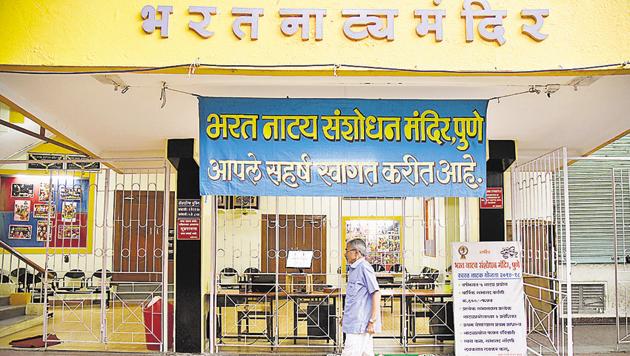
Bharat natya sanshodhan mandir a platform for experimental theatre in Marathi, currently in its 125th year is keeping the tradition of amateur sangeet natak alive.
Members of the group Ravindra Khare, Mohan Mulye and Abhay Jabde shared memories of their most loved sangeet natak like “sangeet sharda”, “sansaykaloi”, “bhavbandhan”, “ekach pyala”, “manapman”, “yayati devayani”, “madarmala” and “matsyagandha” that have stood the test of time. While each of these members do other jobs, their passion for acting, despite not being trained professionally, is what got them together.
“Sangeet natak is our life. This natak is alive because of its music and storyline and it is always a challenge for an actor to give his best performance,” said Khare.
According to Jabde, an electrical engineer by profession, “it was the thrill of watching bal natya (children’s play) that brought me close to theatre.”
“The students’ social club first showcased a play inspired by Hamlet which was held at Bhusari wada in Budhwar peth. What was interesting then was, the female characters were played by men and founder Dada Pathak himself played the queen. In 1895, the club staged the Shakespeare drama Othello which was renamed in Marathi as ‘Zunzar Rao’.
A dhoti was used as a backdrop and that earned them a lot of accolades and also some funding from the audience”, quips Mulye.
{{/usCountry}}A dhoti was used as a backdrop and that earned them a lot of accolades and also some funding from the audience”, quips Mulye.
{{/usCountry}}Khare says “with the British government in power a sangeet natak was one of the mediums through which the message of Azadi or freedom was conveyed”.
Between the year 1895 to 1935, 19 plays were set that dealt with subjects like history, mythology and social awareness.
The student social club managed solely on funds that people offered them.
Khare says “In those days ₹25 or even ₹51 was of great value and if the audience liked a play, they would give money as encouragement.”
The social club moved from Budhwar peth in the 1950’s to Sadashiv peth where it is currently established. It was during this same time that the club was renamed Bharat natya sanshodhan mandir. Khare recalls an interesting story of how an open gymnasium turned into a fullfledged theatre for amateurs.
“The residents offered us their money. It was an interesting proposition for the residents then,as we asked them to give us their money which would act like a fixed deposit and upon maturity, we would pay them back with interest.
This entire auditorium was built with this money and every person was returned the money back with interest, and thus this theatre became more than just a stage as it also began acting ,kathak and tabla classes among others”.
The Bharat natya sanshodhan mandir has given some of the most loved and admired sangeet natak like “katyar kaljat gusali” which was released in 1967 and was written by Purushottam Darvhekar.
The story is on the clash of two gharanas ( school ) of Indian classical music. This was also the first time that classical singer Pandit Jeetendra Abhisheki composed the natya sangeet (music for the play). Another longest running play that still attracts the crowd “sangeet saubhadra” which was written by Balwant Kirloskar. This play tells us the story of how Krishna helped his sister to marry her choice of love who was Arjun.
Khare says “another popular play sanshay kallol which has been adapted by Govind Ballal Deval from the French play anarelle still gets the audience to enjoy its songs to the fullest like “kar ha kari dharila shubhangi” or mriganayana rasik mohini.