
 E-Paper



Civic staff facing resistance during Covid-19 surveys in Pune’s slums
Seven positive cases Covid-19 have been reported from various slum pockets where municipal staff have undertaken door-to-door survey


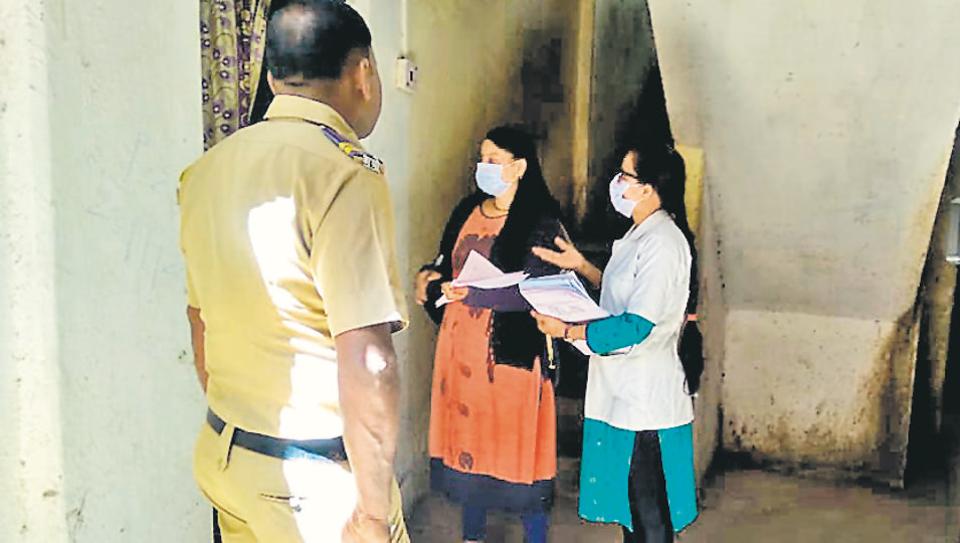
The Pune municipal staff is facing resistance from people in slum pockets while conducting house-to-house survey to detect Covid-19 related symptoms like fever, dry cough, cold and respiratory illnesses.
As of Saturday, seven positive cases of Covid-19 was reported from various slum pockets of the city. While four have occurred in Parvati slums, two are from Gultekdi and one each from Laxminagar (Yerawada) and Ghorpadi peth.
The civic administration has maintained that these are sporadic cases and there are no concentrated numbers in the slums as yet.
Pune municipal commissioner Shekhar Gaikwad said, “We have only found a few sporadic cases in these areas like 2-3 and they too are only the close contacts of the positive patients. There is no immediate plan to seal off these areas. We may decide on containment when the cases touch 10-15 in one area.”
Besides slums, such cases occurred in congested ‘peth’ areas of the city, including Raviwar peth, Bhawani peth and Kasba peth.
Dr Vaishali Jadhav, officer incharge of the containment plan in Pune said, “We conduct survey in the nearby areas where a positive patient has been found to find out if anyone is suffering from any respiratory illnesses like cold cough and difficulty in breathing. We also ask them about their foreign travel history and any other movement. But during the process, our officers often face physical and verbal assault and opposition from residents. Especially in Muslim majority pockets, as they fear that this survey might be linked with NRC (National Register of Citizens) or CAA (Citizenship Amendment Act). These incidents have risen since the Delhi Tablighi incident. We have to take the help of the local police for surveys in these areas which makes our job even more difficult.”
The civic body and the district administration have been tracking people who had attended the Tablighi Jamaat congregation in Delhi.
Currently, under the PMC’s action plan, a solution of 1% sodium chlorite is sprayed in areas where a positive patient is found for 14 days of the incubation period.
Dr Sanjeev Wavare, assistant health officer, PMC said, “We implement the containment plan when a positive patient is found in the half to one kilometre radius. If any of the first contacts who have tested negative do not have the space for home isolation, then we provide them with institutional isolation. We also conduct a survey in the area to find if anyone has symptoms. Depending on the severity of the symptoms, we recommend for sample testing.”
Covid-19 advisory for Jhuggi-Jhopri clusters/slums
The advisory issued by the National Centre for Disease Control defines slums as small, roughly-built house or shelter usually made of mud, wood or metal having thatch or tin sheet roof covering. It says, “slum” means an area consisting of badly built, overcrowded houses, buildings or Jhuggi-Jhopri cluster.
The action plan includes, common areas like toilets, water supply areas, surfaces, likely to be touched by residents to be cleaned frequently using any available disinfectant.
It advises that the local administration must ensure cleaning of toilets frequently, prevent crowding around public amenities such as toilets, drinking water sources and ration shops.
People waiting should maintain a distance of 1m and face away from each other and refrain from touching their eyes, nose and mouth.
The local body must also ensure that all residents have access to soap and water for frequent hand-washing for at least 20 seconds and any family member working as domestic help in the neighborhood should request exemption from service for a short period of two weeks so as to ensure that neither the employer nor employee acquires and spreads Covid-19.


