
 E-Paper



Metro weekday ridership fell by 4.1% during central Delhi protests, shows data
New DelhiThe Delhi Metro’s average weekday ridership decreased by around 267,000, or 4

 Prefer HTon Google


New Delhi
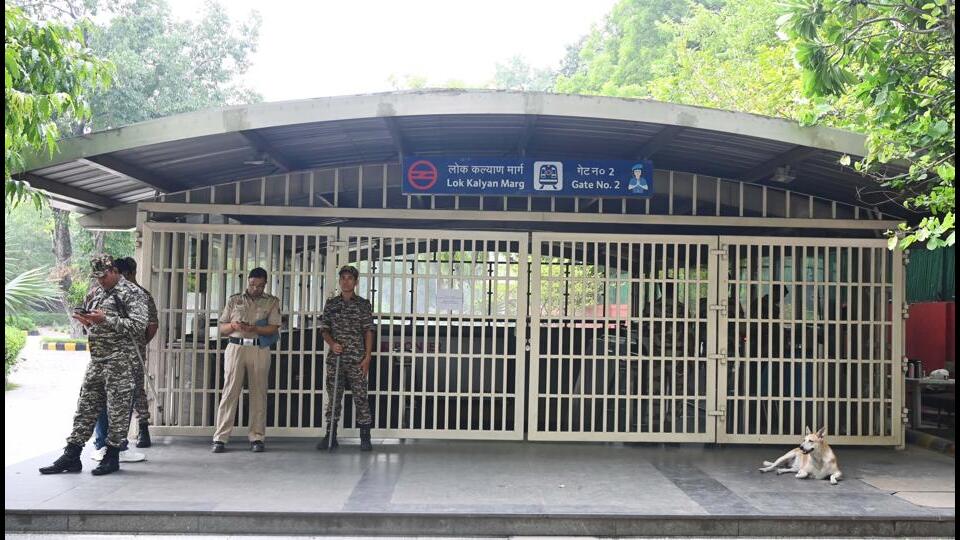
The Delhi Metro’s average weekday ridership decreased by around 267,000, or 4.1%, in passenger journeys between July 20 and 24, during the peak of the central Delhi protests at Jantar Mantar, as most stations in proximity to the protest site remained shut, according to the Delhi Metro Rail Corporation (DMRC).
The DMRC said it is yet to collate information on financial loss due to ridership dip, as this includes several factors.
As per the DMRC data, average weekday journeys between July 1 and July 19 averaged at 6.593 million, which fell to 6.326 million from July 20 to 24. In July 2025, the average weekday ridership was 6.678 million, indicating a higher decline in ridership.
However, DMRC dismissed the dip as “nominal”, citing similar fluctuations during select periods. “The data on passenger journeys in the Delhi Metro network indicates that during the week from 20th to 24th July, 2026, when the agitation was going on at Jantar Mantar, there was a slight decrease in the overall number of passenger journeys. However, in the context of the entire network, this dip was nominal. Such trends are often noticed during weekends, holidays and vacations as well,” said Anuj Dayal, principal executive director, DMRC.
Another DMRC official said, “Many commuters continued using the Metro by boarding or alighting at nearby stations that remained operational, limiting the overall reduction in ridership to 2.67 lakh passenger journeys per day.”
On July 22, in a post on X, the DMRC said the entry and exit to the Janpath, Rajiv Chowk, Patel Chowk, and Central Secretariat Metro stations, which open into the immediate vicinity of the protest site, had been closed “due to security reasons”. Half an hour later, a total of 16 metro stations had been closed, with the shutdown extending to Lok Kalyan Marg, Rajiv Chowk, Ramakrishna Ashram Marg, Barakhambha Road, Supreme Court, Seva Teerth, Mandi House, ITO, Delhi Gate, Indraprastha, Khan Market, Jor Bagh, and Shivaji Stadium. The closure of the Jhandewalan station was announced around 4.40pm.
The closures extended to some of the busiest in the network, with Rajiv Chowk recording an average daily footfall of 365,000 passengers, New Delhi station 138,000, Central Secretariat 92,386, the New Delhi Airport Express station 33,758, and Patel Chowk 28,486, on normal days, according to DMRC.
With the closures, central Delhi was effectively inaccessible through the Metro, as part of a series of unprecedented restrictions across central Delhi as authorities attempted to manage the crowd during the agitation. The Metro restrictions coincided with extensive traffic diversions, multilayer barricading, internet curbs and tight security arrangements around the Parliament and Jantar Mantar during the monsoon session of the Parliament.


Stay updated with all top Cities including, Bengaluru, Delhi, Mumbai and more across India. Stay informed on the latest happenings in World News along with Delhi Election 2025 and Delhi Election Result 2025 Live, New Delhi Election Result Live, Kalkaji Election Result Live at Hindustan Times.


