
 E-Paper



‘Gandhi Yard’ memorial continues to inspire at Yerawada Jail
‘Gandhi Yard’ memorial at Yerawada Jail is an inspiration for 5,000 prisoners and others. Inmates write an exam worth 100 marks every year on Oct 2, which tests them on Gandhian values of forgiveness and peace


Constructed in the year 1871, the Yerawada Central Jail in Pune is spread over 512 acres and houses nearly 5,000 prisoners today. Mahatma Gandhi was the most famous prisoner at the jail, imprisoned here in two stints during the freedom struggle. The first stint was from January 4, 1932 to May 8, 1933, and the second one was August 1, 1933 to August 23, 1933.
It was during his 1932 imprisonment that Gandhi went on an indefinite fast inside the jail to protest against the Communal Award which was announced by the British Prime Minister Ramsay McDonald on August 16, 1932, proposing minority representation for the depressed classes. Under this award, separate electorates were granted to the Forward Caste, Lower Caste, Muslims, Buddhists, Sikhs, Indian Christians, Anglo-Indians, Europeans and Dalits.
Gandhi opposed this move, which he thought divided the depressed classes from the mainstream Hindu community and in protest, embarked on a fast unto death inside the jail on September 20, 1932. He broke his fast only after signing the famous Poona Pact with BR Ambedkar on September 24, 1932, granting more seats to the depressed classes in a joint electorate. Gandhi was finally released from the prison in May 1933.
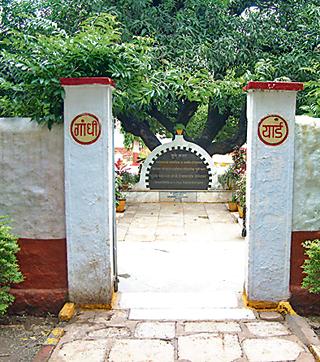
The high security prison today has a memorial called the Gandhi Yard, where he was imprisoned. As one enters the jail, this is the first enclosure on the left of the main entrance.
It was in Yerawada jail that Gandhi developed an interest in sky gazing and astronomy in 1932 — one of his lesser known ones.
This 600 sqft section of the prison serves as a memorial today, but the single room is empty save for a framed photo of Gandhi. A pair of Gandhi chappals and a charkha are kept in the yard.
Two prison inmates have been tasked to keep the yard clean. An incense stick is burnt throughout the day.
Besides Gandhi, other famous freedom fighters who were lodged in Yerawada jail were Jawaharlal Nehru, Netaji Subhas Chandra Bose, Joachim Alva and Bal Gangadhar Tilak.
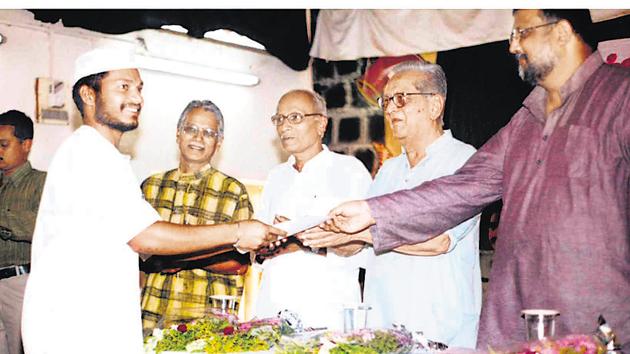
Today, it’s a high security prison —Ajmal Kasab, accused in the 2008 Mumbai terror attacks and film star Sanjay Dutt have also been lodged here. Though journalists are not allowed, voluntary groups and human rights organisations working for legal rights of the prisoners are. Pune-based advocate, Asim Sarode (46), the president of the National Green Tribunal (west zone) Bar Association, launched Gandhian Thoughts initiative for the prisoners in 2002.
Prisoners give an annual examination worth 100 marks every year on the occasion of Gandhi’s birth anniversary on October 2. They are tested on Gandhian values of forgiveness and peace, and expected to write essays on the life and work of the Mahatma. To prepare, they are asked to read Gandhiji’s autobiography, The Story of My Experiments With Truth, besides his other writings on health and constructive work. Good scores brought them benefits like commuting imprisonment term through remissions. The initiative carried on till 2011.
The work by Sahyog Trust continued from 2002 and ended in 2011.
“It was such a life-changing experience to see various life convicts reading Gandhi’s autobiography and other books that he wrote while at Yerawada prison,” Sarode said.


