Mahesh Gotate, an alumnus of the Japanese department under the Institute of Foreign Languages of the Savitribai Phule Pune University, recently presented his research findings on the heavily polluted water bodies of Varanasi to Prime Minister Narendra Modi.
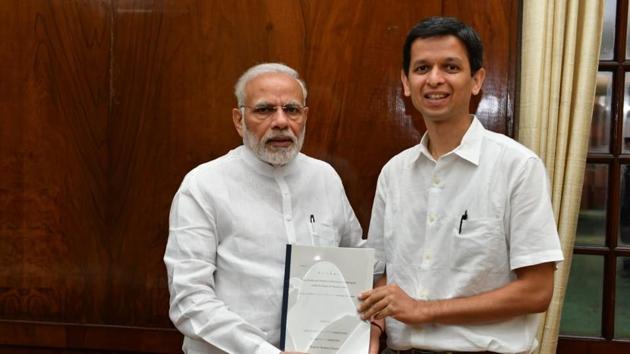
Now residing in Kyoto, Japan, the 41-year-old Gogate who hails from Sangli and worked in an IT firm in Pune, presented his research in the first week of August.
Gogate spent three years in his research as a student of Asian and African Area Studies at Kyoto University and chose to study the sacred water bodies (water tanks called as Kunda, Pokhara, Pushkarini) of Varanasi with a focus on the colonial urban period from 1794 to 1947.
“I presented my research work ‘The ecological and heritage conservation of ancient water bodies’ to the Prime Minister. He asked me about my findings in brief and encouraged me to continue my field work. He was happy to note that research work is happening on these water bodies,” said Gogate.
He noted that Varanasi, which is one of the ancient cities of India and a seat of scholarship and religious studies on the banks of the Ganga, has huge interconnected network of sacred water tanks. These ancient and sacred water bodies are interconnected and also connected with the Ganga and two other small tributaries, namely Varana and Assi, he said over phone from Varanasi.
{{/usCountry}}He noted that Varanasi, which is one of the ancient cities of India and a seat of scholarship and religious studies on the banks of the Ganga, has huge interconnected network of sacred water tanks. These ancient and sacred water bodies are interconnected and also connected with the Ganga and two other small tributaries, namely Varana and Assi, he said over phone from Varanasi.
{{/usCountry}}“These water bodies are declining and are vulnerable. I have argued that the colonial discourse of dry city dominated the colonial urban planning and severely affected the landscape of Varanasi and resulted into the decline of these sacred and ancient water bodies. Now, against the background of heavy precipitation in a short time and increase of impervious surface and decline of open space, the runoff water jeopardises the city life,” he said.
According to the scholar, the urban water bodies and wet lands are like sponge that holds excess water and also increase the water table.
Gogate said that the PM’s passionate commitment to the holistic development of Varanasi, which he represents in Parliament, inspired him to undertake his research on the sacred water bodies. He was also encouraged and guided in this effort by the Bharatiya Janata Party (BJP) MP and president, Indian Council for Cultural Relations (ICCR), Vinay Sahasrabuddhe.