From monthly lecture series on recent researches in the field of Ancient Indian History, Culture and Archaeology, Linguistics, Sanskrit and Lexicography by eminent scholars and publication of monograph series on these subjects to new certificate courses being planned, the Deccan College postgraduate research institute, hailed as the third oldest educational institute in India and the first college to have postgraduate and research institute in the entire Deccan region, has lined-up events to mark its 200th year on Tuesday.
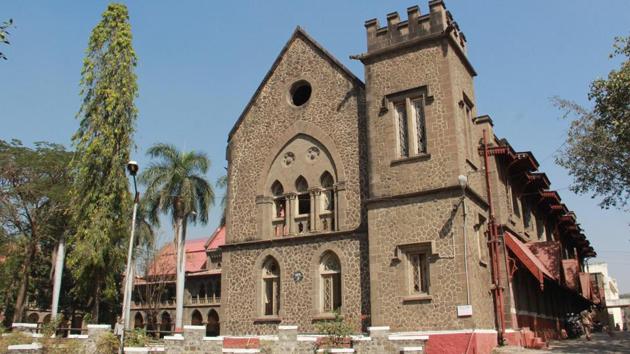
The institute (deemed to be university), plans to celebrate its bicentenary year with various programmes amid solid record of undertaking various key research and excavation projects including Inamgaon, a post-Harappan archaeological site.
The college has given to the world of archaeology some of the well-known archaeologists like MK Dhavalikar, who received the Padma Shri. Professor Prasad Joshi, acting vice-chancellor of the Deccan College, said, “The institute has immensely contributed to research in the fields of Ancient Indian History, Culture and Archaeology, Linguistics, Sanskrit and Lexicography as well as in the fields of Sociology, Anthropology and Maratha History over the past 199 years.”
The University is going to commence a series of workshops on Ancient Indian History, Culture and Archaeology, Linguistics, Sanskrit and Lexicography to make current researches in these subjects popular and public-oriented, added Joshi.
According to him, some ongoing projects at the institute by three departments, include the Sanskrit Dictionary Project, Marathi Dialects Project of the Linguistics Department, Gorewada Archaeological Theme Park project and a joint project with APH Solapur University: Junnar Archaeological Museum Project funded by RUSA. He said that two proposed projects of the University will be financially supported by the Department of Science and Technology, Government of India in collaboration with C-DAC.
{{/usCountry}}According to him, some ongoing projects at the institute by three departments, include the Sanskrit Dictionary Project, Marathi Dialects Project of the Linguistics Department, Gorewada Archaeological Theme Park project and a joint project with APH Solapur University: Junnar Archaeological Museum Project funded by RUSA. He said that two proposed projects of the University will be financially supported by the Department of Science and Technology, Government of India in collaboration with C-DAC.
{{/usCountry}}A special online programme is being organised to mark the 199th Foundation Day and the inauguration of the bicentenary year on October 6 at 4pm. Dr Bhushan Patwardhan, vice-chairman of the University Grants Commission (UGC) will deliver the key note address. Dr GB Deglurkar, former chancellor of the University will also give an address on this occasion. Dr AP Jamkhedkar, chancellor of the University will preside over the function.
According to ex-director K Paddayya, it has been a proud moment to be part of this college where he studied and later worked for 57 years. “I am associated with the Deccan College since 1963. It is often said that we are like raw lumps of clay who are transformed and moulded into scholars after studying at this college,” said Paddayya.
Deccan institute’s department of Sanskrit, started in 1948, carried out one of the most ambitious and prestigious projects - Encyclopedia of Sanskrit.
“So far, we have published 34 volumes covering around 6,000 pages. The published volumes cover around one lakh fifty thousand words. In size, it is three times bigger than a dictionary of any language all around the world. Though it is a dictionary, it is more of an encyclopedia. A regular dictionary gives just the meanings of the word, but this traces the changes in the meaning of the word in literature spread over more than 3,500 years,” said Bhav Sharma, Editorial Assistant, Department of Sanskrit and Lexicography.
History
It was started on October 6, 1821, as the Hindoo College by the Bombay Presidency government at the initiative of its governor Mountstuart Elphinstone using the Dakshina Fund, which was started by Khanderao Dabhade, a Maratha Sardar and continued by the Peshwas for propagating Sanskrit studies. It was renamed as the Poona College on June 7, 1851, and later as the Deccan College in October 1864. The Deccan College was shifted to the new campus covering an area of 115 acres near Yerawada on March 23, 1868. Today, the department has excavated over 100 sites and added various relics, some dating back to the medieval period, to their existing collection. These artefacts are carefully preserved in the museum for visitors.
Department of linguistics
The linguistics department, the first department in this discipline in India, began in 1939. Prof SM Katre was the founder of the department. Professor Sonal Kulkarni-Joshi, head of the department of linguistics, said, “I have been a masters student at the Deccan College and faculty member for more than 15 years. Both in Indian academics and abroad, my affiliation with the Deccan College is highly regarded within linguistic circles. It is a matter of great pride to be a part of this great academic legacy.”
Museums
Founded in the year 1939, the Deccan College Archaeology Museum (DCAM) is the brainchild of eminent archaeologist Padma Bhushan HD Sankalia. The museum features Sankalia’s collection of artefacts as well as a collection of vestiges from different research scholars. Following the numerous excavations carried out by the archaeology department, the initial collection of artefacts soon became an assemblage of cultural material dating back to the prehistoric era. Developed for academic purposes, the museum now features a huge collection of artefacts categorised into nine galleries. The galleries are divided into categories: Stone Age or prehistoric period (before 6000 BC); Chalcolithic or Copper Age (4500- 3500 BC); Megalithic culture; early history; sculptures; epigraphy (inscriptions) and numismatics (the study of coins and related objects); sciences in archaeology and ethnoarchaeology (the study of people for archaeological reasons). The second museum is on The Maratha History Museum.
This Museum -cum-Archives of the Deccan College contains important historical records of the late 18th and early 19th centuries, useful for a student of Maratha history.
Library
Another important aspect of the Deccan College is the library. According to K Paddayya, ex-director Deccan College, the library is a very important component of the institute and has a special place in the world of higher learning and research, both at the national and international levels. It is a unique library having collection of two lakh books mainly in the fields of Archaeology, Ancient Indian History, Medieval History, Anthropology, Linguistics, Sanskrit, Philosophy and Religion. It has inherited a rare collection of books from the old Deccan College whose origins go back to 1821.