
 E-Paper



Mango mania: exports to reach North Korea this year
Regular importers of mangoes from Maharashtra, namely, the US, Europe and the UK have already begun receiving batches of the king of fruits

 Prefer HTon Google


Amidst much talk of a poor mango crop this year, officials of the state horticulture department and the Maharashtra State Marketing Board are confident that exports will increase.
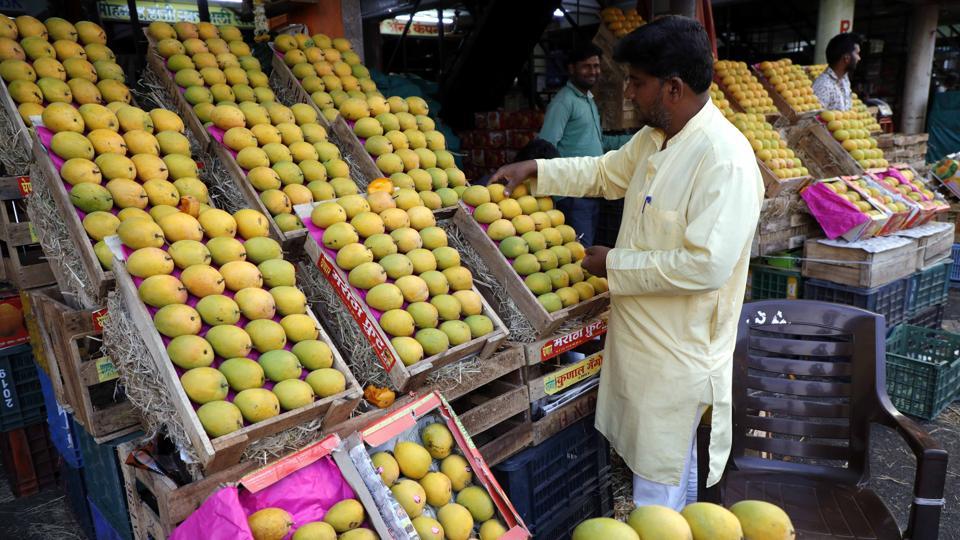
An order requesting for Maharashtra’s famed Alphonso mangoes has come in from North Korea. Australia has also been added to the export list, after approval from Australian authorities regarding the irradiation process at Vashi port.
“North Korea recently approached us with their specifications, and we will be sending their batch shortly,” said Manik Trimbake, deputy director, horticulture department.
Regular importers of mangoes from Maharashtra, viz, the US, Europe and the UK have already begun receiving batches of the king of fruits. The first consignment of 15 tonnes of mangoes, left for the US in the first week of April from Vashi Navi Mumbai, DD Shinde, general manager, Maharashtra State Marketing Board, said.
“Despite a low mango crop, due to a prolonged winter; we are expecting this year’s India exports to cross 50,000 MT, of which 35,000 MT will be exported from Maharashtra,” added Shinde.
Mangoes exported to the US are irradiated at Baba Atomic Research Centre (Barc), Mumbai. The complete irradiation procedure for one tonne of mangoes, takes an hour at Barc. In terms of mango exports, Maharashtra exports 80 per cent of the country’s total mango exports.
Huge drop in mango production expected this year
Last year the average annual production of Kelashi Mango Grower’s Association, Ratnagiri was 720 tonnes. However, the association hopes that the production this year will reach 250-300 tonnes.
Due to an extended winter, and the stark difference between day and night temperatures, the flowering stage of the mango trees have been hindered, which in turn will effect mango production this year.
Sharad Paranjape, president, Kelashi Mango Grower’s Association, Ratnagiri, said, “The current crop is also being affected as the temperatures have crossed the 38 degrees Celsius mark. The powdery mildew disease on flowers have also affected the flowering of the mangoes.”
The association has predicted that this adverse climatic condition could impact production of mangoes by 70 per cent.


