
 E-Paper



Navratri: Nine days of culture, community, fun, faith and celebration
Nine days and nine nights - the city has its fair share of cosmopolitan residents, each bringing an element of their unique culture to the celebration.


The date is October 10 and the city is more than gearing up to welcome the Goddess Durga or/and the Goddess Laxmi, or/and the Goddess Saraswati, depending on how your cultural identity defines the most powerful female deity in the Hindu pantheon for you.
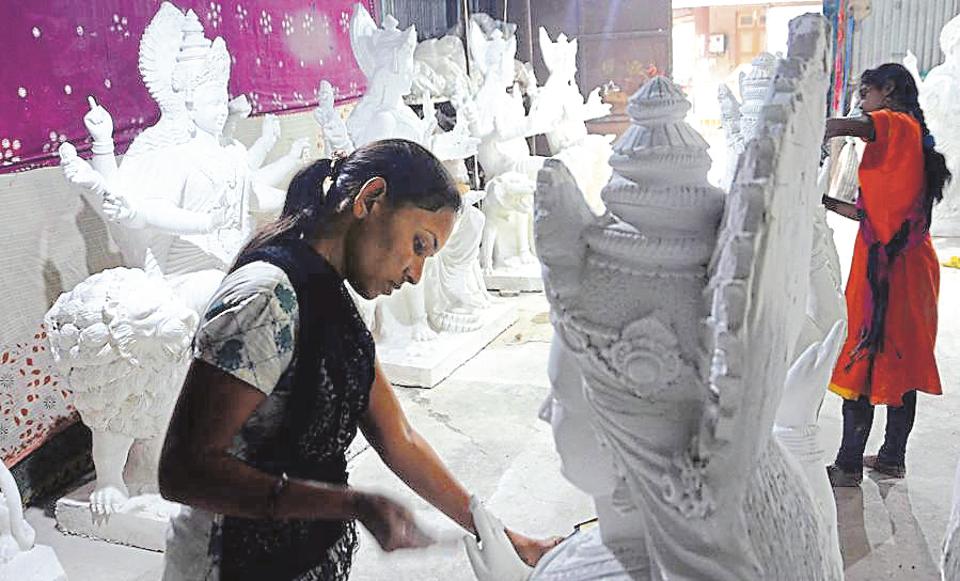
Either way, faith, celebration and community festivities are steadily building to the annual peak that is defined as ‘Navaratri’.
Nine days and nine nights - the city has its fair share of cosmopolitan residents, each bringing an element of their unique culture to the celebration. Tamilians in the city add a religious touch to the celebrations by dedicating the nine special nights to each Goddess - Durga, Laxmi and Saraswati, in turn. The first three days are dedicated to Durga, the next three for Laxmi and the final three days to Saraswati, where special Navaratri rituals are performed for each.
“During these celebrations, we display `Golu’, an arrangement made on a make-shift staircase with nine stairs. Each stair symbolises each day of Navaratri. Decorative idols of gods and goddesses are placed on the stairs. In most cases, the dolls that are used for the `Golu’ are handed over from generation to generation. It is also said every year, new dolls have to be placed,” says R Savitha, resident of Wakad.”
For the Bengali community there are at least 40 Durga pujas organised in various parts of the city. “During the Durga pujas, Bengalis come together along with their relatives and friends to the puja mandap right from the morning to evening to offer prayers to Durga mata, taking prashad and bhog in different areas of Pune. In the evenings its dances and cultural programmes by locals artistes as well as renowned performers from Kolkata. The devotees enjoy their evening meals with delicious food form different stalls located in and around the puja premises. Everything synonymous with Bengali culture will come alive at a Durga puja mandap, Maharashtrians and Bengalis share a lot of cultural heritage, hence it is addressed as “Sharvojanin Durga Puja,” says Samar Roychowdhury
For the Maheshwari community, Navaratri mean nine nights of feminine power, where women enjoy dressing in new sarees, and gear up for dandiya and garba. “Both, men and women, observe a fast for nine days and there are Ramayana reading sessions held in the Laxmi Mata temple,” says Shalini Mundada, resident of Bibvewadi.
The Pune Gujarati Bandhu Samaj is planning a special day on October 16. “We hold a one-day celebration in the city, where the Gujarati community comes together to perform a Garba in front of Devi ma. Usually, Gujaratis keep a ghat (earthern pot) with akhand jyoti (everlasting light) that is worshipped. We play garba to invoke energy and create positivity,” says Chaya Patel, convenor, Pune Gujarati bandhu samaj.


