
 E-Paper



Pollutants in Pune’s air cross permissible limits
According to Maharashtra pollution control board, RSPM level recorded in various parts of city in the last 15 days between the range of 105 g/m3 and 131g/m3 (per metric cube), while permissible limit is 100g/m3


The city’s air quality has already crossed permissible limit of air pollutants, which was gauged by respirable suspended particulate matter (RSPM), two weeks before Diwali. According to Maharashtra pollution control board (MPCB), RSPM level recorded in various parts of city in the last 15 days was between the range of 105 g/m3 and 131g/m3 (Per metric cube) while the permissible limit is 100g/m3. There has been a consistent rise in RSPM as the winter is setting in.
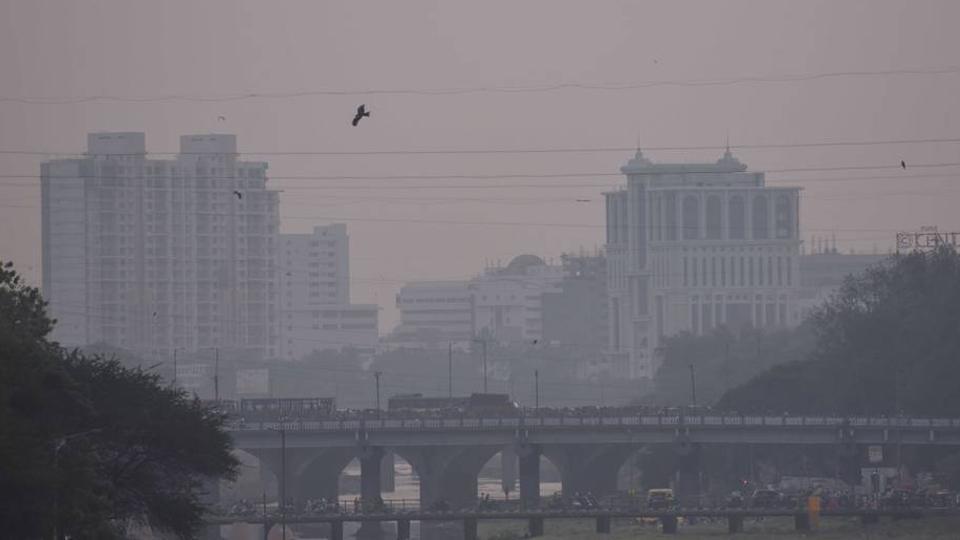
To check air quality, the Maharashtra pollution control board has conducted daily tests in various cities across Maharashtra with the help of ambient air quality monitoring network which is the systematic, long-term assessment of pollutant levels by measuring the quantity and types of certain pollutants in the surrounding, outdoor air.The data collected over the last two months indicates that the level of RSPM has increased steadily and in first week of October it crossed the prescribed limit of 100g/m3.
In July, RSPM was found to be 41.97 g/m3 in Karve road); 51 g/m3 in Nal stop and 21.57 g/m3 in Swargate.It further increased to 93.75g/m3 at Nal Stop in August and while at Karve road, the average for August was 37.20 g/m3. The data by MPCB data also revealed that respirable suspended particulate matter reached 98 g/m3 on September 26,and within next 10 days it crossed prescribed limit and reached 120 g/m3 on October 6.
Thereafter, RSPM has been continuously increasing and it peaked at 131g/m3 on October 15.
The levels of nitrogen oxides and sulphur dioxides are under permissible limits, according to MPCB. The permissible limit for both Nox and SO2 is 80.00 g/m3.
RSPM refers to particulate matter with diameter of less than or equal to 10 micrometres. They are produced from combustion process, vehicles and industrial sources.
“While the city’s population is 3.5 million, the regional transport office has registered 3.62 million vehicles,” said Babasaheb Ajri, chief, RTO
“In winter, the dust particles get suppressed and so the count of RSPM increases. To keep a check on RSPM, we have asked the civic body to implement action plan under which we will keep a strict watch on industrial and vehicular air pollution,” said V M Motghare, joint director, MPCB.
The pollution levels in Pune has been on a rise and it has gone up by around 10 percent in the last five years which is matter of concern. We are going to start a study where PM 2.5 will be monitored and the results will be declared only after Diwali. It has been also observed that in winters pollution levels are rising. This all will be studied during the coming month, revealed, DR Gufran Baig, director, IITM
Chronic lung disease
Dr Sundeep Salvi, director, Chest Research Foundation of India said, “The rise in chronic lung diseases (CLD) is tremendous over the last few years and the major reason is rising levels of air pollution. The deteriorating quality of air has led to rise in number of lung diseases specifically chronic obstructive pulmonary disorder and asthma and in winter air pollution levels increase more compared ot other days.” 55 million cases of Chronic obstructive pulmonary disease were reported in India in 2017 and 38 million of asthma cases were reported in the same year . Of these around 10 percent alone were from the city of Pune. This is a major cause of concern.”
Sharing the figures, Salvi said, “The pollution levels mainly rise in winters because of cold air. The particles become heavier and is stagnant . Also, to protect themselves from cold, people burn things which causes smoke. This remains in the air and hence residents inhale the polluted air and this is also one the major reason why cases of CLD are rising.”


