PUNE Puneites woke up on Monday to breathe less polluted air after the “Janata Curfew” lockdown ordered by the Prime Minister Narendra Modi to combat the spread of Covid-19 (coronavirus). The move kept cars off the road and closed factories, improving air quality.
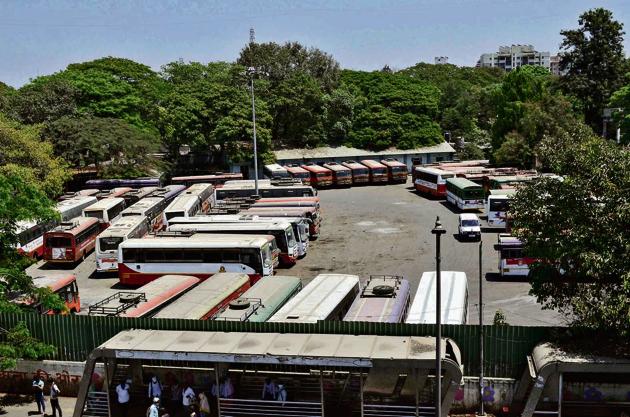
According to government environment monitoring agency System of Air Quality and Forecasting And Research (Safar), there has been a reduction of at least 45 per cent in oxides of nitrogen (NOx) in Pune from March 5 to March 19, 2020, as compared to the same period in 2019 and 2018.
The city recorded NOx levels at an average of 35 parts per billion (ppb) in 2018-2019, which comes under satisfactory category (22-43 ppb) and the figure was 20 ppb (good, 0-21) in 2020. On March 20, 21 and 22, this year, the city recorded NOx levels at an average of below 20 ppb in 202, according to the data.
As of March 23, this year, the air quality index for the city is ‘satisfactory (30-60)’ as it is 61 (µgm-3) for PM 10 and 38 (µgm-3) for PM 2.5 as mentioned on the website.
Safar comes under the Indian Institute of Tropical Meteorology, Pune.
{{/usCountry}}Safar comes under the Indian Institute of Tropical Meteorology, Pune.
{{/usCountry}}There was a significant reduction in NOx pollution in Pune and Pimpri-Chinchwad regions from March 6 onwards (~50 per cent), but it is fluctuating. The levels of PM2.5 show mixed impact depending on location, according to the data.
Sujit Patwardhan, an environmentalist working with Parisar, said, “It is unfortunate that it takes a pandemic to realise that nature can always bounce back if given a chance. Not just air quality, but across the world, the lockdown due to Covid-19 has improved water quality.”
“The government authorities should not just make promises, instead work on widening roads and building more flyovers. They must simultaneously discourage the use of private vehicles and build a better public transport system,” said Patwardhan.
According to Safar study, fossil fuel emission, mainly coming from vehicular traffic, is one of the major sources of NOx emissions (~60-80%) and PM2.5 (35-50%) in four cities where the study was conducted namely Pune, Mumbai, Delhi and Ahmedabad.
Under fair weather conditions, NOx levels are mainly controlled by its major sources of emissions (vehicular traffic), although changes due to weather cannot be ruled out. Hence, if NOx levels are reduced significantly as compared to earlier years, it provides us with a broader indication of reduction in emission in major sources. Vehicular traffic also impacts PM2.5 by fossil fuel and resuspended dust emissions too, according to the study.
Fuel demand drops
The Safar observation is backed by another data released by All India Petrol Dealers Association (AIPDA), which claims that demand for petrol and diesel in Pune has come down by 20 to 25 per cent from last week litres respectively.
“The fall in petrol and diesel consumption is attributed to reduced use of vehicles in the current situation given Coronavirus scare,” said Ali Daruwala, National Spokesperson, All India Petrol Dealers Association.