
 E-Paper



Startup Saturday: Pune firm that simplified logistics management
In the first few months, the co-founders of Yoryo have seen a saving of 15% in transport costs and 100% visibility of transport movements


Amardeep Chougale was working with DLF when he saw the issues the company had with the business of logistics. While this was niggling in his mind, he met his childhood friend, Pritam Bhat in Hyderabad after 25 years.
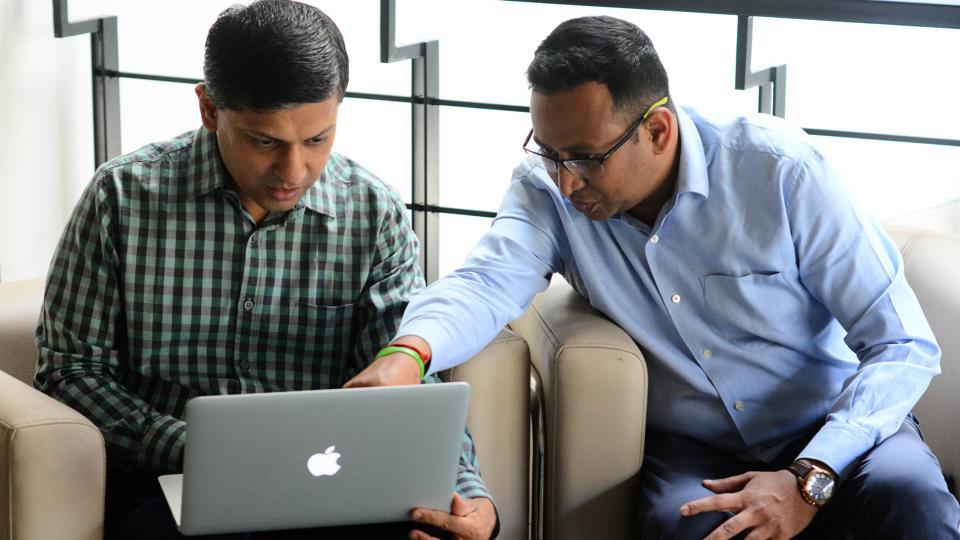
“I told him about how I wanted to do something that takes care of the problems faced by the logistics industry,” said Chougale. Bhat had just returned after a long stint in the US. He had worked in various companies, last being e-bay. He roped in his friend Nikhil Gandhi and hence was born Yoryo.
The enthusiasm and vigour with which they started however did not let common sense dim.
“Though I had been with DHL, I felt that we needed a wider perspective on the issues,” said Chougale.
UNDERSTANDING ISSUES
As a result the trio met atleast 40 prospective customers, big and small to understand what issues were bothering them.
“There were three problems that were common to most customers. They were about governance, logistics cost and real time operational data availability. Logistics planning decisions such as which vehicle to use, how to load a vehicle and which route to take are made in ad-hoc manner with no real time operational data. These inefficiencies leads to non-optimal planning with overall increase in logistics cost, ” said Bhat. Besides these, there were problems such as lack of in-transit visibility, missing turn around time for loading and unloading and no instant proof of delivery. The trio started work on all these areas late last year.
WHAT DID IT TAKE?
“After spending the initial three to four months to understand the customer requirements and business constraints, the information gathered was used to design and build the product. Pritam and myself drove the product architecture and design. We made sure that product is scalable and standardised as we moved forward. In logistics, distribution network of a company, product/stock keeping units dimensions, weight, volume are standardised and static.
“The dynamic nature comes from the daily dispatch needs across networks and the available transport capacity. What our algorithms do is to calculate the best possible route, load and vehicle, which will give the most economical run i.e. to give shortest route that will save time, distance and carry more volume,” said Gandhi. The co-founders said that with technology it becomes possible to run the logistic business in a transparent and fair manner.
”We had a two-pronged marketing strategy. One was feet on the street where we would approach customers we did not really know, mostly small and medium-sized enterprises. And the other was to tap customers in our network. Actually both strategies worked well for us,” said Chougale.
He is quick to add that it was the mentoring by the two TiE Pune charter members Ganesh Natarajan and Nitin Deshpande that changed the course of their journey. Based on their advice to think big, the co-founders started looking at business differently.
Since Bhat had worked with eBay he had an idea of the issues boggling the logistics industry in the USA.
“World over, under-utilization of transport vehicles is a big problem. Atleast 40% of trucks space is empty during the forward journey. This adds to the cost and carbon footprint,” he said. Just in few months they managed to get two large multinational companies as customers. “We cannot disclose their names due to non-disclosure agreement (NDA) obligations. In the first few months they have seen a saving of 15% in transport costs and 100% visibility of their transport movements. We have line up of five more customers in the coming months,” Chougale said.
THE WAY FORWARD
“As we work with multiple enterprise customers to optimise their logistics, we get the visibility of available transport capacity from attached transport providers. We have plans to explore how this excess capacity on certain routes can be shared without impacting the servicelevel agreements.
“This will open up opportunities for more co-loading between shippers and logistics service providers. Technology which provides reliable and secure way to enable these transactions will be key foundation for this. We believe that eventually sharing economy will pave the way and we will be able to capitalise on co-loading opportunities across the network to reduce transport costs,” Chougale said.
Yoryo is a logistics solution that allows that works on planning and scheduling: route planning and optimisation; load planning & optimisation; vehicle capacity economics and vehicle recommendation engine, among others.


