
 E-Paper



By the way | Losing Lahore in Chandigarh
She is hardly ever on Facebook. It’s been three years. She may have got married. She was planning to when we met three years ago. A lot has changed since. I can no longer take her to Aroma, the hotel in Chandigarh, to order some mutton and warqi paranthe from Lahore Chowk, and reciprocate her gesture of taking me to that restaurant in Lahore where we shared a plate of Amritsari kulche-chhole. The eatery has been renamed Lucknow Chowk.

 Prefer HTon Google


She is hardly ever on Facebook. It’s been three years. She may have got married. She was planning to when we met three years ago. A lot has changed since. I can no longer take her to Aroma, the hotel in Chandigarh, to order some mutton and warqi paranthe from Lahore Chowk, and reciprocate her gesture of taking me to that restaurant in Lahore where we shared a plate of Amritsari kulche-chhole. The eatery has been renamed Lucknow Chowk.
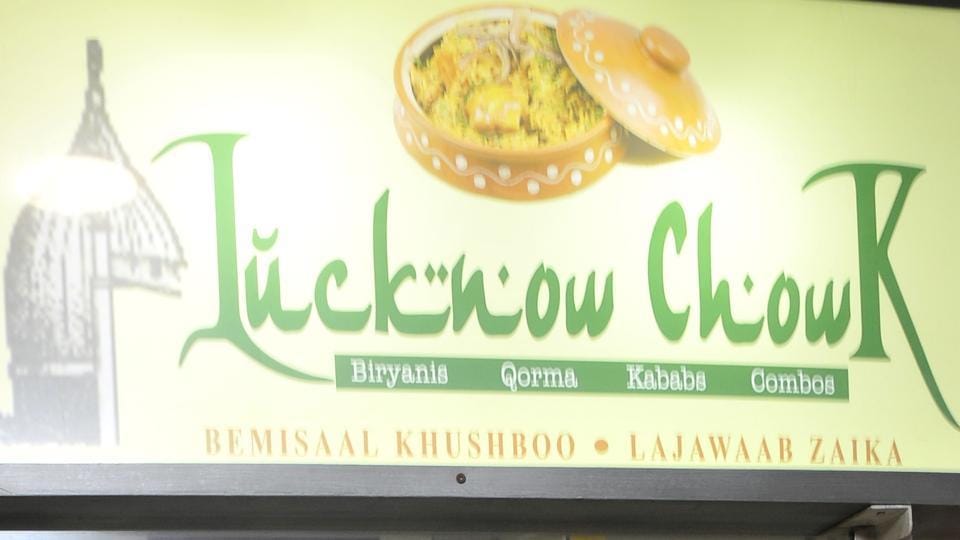
I am sure she will understand why. I still remember her bittersweet shrug of the shoulders when a procession led by some radical Islamists marched in front of Awari hotel in Lahore, protesting against the journalists’ group of which I was a part. Guns were being flashed, slogans raised against India. But I only remember her ironic smile. And those loud burps — our uninhibited, shameless celebration of our shared, sumptuous food — that remain the takeaway sound from that trip.
At Aroma, no guns were flashed, and no slogans were raised. There was a ruckus a couple of times, say the waiters. This was days after the mid-September terror attack in Uri, J&K, where 17 soldiers were killed. The owner denies that, but, whatever be the real reason behind the name-change, the India-Pakistan tension was surely the trigger. “There comes a time when one has to stop being too soft… I have sided with my feeling of nationalism and patriotism this time,” says the owner, Manmohan Kohli.
The groups that created the alleged ruckus were more direct, say the waiters. “These guys are killing our soldiers, and you are using their name! Take this board down,” they told the staff.
She will understand that feeling, too. “At any social gathering, it is customary for us to make fun of Indians. Many of us laugh at the jokes. When we are told about civilians dying in firing at the LoC, and of the families of our slain soldiers, many of us profess to go to war and finish this ‘panga’ off, once and for all. Many of us pledge never to watch Indian TV serials again,” she had told me.
But, often, the conversation veers towards the pointlessness of it all, she had added. “People don’t understand politics, or how we actually elect some people to govern our country. They are not supposed to govern our culture and minds,” she had said, making a face, pushing her chin down with lips pursed in an inverted smile. Her nose had become pointier in the process. The sulk face is the same across borders. “That’s just how we are, ji!”
As part of the visit, at a village-themed restaurant, our delegation of 15 — most of them Punjabi, a community that’s routinely run down for being too emotional about India-Pak relations — had not quite understood the logic of why we were there. What were our hosts trying to show us? Golgappe? Dal makhani? Makki di roti and sarson da saag? Where else could they have taken us in the heart of the Punjab? What else could they have made us eat? A Big Mac from Ronald McDonald’s Pakistan address, maybe.
Kohli underlines the same irony. His parents are from what is now Pakistan, and he was known to be extra-hospitable to visitors from his native chunk of land. They would’ve loved to have a restaurant named after Pindi here, he tells me. “But there comes a time,” he says, “when you need to tell the other side, ‘Look, yaar, we don’t like you!”
The food is the same anyway — this is what the owners, waiters, I and she agree on. “After all, there would have been no Chandigarh had Lahore not been given to us!” she had said.
The people, too, are the same; aren’t they? She had differed on that, and grown quite animated: “No, we have too many of these radical Righties. I am sure people can differ between politics and culture, between people and the power elites, between these agenda-driven idiots and the emotion-driven commoners. But this atmosphere of hyper-nationalism just does not leave room to think. You guys have much less of that.” She was speaking in the August of 2013. A lot has changed. She is hardly ever on Facebook. I want to ask her if they still serve Amritsari chhole-kulche at that restaurant. I hope she says yes.


