Pure, traditional aromatic basmati, once the main export of the three border districts of Amritsar, Gurdaspur and Tarn Taran, is now on the verge of extinction. Basmati-386 that once brought fame to the region for its aroma and the length of its grain, is now grown on only 10% of the area it was grown just five years ago, Punjab Agricultural University, Ludhiana, has estimated.
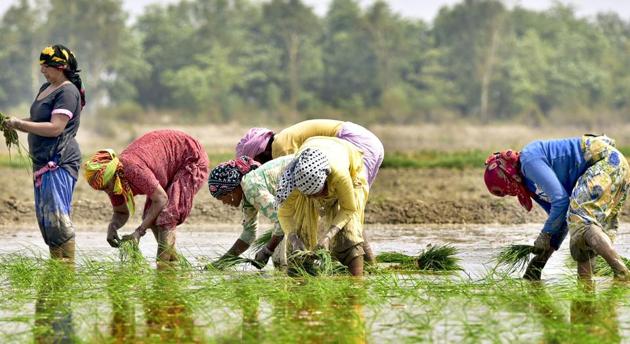
The reasons are many. These include the government’s failure to put a favorable export system in place with the main reason being the inadequate returns to the farmer. Falling yields of the variety with newer more productive varieties being discovered have added to the farmer turning away from sowing the variety.
‘Economics just does not add up’
Gurjit Singh, a farmer from Chaguwan village that famous for this variety, says, “This variety yields 8-10 quintals per acre. This is lower than other basmati varieties — PUSA-1121, PUSA-1509, Punjab-4 and 5 — that yield 15 quintals per acre to 18 quintals per acre.”
Satnam Singh, another progressive farmer from Kuhala village, said, “I sowed Basmati-386 on once acre and got only Rs 2,400 per quintal. I needed to earn Rs 5,500 per quintal to make ends meet. I sowed the variety only to make it alive.” He added that the variety was also sown a month later than normal paddy, delaying the sowing of the Rabi wheat. “This lowers the wheat yield by up to two quintals per acre. The government, however, in not serious on our concerns. Millers question quality of our produce on flimsy grounds,” he claimed.
“Cultivation of Basmati-386 is no longer viable as the PAU and other agri-universities in the country have developed other look-alike varieties which give better yield,” said Ashok Arora, owner of Dawat Basmati Rice, a prominent rice exporter. An attempt to make a similar variety, Basmati-370, also did not work as the aroma could not be reproduced.
{{/usCountry}}“Cultivation of Basmati-386 is no longer viable as the PAU and other agri-universities in the country have developed other look-alike varieties which give better yield,” said Ashok Arora, owner of Dawat Basmati Rice, a prominent rice exporter. An attempt to make a similar variety, Basmati-370, also did not work as the aroma could not be reproduced.
{{/usCountry}}Apart from the two villages of Chaguwan and Kuhala, the other villages famous for the variety are Brar, Khyala, Bullar, Chawinda. These villages fall in Chugawan, Harchha Chhina, Ajnala and Attari blocks, respectively. Tarn Taran’s Gaddiwind blocks and Gurdaspur’s Batala area also situated in this belt.
Chief agriculture officer Dalbir Singh Chinna said they aimed to ensure that growers got good price for their produce of older varieties to ensure survival.
Why has Basmati-386 withered away?
•The main reason being the inadequate returns to the farmer
•The government’s failure to put a favorable export system in place with
•Falling yields of the variety
•Newer more productive varieties have been discovered