In his most scathing attack on the Goods and Services Tax (GST) regime so far, Punjab finance minister Manpreet Badal warned the GST council on Saturday that the state may have “no option but to fall out of line” going by the alarming shortfall in its revenue.
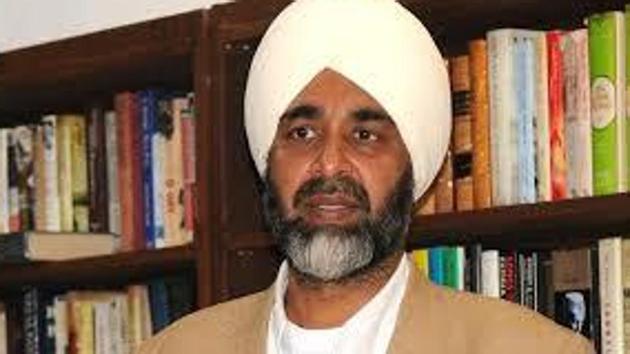
“Among finance ministers who should be more worried on the revenue account, I must be right at the top. Punjab’s revenue gap after GST is second highest in absolute terms,” he said at the council’s meeting at New Delhi on Saturday, adding “Our average revenue shortfall, between August 2017 and June 2018, is Rs 580 crore per month. The new assured revenue for 2018-19 is now a whopping Rs 1,786 crore per month but actual collections are still hovering around Rs 900 crore. Even if they touch Rs 1,000 crore, I will have a shortfall of Rs 10,000 crore for the year 2018-19. We expect this deficit to go up to Rs 14,000 crore by 2022.”
The state’s protected revenue for 2017-18 is Rs 1,567 crore per month.
He went on to add that if the state fails to protect its revenue in the run-up to 2022 (when the assured annual growth of 14% over 2015-16 revenue base for five years will come to an end), Punjab may have “no option but to fall out of agreed uniform rates”.
{{/usCountry}}He went on to add that if the state fails to protect its revenue in the run-up to 2022 (when the assured annual growth of 14% over 2015-16 revenue base for five years will come to an end), Punjab may have “no option but to fall out of agreed uniform rates”.
{{/usCountry}}The case of Punjab is curious. It’s a high-consumption state, and the expectations were that it would gain from GST, which is a destination tax. But, as an agrarian state, the taxes and cess it collected on foodgrains were its main source of tax revenue which have now been subsumed under the GST.
An internal study found that a major portion of the revenue shortfall is on account of these pre-GST taxes on foodgrains. But, even after excluding its impact, the revenue shortfall remains around 16%.
Manpreet later told HT that similar tax on foodgrains was also collected by states such as UP and Haryana, yet they are not such laggards. “I had requested the chief economic adviser (Arvind Subramanian) for taking up Punjab as a model case for understanding the revenue gap. He had agreed but has left the job now. We are concerned if the consumption basket of Punjab is materially different, and what could be the appropriate rates for Punjab, based on its consumption,” he said.
Through the posturing, Punjab is also making a case for better grants before the 15th Finance Commission which will be visiting the state in September. It wants to flag to the commission that the nearly 40% fall in revenue has belied its expectations, and its basket of consumption needs to be studied for a remedy. “I have placed it on record as I cannot fall from the cliff once the protected revenue from Centre stops coming in 2022,” Manpreet added.
Though prompted by economic exigency, Punjab’s stance also hints at the political posturing of Congress-ruled and even other non-BJP states. Joining ranks with West Bengal at Saturday’s meeting, Manpreet hit out at the law committee of the GST and accused it of “arrogance and trashing legitimate suggestions”. He then trained his guns at the “cooperative federalism” for which GST is given credit. “GST is a law that belongs to each and every state. The process of stakeholder consultation should be real and wider. Not enough time is given to study the agenda, which is too large. It is humanly impossible to make any effective contribution to a 400-page agenda at a short notice. I do not know with what face I can go back to my cabinet and people, and say that Punjab’s interests have been duly represented,” he said.
Punjab, in line with the Congress stand on the issue, has also been calling for a single rate under GST. The Punjab FM cited a World Bank report that said most countries have one or two rates. His last take was on how GST plays out on a humble egg: “I am informed that the rate of GST on poultry eggs is nil. But if you break it and sell the contents, the egg yolk is taxed at 5% and egg white at 18%!”