While farmers are facing a lot of difficulties in selling their wheat crop in grain markets, the per hectare yield of the crop speaks volumes about the hard work put in by them to achieve such results in Amritsar district.
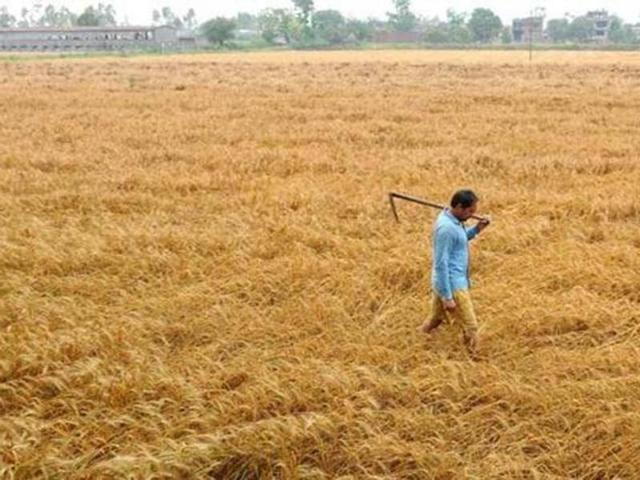
Results of the randomly selected agricultural plots across the district where wheat was sown in November have started pouring in at the office of the chief agriculture officer (CAO), and these indicate an increase in the yield of the crop over the previous year. Figures of 124 experimental plots of the 150-odd indicate the yield touched 4,500 kg per hectare. In comparison, the yield obtained from all 150 experimental plots last year was 3,940 kg per hectare.
Giving credit to farmers, CAO Balwinder Singh Chinna said here on Tuesday that the high yield was mainly due to the fact the farmers followed practices recommended by the agriculture department and the Punjab Agricultural University (PAU), Ludhiana. Farmers sowed the recommended varieties only and used the right amount of fertilisers, he said.
“Even when there were cases of outbreak of the yellow rust disease in certain parts of the district, farmers were quick to inform the agriculture block development officer concerned. The officers in turn advised them about fungicides or other chemicals to be used for controlling the disease, and they followed the advice,” said Chinna.
{{/usCountry}}“Even when there were cases of outbreak of the yellow rust disease in certain parts of the district, farmers were quick to inform the agriculture block development officer concerned. The officers in turn advised them about fungicides or other chemicals to be used for controlling the disease, and they followed the advice,” said Chinna.
{{/usCountry}}With the yield going up, the overall production of the crop, too, shot up this year. In the last season, from a total area of 1.88 lakh hectare under wheat, the production achieved in the district was 7.39 lakh tonne.
Chinna said the exact production figure will only be known when the entire wheat comes to mandis, as the arrival of the crop is still on. So the projected production this year is expected to be 8.46 lakh tonne.
He said the inclement weather in late March and early April only had a marginal effect on the crop yield. “The prolonged cold conditions helped in better and healthy grain formation as compared to last year,” he said.
The CAO said that as has been the case in the past few years, farmers in the district as well as those in other parts of the state preferred to sow the varieties produced by the Haryana Agricultural University (HAU). This was because of their high yield as compared to the Punjab varieties, he said.