With the approval of the Delhi Master Plan 2047 on August 12, the national capital has laid out a long-term blueprint to accommodate a population expected to approach 32 million by 2047 and meet the need for nearly 4 million additional homes.
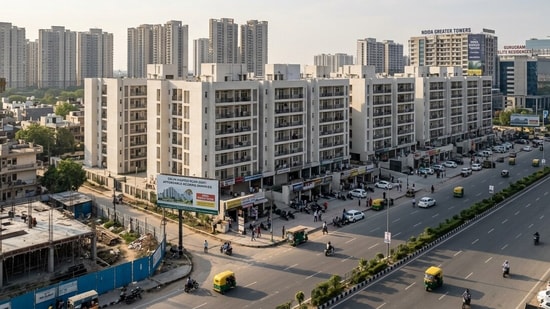
For Delhi’s real estate market, the plan could unlock opportunities in affordable housing, redevelopment and commercial development by bringing underutilised urban land into productive use. Provisions for land pooling, redevelopment, revised floor area ratio (FAR), Transit-Oriented Development (TOD) and faster building approvals could significantly expand housing supply.
Could Delhi pull buyers back from Noida and Gurugram? Will reverse migration follow?
The impact of MPD 2047 on NCR real estate is unlikely to be uniform. If large volumes of new affordable housing are delivered within Delhi at competitive prices, some price-sensitive buyers who currently consider Noida or Greater Noida could potentially return to the capital, say experts.
Having said that, rather than depressing prices in neighbouring cities, the influx of Delhi housing stock will trigger market segmentation and recalibrate demand based on product type, say real estate experts.
Differentiated real estate offerings
Delhi's strategy: The MPD 2047 prioritises compact, small-format homes, affordable rental housing complexes (ARHCs), and inner-city urban regeneration.
{{/usCountry}}Delhi's strategy: The MPD 2047 prioritises compact, small-format homes, affordable rental housing complexes (ARHCs), and inner-city urban regeneration.
{{/usCountry}}Noida and Gurugram’s advantage: Buyers migrate to Gurugram and Noida primarily for large-format modern lifestyle amenities, gated townships, expansive 3/4 BHK apartments, private clubhouses, corporate office proximity, not to mention dedicated parking. Delhi's land constraints prevent it from replicating these large-scale luxury projects at competitive price points.
Housing formats: Delhi’s fresh supply will come largely through brownfield redevelopment, TOD corridors, and peripheral village pooling. While this will cater to mid-income earners, end-users seeking high-end luxury, sprawling golf-course residences, or grade-A commercial corridors will continue to prefer regional hubs like Dwarka Expressway, Golf Course Road (Gurugram), or Sector 150 along Noida Expressway.
Gurugram and Noida: Limited vulnerability to Delhi’s housing push
Gurugram’s residential market is not simply a spillover market for Delhi. Its demand is increasingly anchored by employment, corporate offices and premium housing.
Knight Frank said Gurugram accounted for 42% of NCR’s residential sales and 50% of new launches in H1 2026, with significant development along corridors such as Dwarka Expressway and New Gurugram.
Cushman & Wakefield reported 8% year-on-year growth in Gurugram’s mid-segment residential prices and 2% growth in the luxury segment in Q2 2026.
The potential impact of additional Delhi housing supply comes at a time when both Noida and Gurugram have recorded substantial price appreciation.
According to Anarock Research, average residential prices in Noida rose 125%, from ₹4,795 per sq ft in 2019 to ₹10,780 per sq ft in Q2 2026. Gurugram followed with 117% appreciation, with average prices increasing from ₹6,150 per sq ft to ₹13,350 per sq ft over the same period.
Both markets have benefited from employment growth and rising demand. Noida’s growth has received an additional boost from the upcoming Noida International Airport, improved connectivity and the expansion of Global Capability Centres (GCCs). Gurugram, meanwhile, continues to benefit from its established corporate ecosystem and premium residential market.
Ankita Sood, National Director, Research, Knight Frank India, told HT Real Estate that MPD 2047 is unlikely to have an immediate impact on housing demand or prices in Gurugram and Noida.
“Both markets have evolved into established corporate hubs, with job opportunities serving as a key anchor for residential demand. Gurugram, in particular, has a more evolved market with significant product differentiation,” she said.
According to Sood, the impact could become more visible in Delhi over time, particularly as affordable housing and redevelopment are formalised. However, much will depend on the pace of land assembly, infrastructure development and approvals.
“Delhi needs to create strong residential anchors, including employment opportunities, amenities and dedicated parking, which remain challenges. Unlike Gurugram and Noida, which already have established corporate addresses, Delhi does not have an immediate equivalent anchor. Therefore, MPD 2047 could influence Delhi’s housing market over the longer term, but it is unlikely to materially alter prices in Gurugram and Noida in the immediate future,” she said.
MPD 2047 could create new development corridors
The plan could unlock development potential through provisions relating to ageing DDA housing, revised FAR, TOD and faster building approvals, experts said. Emerging corridors such as Narela and the Rithala-Kundli Metro alignment could also see greater residential, institutional and commercial development as connectivity improves.
For developers and investors, the focus could increasingly shift from current property prices to development rights, redevelopment potential, infrastructure readiness and access to public transport. Market participants, however, will need to distinguish between policy proposals and enforceable development rights until the plan and associated regulations are formally notified, said experts.
Delhi vs NCR: More of a market expansion than a zero-sum game
Mohit Goel, Managing Director, Omaxe Ltd, said MPD 2047 could bring meaningful new housing supply into Delhi through land pooling, redevelopment and higher-density development around transit and mixed-use corridors.
“However, I would not view this as a simple case of Delhi competing with NCR and putting uniform pressure on property prices. The impact will depend on where new supply comes up, which segments it serves and how quickly supporting infrastructure develops,” he said.
According to Goel, Delhi has a clear need for more homes closer to established employment centres, as many residents currently live farther away because suitable housing near workplaces is limited or expensive.
“New supply within the city can therefore meet genuine end-user demand rather than simply diverting demand from neighbouring markets. Redevelopment is equally important, as it can replace ageing and dilapidated structures while modernising established neighbourhoods,” he said.
He added that better connectivity to emerging growth centres could expand Delhi’s housing capacity. “For the wider NCR, I see this as a market-expansion story rather than a zero-sum competition. Different markets will continue to serve different price points, housing formats and employment needs,” Goel said.
What does MPD 2047 mean for property prices?
MPD 2047 is unlikely to immediately trigger a correction in Noida or Gurugram property prices. Instead, it could make Delhi more competitive over the longer term, particularly in affordable and mid-income housing.
For Noida, infrastructure, the airport, employment growth and connectivity are likely to remain the primary price drivers. Gurugram’s premium positioning, corporate employment base and differentiated housing stock could shield it from significant competitive pressure from additional Delhi supply, said experts.
The bigger question is whether MPD 2047 can move quickly from a policy framework to actual housing supply. If land pooling, redevelopment, TOD and faster approvals translate into projects at scale, Delhi could regain some housing demand currently flowing into NCR. If implementation remains slow, Noida and Gurugram are likely to retain their current advantages, added experts.
This is important as MPD 2047 is a long-term strategic vision spanning over two decades. Land pooling and brownfield redevelopment in Delhi face legal, structural, and land assembly bottlenecks. Supply will trickle in gradually over 10–20 years rather than flooding the market all at once, preventing any immediate price shocks in NCR, say real estate experts.
The impact on Gurugram is likely to be more limited, particularly in the premium and luxury segments. Gurugram’s residential demand is closely linked to its established corporate and employment ecosystem, while Noida has developed its own employment, infrastructure and connectivity-led growth story.
The key factor, therefore, will be execution. MPD 2047 is a framework rather than an immediate supply pipeline. The extent to which it affects housing availability and prices will depend on how quickly land is assembled, infrastructure is developed, approvals are secured and projects actually reach the market, say real estate experts.