
 E-Paper



Mangrove forests could be wiped out by rising sea levels in 30 years: Study
Mangrove forests are more likely to survive when sea-level rise is less than 5 millimeters (about 0.2 inches) per year, which is projected for low-emissions scenarios this century.

 Prefer HTon Google


Mangrove forests could disappear under rising sea levels by 2050 if the greenhouse gas emissions continue unabated, according a new study.
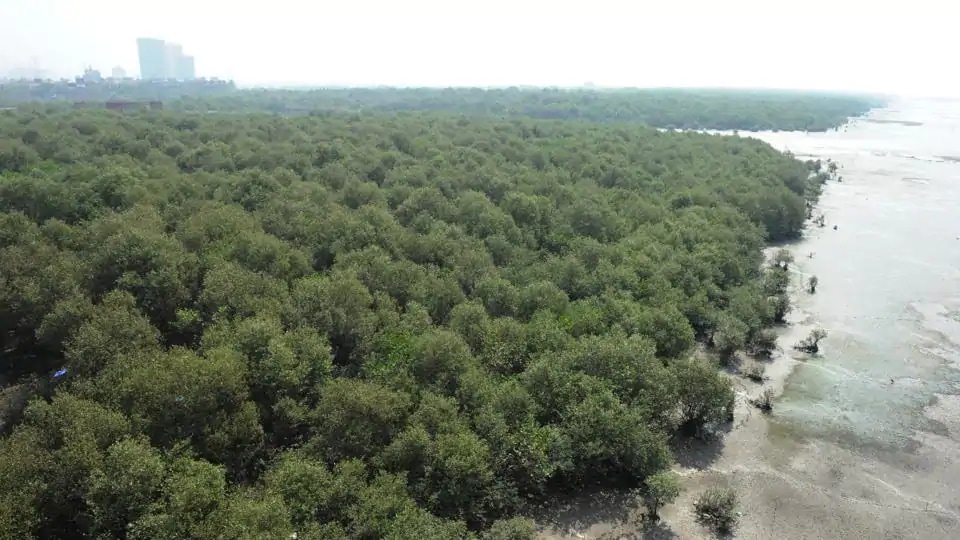
Examining sediment data from 78 mangrove ecosystems from the last 10,000 years, a team of researchers from Rutgers University found that if the sea level rises by more than six millimetres or 0.23 inches per year, the mangroves would be in danger of dying in just 30 years. They are more likely to survive when sea-level rise is less than 5 millimeters (about 0.2 inches) per year, which is projected for low-emissions scenarios this century.
These ecosystems, such as the world’s largest mangrove delta Sunderban spread across India and Bangladesh, are vital to storing planet-heating carbon dioxide. They act as buffers protecting coastlines from tropical storms and soil erosion. They are also very rich in biodiversity as they provide habitat to many species of tropical fish, providing livelihoods to coastal communities.
“If they disappear, there’s going to be imbalances in the number of fish and other species that rely on them,” co-author Erica Ashe, a postdoctoral scientist at Rutgers University, told Earther, according to a report in foxnews dot com.
“And that could have effects on other species, even ones that actually aren’t sheltered by these mangroves, because when the levels of different species change, that can affect the entire system,” Ashe added.
Benjamin Horton, chair of the Asian School of the Environment at Singapore’s Nanyang Technologoical University, told Thomson Reuters Foundation that losing mangroves “would mean there is even more carbon dioxide in the atmosphere, causing even higher temperatures and even higher rates of sea level rise.”
“We are very worried of a knock-on effect,” he said.
But they are being destroyed at rates three to five times higher than the average for forests and more than a quarter of the world’s mangroves have already disappeared, according to the United Nations, says the Thomson Reuters Foundation reports.
Around one-third of the Sunderban has been damaged by Cyclone Amphan which left a trail of destruction to life and property in West Bengal and Odisha last month , according to a preliminary assessment of the West Bengal forest department.
“Around 1500 sq km of forest area has suffered massive damage in the cyclone. The nylon net fencing that was set up to prevent tigers from straying into villages has also been damaged. There are no reports of any animals killed so far in the storm,” said Ravi Kant Sinha, chief wildlife warden of West Bengal.
However, there is still hope and it is not too late to save the mangrove forests.
“If we keep to the Paris Agreement and control emissions, it is not too late to save the world’s mangrove forests—because the lower emissions scenarios do not suggest sea-level rise to exceed 5 millimeters per year. However, under the mid- to high-emissions scenarios, we expect these thresholds to be exceeded,” says Neil Saintilan from Macquarie University in Australia, who led the study published in the journal Science.
Under the 2015 Paris Agreement, most world governments have pledged to keep global warming to “well below” 2 degrees Celsius (3.6F) above pre-industrial times and to strive for a lower limit of 1.5C.


