The mysterious metal cylinder that washed up on an Australian beach two weeks ago is likely debris from an expended third stage of a Polar Satellite Launch Vehicle (PSLV), the Australian Space Agency confirmed on Monday, “PSLV is a medium-lift launch vehicle operated by ISRO (Indian Space Research Organisation,” it said.
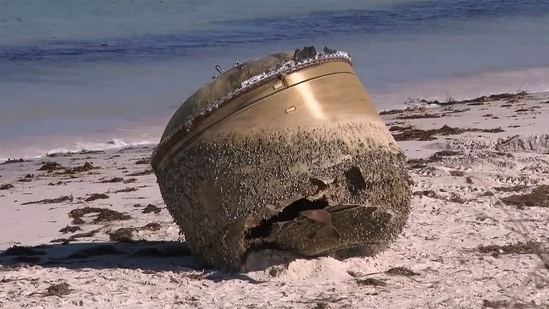
“We have concluded the object located on a beach near Jurien Bay in Western Australia is most likely debris from an expended third-stage of a Polar Satellite Launch Vehicle (PSLV). The PSLV is a medium-lift launch vehicle operated by ISRO,” the space agency tweeted.
A day after the object surfaced on July 16, the ISRO had confirmed to HT that the object was a part of PSLV upper stage but an old one.
Also Read: ISRO PSLV launch: 7 Singaporean satellites placed into intended orbits
ISRO chairman S Somanath had said, “This is a part of PSLV upper stage but an old one. It is not from a recent mission, it must be older." PSLV's third stage is a solid rocket motor that provides upper stages high thrust after the atmospheric phase of launch.
'Debris with Australian agency'
The Australian Space Agency said that the debris will remain in storage and it was working with the ISRO, to seek confirmation to determine the next steps, including considering obligations under the United Nations space treaties.
{{/usCountry}}The Australian Space Agency said that the debris will remain in storage and it was working with the ISRO, to seek confirmation to determine the next steps, including considering obligations under the United Nations space treaties.
{{/usCountry}}“The Australian Space Agency is committed to the long-term sustainability of outer space activities, including debris mitigation, and continues to highlight this on the international stage,” it further said.
The object's appearance had caused a frenzy on social media, with people speculating the origins of the debris. Its appearance also coincided with the timing of the launch of the ISRO moon mission Chandrayaan 3 - set off in space on July 14.
According to experts, the detached rocket components are not dangerous and are usually left behind by the space launch of all major space agencies. The parts of the rocket detach during different stages when its role in the mission is completed. Agencies carefully plan well in advance about where these objects should land to ensure that they don't pose any threat to the people.