
 E-Paper



What happens to Earth in 200 million years? A new supercontinent forms, say scientists
Scientists have predicted the possibility of the closure of Pacific Ocean and the collision of Asia with the Americas to create a supercontinent called 'Amasia'.

 Prefer HTon Google


Over the next 200 to 300 million years – as the Pacific Ocean shrinks – Asia will collide with the Americas to form a new landmass – a supercontinent that scientists have dubbed 'Amasia'.
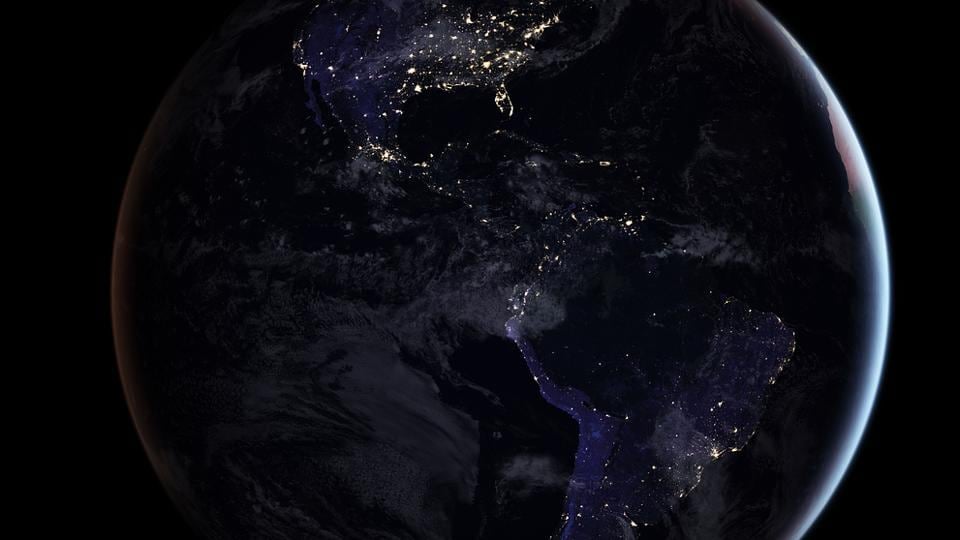
Researchers at Australia's Curtin University and those in Peking University in China used a supercomputer to model the future land formations and discovered that the shift in tectonic plates could eventually result in the collision of Asia with the Americas.
"Over the past two billion years, Earth's continents have collided together to form a supercontinent every 600 million years, known as the supercontinent cycle. This means that the current continents are due to come together again in a couple of hundred million years," said Dr Chuan Huang, the lead author of the paper published in the National Science Review.
"Our results preclude the possibility of assembling the future supercontinent Amasia through either introversion by closing the Atlantic and Indian oceans, or orthoversion by closing Arctic and Caribbean seas. Instead, Amasia could only have an extroversion assembly through the closure of the Pacific Ocean due to the weaking of the oceanic lithosphere with time."
"…some believe the Pacific Ocean will close (as opposed to the Atlantic and Indian) when America collides with Asia. Australia is also expected to play a role in this important Earth event, first colliding with Asia and then connecting America and Asia once the Pacific Ocean closes,” Huang added.
Scientists said the new supercontinent will form first in the northern hemisphere and then slowly move south toward the equator. If this does happen, it means that Antarctica will still remain secluded at the southern pole.


