
 E-Paper



The South Korea story: Red Devils rewrote World Cup history, but left a trail of uncomfortable questions
South Korea became the first Asian nation to reach a World Cup semi-final, stunning Europe’s giants, but controversy continues to shadow that historic run.

 Prefer HTon Google


South Korea's run at the 2002 FIFA World Cup remains one of the most extraordinary stories in football history. It was only the second time the tournament had been held in Asia, the first coming two decades before Qatar 2022, when South Korea and Japan agreed to co-host the event after rival bids and a unique FIFA compromise.
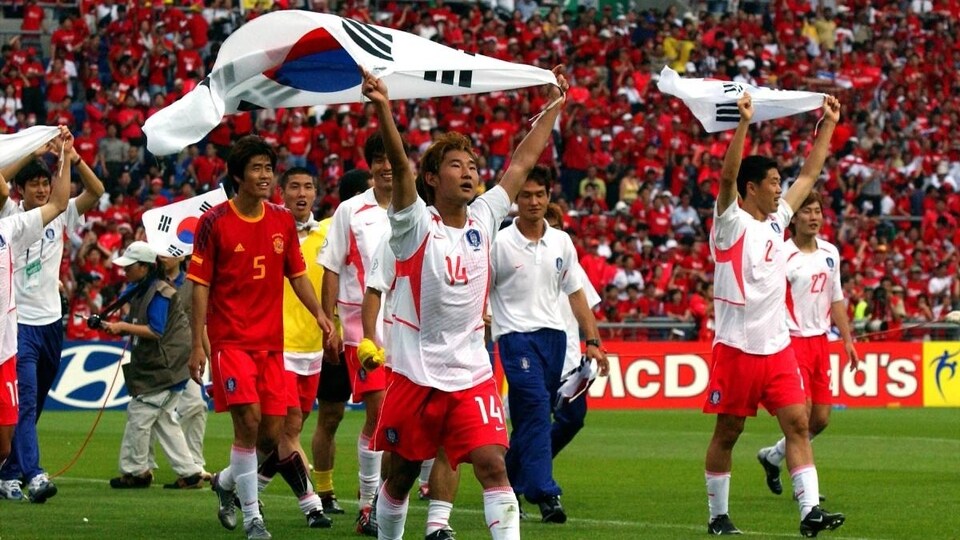
The 17th edition of the World Cup is remembered for two defining storylines. The first came in Yokohama, where Ronaldo completed his redemption arc with a brace against Germany to secure Brazil's record fifth world title. The second unfolded across South Korea, where the hosts achieved something no Asian nation had ever managed before — reaching the semi-finals.
Under the guidance of Dutch coach Guus Hiddink, the Taeguk Warriors transformed from World Cup underachievers into one of the tournament's biggest sensations. Yet, 24 years later, their remarkable run remains inseparable from the debates that followed it.
ALSO READ: Ronaldo, 1998 and 2002: The mystery football never solved, and the answer it never forgot
Placed in Group D, South Korea opened with a convincing 2-0 win over Poland in Busan before drawing 1-1 with the United States. They then stunned a star-studded Portugal side 1-0 to finish top of the group. Hiddink's team played with intensity, discipline and belief, eliminating both Portugal and Poland while advancing alongside the United States.
The knockout rounds were where South Korea truly captured global attention — and where the controversy began.
In the Round of 16, they defeated Italy 2-1 after extra time. Francesco Totti was sent off for simulation in a decision that enraged the Italians. Damiano Tommasi had a goal ruled out, while Ecuadorian referee Byron Moreno became the centre of worldwide scrutiny. Italy exited the tournament furious, convinced they had been wronged.
The quarter-final against Spain only intensified those feelings. Spain had two goals disallowed, including one from Fernando Morientes, in decisions that remain heavily debated. After 120 goalless minutes, South Korea prevailed in a penalty shootout. Spanish players and media were left incensed, and accusations of poor officiating grew louder.
Germany, however, proved a step too far. In the semi-final, Michael Ballack scored the only goal of the game with 15 minutes remaining, ending South Korea's dream run. A 3-2 defeat to Turkey in the third-place playoff followed, leaving the hosts in fourth place, still the best finish by an Asian nation in World Cup history.
Yet the achievement was quickly overshadowed by questions surrounding the officiating. Moreno was later banned by FIFA for misconduct in unrelated matches. Several key decisions from South Korea's victories over Italy and Spain continued to be dissected by analysts, journalists and fans for years. The debate over whether South Korea's run was purely a sporting miracle or aided by controversial refereeing decisions has never fully disappeared.
Beyond the controversy, the historic performance had a major impact on South Korean football. It ignited unprecedented football fever across the country. Millions filled public squares dressed in red. The national team became a symbol of pride and belief. Park Ji-sung emerged as a global star before later winning the UEFA Champions League with Manchester United. Hiddink was granted honorary South Korean citizenship, a rare honour that reflected the scale of his achievement.
More than two decades later, South Korea's 2002 campaign remains one of football's most fascinating chapters, a story of a nation that dared to dream, a team that shattered expectations, and a tournament that continues to provoke questions the sport has never fully answered.


