
 E-Paper



A voice with the stick: Germany captain Lorenz is more than just a hockey player
The 26-year-old runs a blog where she pens her thoughts about issues ranging from women empowerment, racism, gender and sexual inclusivity

 Prefer HTon Google


Nike Lorenz is captain of the Germany team currently atop Pool A in the FIH Women's Hockey Olympic Qualifiers in Ranchi. A two-time Olympian who was part of the German bronze-medal winning team at the 2016 Rio Olympics, she has more than 150 international appearances. But Lorenz is more than just a hockey player. And she makes it a point to have an identity beyond the field.
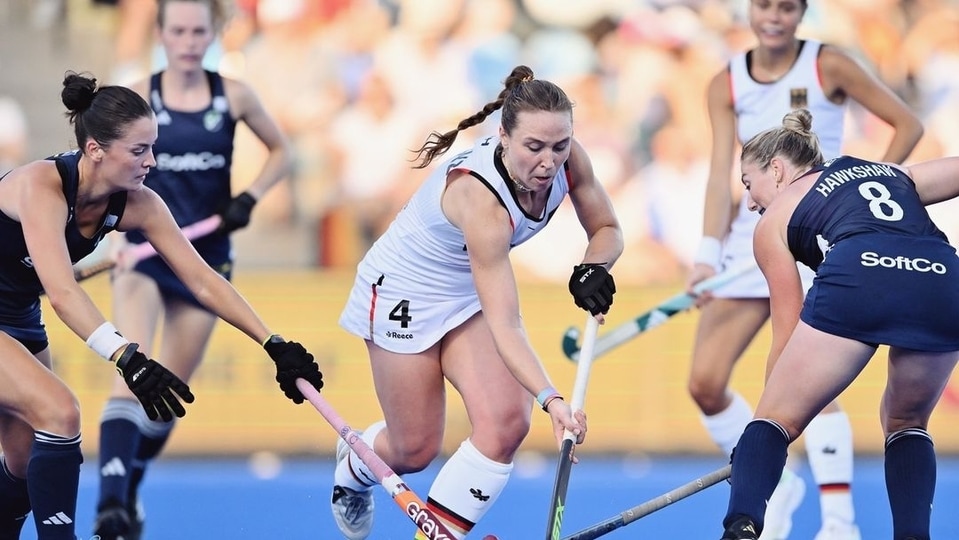
The 26-year-old runs a blog titled, "Writing Out Loud", where she pens her thoughts about issues ranging from women empowerment, racism, gender and sexual inclusivity through a series of articles. The platform is not all social and political; there are also essays about her Rio Games Village experience, coffee, books and living through the Covid pandemic.
Yet there are certain topics that she feels strongly about. At the Tokyo Olympics in 2021, Lorenz wore a rainbow-coloured band on her socks in support of the LGBTQ movement, but not before the International Olympic Committee had to approve it. Letting her thoughts out on these issues through a blog was “better for my mental health”, she said. It helped that she enjoyed writing in school, and that she feels the urge to use her influence as a top athlete in Germany to take these discussions to a wider audience.
"That makes me want to speak up," Lorenz told this paper. “In a lot of these cases, I'm on the privileged side. For example, when I talk about the female choice or racism, I read so much about people saying they need allies, that I feel the need to step up on these issues.”
Some topics in her blog also have a personal touch. There's one on "disordered eating" that an elite athlete, especially woman athlete, often goes through. "Women get judged so much on how they look. We need to move away from the body image, especially in female sports," she said.
Environment is another issue close to her heart. Lorenz works part-time in the sustainability department of a supermarket chain in Germany, where part of her job is to implement policies around deforestation regulations and trying to sell only those items "for which they don't need plants and trees to be killed", she said.
Articles on racism come up quite often. In an August 2020 essay titled 'An anti-racism campaign from sport', she writes: "We want to make the issue of racism in Germany, more precisely in sport, tangible". In a February 2021 article, she invites German sprinter Yasmin Kwadwo to discuss the subject and ways to fight racism in their country.
The fact that people are starting to talk about it back home is a starting point for real change, which, she believes, has been “really slow”.
“We need to give such topics a voice, basically. Get people to talk about it; also show anyone in charge that we do care about this, so you better do something about it," she said. “But yes, it's still a long way to go.”
The two-time Olympian going for her third also senses a semblance of shift within the sporting world in terms of sportspersons putting such issues in the spotlight — Naomi Osaka during Black Lives Matter, for instance — and governing bodies listening and budging to athlete voices.
“At times you see them changing rules. Women can now play in shorts as well and not just skirts, or in different sports they can wear longer trousers,” Lorenz said.
“But I feel for now, it's still a lot of female voices speaking up. So, they go like: 'they are female issues’. And they often get pushed to the side a little. For it to become more rounded, you need more men to get into our standpoint. You need more people, and the privileged people, to say, 'I'm concerned about this as well, and we need to get this right even though we're not affected’.”
One argument to that, however, is for people not fully informed about certain subjects, silence is the best answer at times. Most of India’s top sportspersons stayed away from commenting during the wrestlers’ protests around the sexual harassment allegations against the then federation chief last year.
“I get that you have to be informed to speak up,” Lorenz said. "But I feel like if you see something that you agree with, just say that and maybe not anything else. That's a stronger point of view than not saying anything. I'm not provoking everyone to be an activist; because I know how much energy it takes. But it's easy enough for people around you to say, ‘I agree, I'm right behind you’. I see a lot of single voices that are alone and strong, but they need to be backed up.”
Lorenz said she would love to write more, but with full-time hockey and a part-time job to juggle, time remains an obstacle. Not that she wants to limit herself. After the Tokyo Olympics where Germany finished sixth, Lorenz took up a Masters course in entrepreneurship, innovation and management in Nottingham while also playing hockey for the University of Nottingham. The balancing act, while also putting her thoughts into words, only helps her hockey.
"It's really important for me as a person. I'm very cautious that I also have a different identity, which is more than just hockey," she said. “Even while I’m here, it helps me to think about something else. That’s why I have the blog. If I have just hockey, it could make me too narrowed in my view.”


