E-Paper



How Ahmedabad is gearing up for 2030 Commonwealth Games
Ahmedabad is expected to stage many tournaments in the years ahead as the city prepares to showcase its preparedness to stage the 2036 Olympics.

 Prefer HTon Google


Ahmedabad: The union cabinet giving its backing for bringing the 2030 Commonwealth Games to India is expected to give Ahmedabad, identified as the host city, fresh momentum to its efforts to expand the city’s world class sports and urban infrastructure.
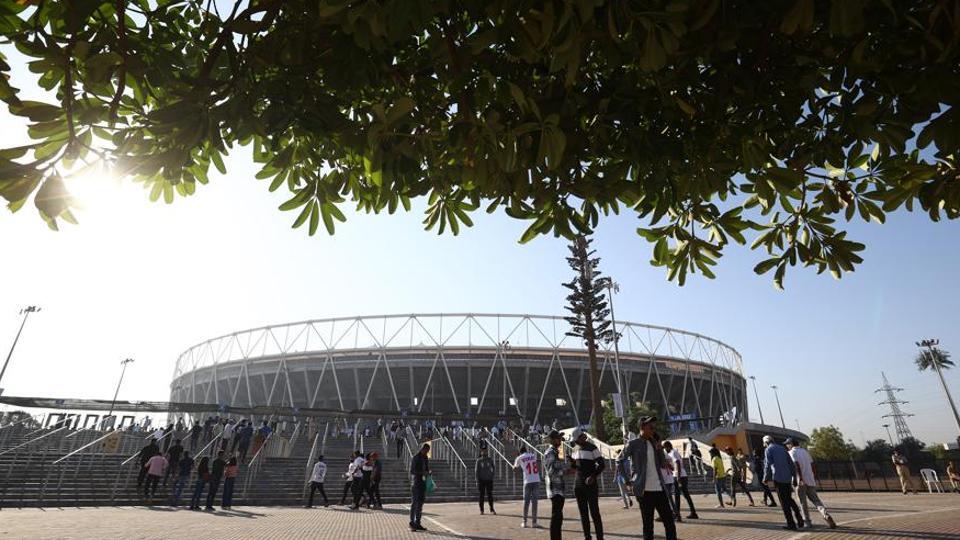
The Sardar Vallabhbhai Patel Sports Enclave will be the central venue, anchored by the Narendra Modi Stadium in Motera, the world’s largest cricket ground with a capacity of over one lakh.
The city has already started demonstrating its capability to host global events.
The weeklong Commonwealth Weightlifting Championship 2025 opened on August 24 at the newly completed Veer Savarkar Sports Complex in Naranpura. Almost 300 lifters from 30 Commonwealth nations and territories are competing across senior and age categories with 144 medals at stake. The competition serves as a qualifying event for the 2026 Commonwealth Games in Glasgow.
This complex has been developed as a multi-sport hub with an aquatics centre, an indoor multisport arena, a Centre for Sports Excellence, and community sports facilities built at a projected cost of around ₹850 crore.
The championship is the first in a string of international competitions Ahmedabad will stage in the years ahead as the city prepares to showcase its preparedness to stage the 2036 Olympics which India is keen to host.
The Asian Aquatics Championship is scheduled for September-October at facilities within the Sardar Vallabhbhai Patel enclave, a 300-acre complex.
“The Sardar Vallabhbhai Patel Sports Enclave is under development and will feature 10 new stadiums with permanent and temporary venues for sports like gymnastics, skateboarding, softball and tennis. This will be the main venue for the Commonwealth Games in 2030,” said an official close to the development who spoke on condition of anonymity. The enclave will include a football stadium, aquatics centre, 18,000-seat indoor arena, Athletes Village and hotels. “The enclave can serve as an Athletes’ Village for 3000 athletes,” the official added.
Gujarat Sports Infrastructure Development Corporation Limited (GSID), the nodal agency for the development of sports infrastructure in the state, will build six sports complexes at a budget of around Rs.6000 crore, a majority of which will go for the Sardar Patel Sports Enclave in Motera, he added.
A multimodal transport hub is being built in Ahmedabad and state capital Gandhinagar, which includes Western Railway tracks and city bus services. Apart from this, mega sports infrastructure has been planned in an area of one lakh square meters on SG Highway, which will connect areas like Ambli, Ghuma, Jodhpur, Shella and Vejalpur.
There is also a plan to develop five small cities around Ahmedabad (Kalol, Sanand, Dahegam, Bareja, Mehmedabad) as satellite towns, which will give a boost to the preparations for the mega sporting event, said sources.
“Apart from the Sardar Patel Sports Enclave and Naranpura stadium, work is on at the Gujarat Police Academy in Karai where a 143-acre site is being transformed into a sports hub. It will house an athletics stadium and facility for hosting Rugby 7s and football. An indoor multipurpose arena is designed for weightlifting and other events, alongside an integrated shooting centre for amateur and professional shooters,” he added.
With the Sabarmati riverfront currently under construction in Phase-II, it can be a suitable place for events like water sports, said a second official. It is planned to build international standard infrastructure on a stretch of 2 km on the riverfront, in which a water barrage is being constructed, he added. At Sanskardham educational institute in Ahmedabad, infrastructure is being developed for combat sports.
The Ahmedabad Municipal Corporation (AMC) also plans to build five large sports complexes with an estimated budget of ₹200 to 250 crore.
In 2026, the city will host the Asian Weightlifting Championship and the Archery Asia Para Cup, while in 2029 it will stage the World Police and Fire Games across Ahmedabad, Gandhinagar and Ekta Nagar. From November 22 to 30, 2026, The Arena by TransStadia in Ahmedabad will host all Group D matches of the AFC U-17 Asian Cup qualifiers.
Ahmedabad’s preparations extend beyond venues to transport and urban planning. The Mumbai–Ahmedabad bullet train corridor is expected to complete its Gujarat section by December 2027 and the entire line by December 2029, a timeline aligned with the Games. The Sardar Vallabhbhai Patel International Airport is undergoing a ₹3,130 crore expansion with a new terminal.
Metro and BRTS extensions are underway, while the municipal corporation has proposed a seven-kilometre sports-themed corridor from the Sabarmati Multimodal Hub to Koteshwar Metro Station. Road-widening projects around Naranpura and Motera are being advanced to improve access to stadiums.
Accommodation facilities are also being scaled up. Land has been earmarked for Athletes’ Village with integrated housing, dining, healthcare and training amenities. Several hotels are being planned and upgraded near major sporting venues to meet international standards. The Ahmedabad-Gandhinagar twin-city development is being accelerated so both cities can jointly support the international gaming events.
A state government official said that hosting the 2030 Games will not only promote sports and youth participation but also generate employment, attract investment and further position India as a hub for multi-sport international events.