
 E-Paper



In a heartless discipline, Ravi Dahiya chases perfection
"For an athlete, the quest for contentment is endless and perennial. From outside, it may appear that my life has changed drastically, but frankly, nothing much has changed," Tokyo Olympics silver medallist Ravi Dahiya said.

 Prefer HTon Google


The familiar unruly mop of hair sits pretty on his head, the sculpted triceps glisten from a distance, and the legs — heavy and leaden — power on like well-oiled pistons on the stationary bike. Ravi Dahiya is hurtling towards an imaginary target, his pursed lips and blank gaze intact. It reads Paris 2024.
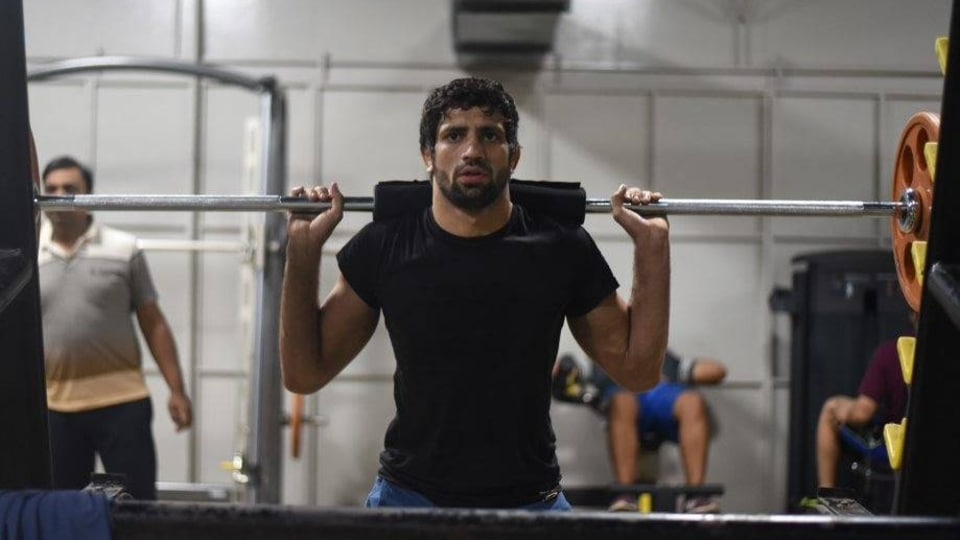
"That's the ultimate goal," he mumbles, more as a reminder to himself than an inane response. "But it is equally important to stay in the present. After Tokyo, a lot of people have asked me about my goals for Paris, but sport is a heartless discipline. In wrestling, your career can end in a snap. That's why it is important to not think too far ahead," says Dahiya, who won a silver in his maiden Olympics last year after going down to Russian Olympic Committee’s (ROC) Zavur Uguev 7-4 in the 57kg final.
Despite the glory, the enduring image of that August evening remains that of a crestfallen Dahiya forcing a smile for the cameras. Nine months on, acceptance has finally arrived.
"I was really sad. I have immense respect for that silver, but in wrestling, you never know when are you going to play an Olympic final again. Each year, a new crop of talented wrestlers comes through, your game is studied threadbare, techniques evolve, weights change. A lot can happen in an Olympic cycle. So, when you have that elusive chance to create history, you better do it. I knew I had fluffed my chance, and that hurt me a lot," he says.
"But, I have moved on now. It took me a while. The disappointment of missing an Olympic gold cannot and should not go away easily."
For a euphoric nation though, it was more a case of winning silver than losing gold. Awards and accolades followed, and closer home, a life-size poster came up at the entrance of Chhatrasal Stadium. In fact, the usually uptight coaches organised a 'DJ night' on Dahiya's return where the boys grooved to Haryanvi and Punjabi pop till the wee hours as the Olympic medal was passed around for all to feel.
The picture of a victorious Dahiya standing beside a fallen Nurislam Sanayev of Kazakhstan, in the Olympic semi-final that he won by fall after being 2-9 down, now hangs in the Chhatrasal training hall, next to the giant frame of Sushil Kumar receiving his Khel Ratna. It is a poignant passing-the-baton illustration at the famed wrestling nursery, a fair degree of serendipity notwithstanding. Coaches who once showed young trainees clips of Sushil Kumar and Yogeshwar Dutt now groom the next batch with Dahiya's videos.
The 24-year-old, who came to Chhatrasal 15 years back from Sonipat's Nahri village, understands the fickleness of fame, or so he claims. "When I took up wrestling and came here, I didn't know of Sushil Kumar or Yogeshwar Dutt. I just loved to wrestle, and gradually these iconic figures became an inspiration. Now, I am told I inspire people. It feels good, but a few years later, someone will replace me too. So, I don't read a lot into these things."
"I don't think the moment to look back at my journey or think of my legacy has arrived yet. There is still a long way to go and I don't want to sit on my laurels. I am happy, but not satisfied. For an athlete, the quest for contentment is endless and perennial. From outside, it may appear that my life has changed drastically, but frankly, nothing much has changed."
That means he still wakes up at 4:30 am, hits the mat at 5, and proceeds to punish his body in an unforgiving four-hour mat session, five days a week. The success at the Olympics was followed by a gold at the Asian Championships in Ulaanbaatar, Mongolia, last month, making him the only Indian wrestler to win three consecutive continental championships.
True to form, Dahiya lists the achievement as another "happy but unsatisfied" landmark. "I am not perfect, and till the time perfection eludes me, I won't rest," he says.
"Of course, Olympics gold remains the larger goal, but that doesn't mean you ignore everything else in between. Currently, I am focussed on bringing home a gold medal at the Commonwealth Games," he adds. That shouldn't be a problem, given India's pedigree at CWG. With 102 medals in the sport, India are the second most successful wrestling nation behind Canada (135) at the CWG. In the last edition, India's 12 wrestling medals were the most by any nation.
In fact, India have won gold in Dahiya's weight class (57 kg) in the previous two occasions of the Games through Amit Dahiya in Glasgow in 2014 and Rahul Aware in Gold Coast four years later. Dahiya is aware of the history but is far from being bogged down by it.
"We have a very good record at CWG, and I am confident of keeping up the tradition," he says.
Currently nursing a twisted left ankle — he won the CWG trials grappling through the discomfort — Dahiya will be in action in Rome Ranking Series next month where he will compete in the 61 kg class. In fact, he plans to oscillate between 57 kg and 61 kg categories till Paris Games before thinking of moving to the higher weight class (65 kg).
"It is quite tough to maintain the weight (57kg), so I will compete in the 61 kg category wherever possible. But since the next Olympics are just two years away, I am not thinking of changing weight class anytime before that," he says.


