
 E-Paper



5 James Bond gadgets you didn’t know existed in real life
James Bond movies introduced gadgets that seemed impossible. Here's how some of his spy tools inspired real-world technology we use today.

 Prefer HTon Google


James Bond movies have long shown audiences gadgets that seemed impossible. Yet many of these fictional devices inspired real-world innovations over the years. From X-ray glasses to spy microchips, technologies that once belonged only on the silver screen are now influencing medicine, defence, and engineering. Intelligence agencies even experimented with Bond-style devices during the Cold War, proving that fiction can shape reality.

X-Ray Glasses
In The World is Not Enough (1999), Pierce Brosnan’s Bond wears X-ray glasses designed to reveal hidden weapons. While they never truly saw through clothing, the concept inspired medical technology. Evena Medical developed the Eyes-On Glasses System, which uses near-infrared and 3D imaging to visualise veins beneath the skin. This helps healthcare professionals locate veins for IVs or blood draws. Although Evena Medical eventually went bankrupt in 2017, the idea brought us closer to the vision of real-life “X-ray” vision.
Also read: 4 Smart home upgrades you can get for less than $50, here’s how
Bionic Arms
Dr. Julius No, the villain in Dr. No (1962), replaced his lost arms with mechanical prosthetics. Modern prosthetics have advanced far beyond that. Devices like the i-LIMB hand allow users to control individual fingers using residual muscle signals, enabling natural movement and precision. While these arms do not give supernatural strength like Dr. No’s, they provide independence and functionality to amputees.
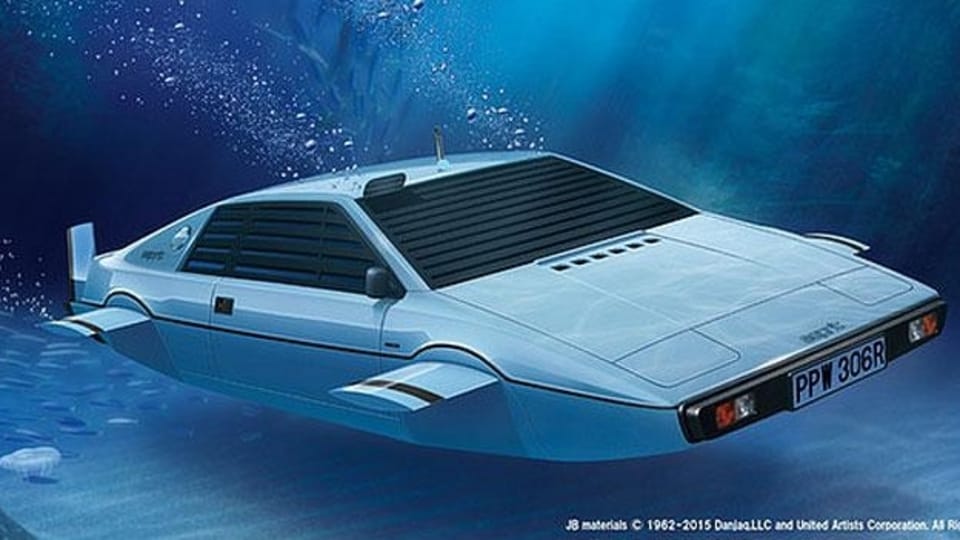
The Submarine Car
In The Spy Who Loved Me (1977), Bond drives a Lotus Esprit that transforms into a submarine. While no car fully matches that capability, amphibious vehicles like the Gibbs Aquada can travel on land and water, reaching high speeds on both. Elon Musk even purchased the original Lotus prop, considering a real-life project, but the design ended up inspiring Tesla’s Cybertruck aesthetics more than a functional submersible car.
Also read: From AI robots to smart locks: 7 Futuristic gadgets at CES 2026 you can actually buy in 2026
Biometric Weapon Security
Bond’s Walther PPK in Skyfall (2012) fires only when held by him, thanks to a palm-print sensor. Today, biometric guns such as the Biofire Smart Gun use fingerprint and facial recognition to ensure firearms operate only for authorised users, aiming to reduce theft and misuse.
Also read: Samsung introduces Galaxy Book 6 series with Intel Core Ultra series 3 processors
Microchip Implants
In Casino Royale (2006), Bond gets a microchip that tracks his location and vital signs. Modern implants serve similar purposes, though differently. RFID chips track pets and livestock, while neural implants like those from Neuralink allow users to control devices or prosthetics using brain signals. What was once spy fiction now intersects with neuromedical innovation.
In short, James Bond movies continue to inspire engineers and scientists. While we may not have all gadgets exactly as 007 imagined, the line between cinematic fantasy and real technology is narrowing.


