
 E-Paper



Chandrayaan-3's most critical part: Last Moon orbit speed to be 6,000km/h; Landing limit 10km/h
Chandrayaan-3 mission challenges include transferring from horizontal to vertical direction and minimizing fuel usage.

 Prefer HTon Google


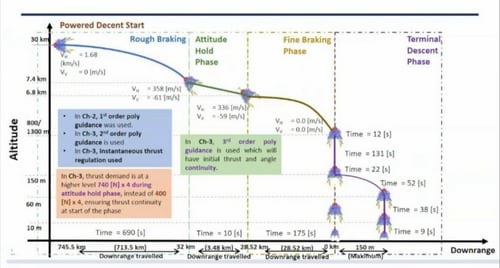
Chandrayaan-3 has to decrease its speed from about 1.68km/s (6,048km/hr) horizontally, changing direction to make the craft vertical and finally bringing it to zero after making a soft landing on the lunar surface, “this is the most critical task,” said the Indian Space Research Organisation (ISRO) Chief S Somanath. The lander's touchdown test limit is only ≤ 3.0 m/sec (10.8km/hr) vertical velocity.
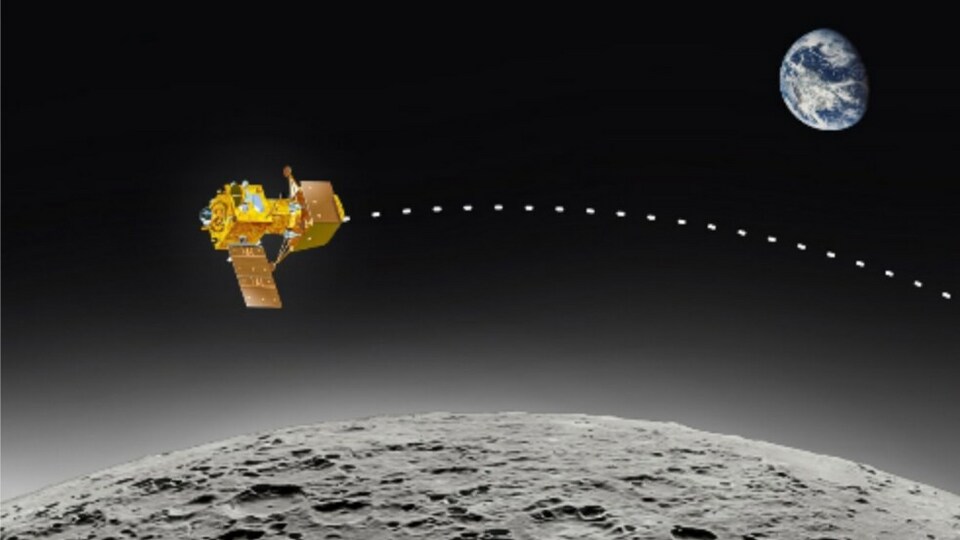
Chandrayaan-3 LIVE Updates: ISRO successfully performs third lunar-bound manoeuvre, spacecraft moves closer to Moon
“The ability to transfer from horizontal to vertical direction is the trick we have to play here. Here only we had the problem last time,” Somanath said during a talk on ‘Chandrayaan-3: Bharat’s Pride Space Mission’, hosted by the non-profit organisation Disha Bharat.
Chandrayaan-3 will be manoeuvred into a vertical position through a series of steps, aiming for a safe lunar landing. This step is vital due to ISRO's previous failure to successfully land its lander on the Moon's surface in the Chandrayaan-2 mission.
The ISRO chief mentioned that the challenge also involves minimising fuel usage, ensuring accurate distance calculations, and proper functioning of all algorithms.
READ HERE - Chandrayaan-3: Why did Chandrayaan-2 lander fail? Why is it so difficult to land on Moon?
Vikram Lander's touchdown specifications
Landing craft maximum mass at Lunar touchdown: 800 kg
Vertical Velocity: ≤ 2 m/sec
Horizontal Velocity: ≤ 0.5 m/sec
Slope: ≤ 12 degree
Touchdown test limits for Vikram Lander
Vertical Velocity: ≤ 3.0 m/sec (10.8km/hr)
Horizontal Velocity: ≤ 1.0 m/sec
Slope: ≤ 12 degree
Also check: Chandrayaan-3 shares first-ever images after entering Moon's orbit
Chandrayaan-3 mission milestones: A detailed timeline
July 6: ISRO announces Mission Chandrayaan-3 launch date of July 14 from Sriharikota's second pad.
July 7: Successful vehicle electrical tests completed.
July 11: Comprehensive 24-hour 'Launch Rehearsal' simulating the entire launch process concludes.
July 14: LVM3 M4 vehicle launches Chandrayaan-3 into designated orbit.
July 15: First orbit-raising manoeuvre successful, reaching 41762 km x 173 km orbit.
July 17: Second orbit-raising manoeuvre places Chandrayaan-3 at 41603 km x 226 km orbit.
July 22: Fourth orbit-raising manoeuvre establishes spacecraft in 71351 km x 233 km orbit.
July 25: Another successful orbit-raising manoeuvre.
August 1: Chandrayaan-3 inserted into translunar orbit (288 km x 369328 km).
August 5: Successful lunar orbit insertion (164 km x 18074 km).
August 6: Lunar orbit lowered to 170 km x 4,313 km.
August 9: ISRO carefully moves the spacecraft's path lower in its orbit around the moon. It has achieved a lunar orbit of 174 km x 1437 km
August 14: Chandrayaan-3 gets closer to the moon's surface in another controlled move.
August 16: The landing module, comprising the Vikram lander and Pragyan rover, will separate from its propulsion system as the spacecraft gets even closer to the moon, about 100*100 km lunar orbit.
August 18: The Chandrayaan-3 will make the final orbit adjustment by reducing it to be around 100*30 km, the farthest and nearest point from the moon respectively.
August 23: If everything goes well, planned lunar touchdown attempt at 5:47pm where the spacecraft will travel the last 30km distance.
However, ISRO says, there is the possibility of rescheduling for September based on lunar factors.


