Buying a CCTV camera for home security sounds simple until you start deciding how many you actually need. One camera can cover the main door, but what about the balcony? Do you need another one inside the living room? And should every room have its own camera?
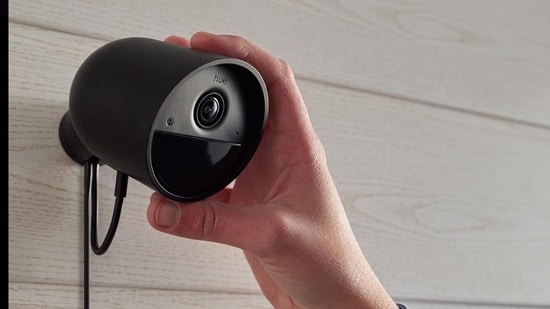
For a typical 2BHK apartment, you usually do not need a camera in every corner. Two to four cameras are enough for most homes, with three being a practical middle ground. But the right number depends more on your home's layout and entry points than the number of bedrooms.
Three CCTV cameras are enough for a 2BHK
| Camera | Where to install it? | What it should cover? |
|---|---|---|
| Camera 1 | Main entrance | Front door, visitors and the immediate corridor |
| Camera 2 | Balcony or secondary access point | Balcony, service entrance or another vulnerable entry area |
| Camera 3 | Living room or central passage | Movement inside the home and access to other rooms |
This three-camera setup covers the areas that matter without requiring a camera in every room. It also gives you a good starting point if you are setting up CCTV for the first time.
Camera 1 should cover the main entrance
The main entrance is the most important location for a CCTV camera in an apartment. It lets you see who is approaching your home and can also record visitors and deliveries.
If your apartment building already has CCTV covering the common corridor and lift lobby, you may not need to point your camera towards the entire corridor. Instead, position it to get a clear view of your door and the area immediately outside it.
CISA's guidance for home security also recommends using cameras around doors and windows and positioning them to remove blind spots. This is a more useful approach than simply increasing the number of cameras.
Camera 2 should cover the most vulnerable access point
The second camera should go wherever there is another realistic way into the home. For a ground floor apartment, this could be a balcony, large window or service entrance. In a higher-floor apartment, the balcony may still be worth covering if it can be accessed from an adjoining terrace, staircase or another structure.
This camera is more important than adding another camera to a bedroom or another indoor area because it covers a potential entry point.
If your home has no secondary access point that needs monitoring, you can instead use this camera to cover another area that is difficult to see from the first camera.
Camera 3 should cover the living room or central passage
The third camera can be placed inside the home, preferably in the living room or a passage connecting different parts of the house. The aim is not to monitor every room but to record movement inside the home if someone gets past the external cameras.
A well-positioned camera can cover the living room and parts of the connecting passage without pointing directly into bedrooms or other private areas. This gives you useful indoor coverage while keeping the number of cameras under control.
There is also a privacy reason for avoiding unnecessary cameras inside the home. Police guidance on domestic CCTV recommends considering what each camera records and positioning it in a way that minimises intrusion into other people's privacy.
When you may need a fourth camera
Three cameras should be enough for most 2BHK apartments, but there are some situations where a fourth one can make sense.
If you live in a ground-floor apartment with multiple balconies, entrances or exposed windows, you may have more areas that need coverage. The same applies to an independent 2BHK house with a driveway, parking area, side entrance or backyard.
In such cases, the fourth camera should cover the additional vulnerable area rather than simply being added indoors. CISA also recommends considering exterior doors, parking areas, walkways and blind spots when planning surveillance coverage.
You do not need a camera in every room
This is where many CCTV installations can become unnecessarily expensive. A 2BHK does not need separate cameras for both bedrooms, the kitchen, living room and passage.
Bedrooms and other private areas generally do not need constant monitoring if the objective is to secure the home against unwanted entry. A camera at the entrance and another covering the main indoor movement area can provide useful coverage without recording private spaces.
The idea is to identify the areas that actually need monitoring rather than trying to record every part of the house.
Be careful about what your cameras record
Camera placement also matters from a privacy perspective. If you live in an apartment, avoid positioning a camera so that it unnecessarily records your neighbour's door or private space.
Police guidance on domestic CCTV similarly recommends positioning cameras carefully and avoiding unnecessary recording of neighbouring properties and public areas.
The same principle applies to balconies and windows. You want the camera to protect your home, not continuously record areas that have nothing to do with your security.
Similar articles for you
Tablet or laptop? The better choice depends on how you work, relax and use your device
Your next TV could change movie night forever, if you choose between OLED, QLED and Mini-LED wisely
- How many CCTV cameras are enough for a 2BHK home?
Three CCTV cameras are usually enough for a typical 2BHK apartment. One can cover the main entrance, another the balcony or secondary access point, and the third can monitor the living room or central passage.
- Where should I install CCTV cameras in a 2BHK?
The main entrance should be the first priority. The second camera can cover a balcony, service entrance or another vulnerable access point, while the third can be placed in the living room or a central passage.
- Do I need CCTV cameras inside every room?
No. Installing cameras in every room is usually unnecessary and can create privacy concerns. A strategically placed camera in the living room or central passage can cover indoor movement without monitoring private areas.
- Is three CCTV cameras enough for a ground floor 2BHK?
Three cameras can be enough, but a fourth camera may be useful if the home has multiple external access points, large windows, a parking area or more than one balcony that needs monitoring.
Disclaimer: At Hindustan Times, we help you stay up-to-date with the latest trends and products. Hindustan Times has an affiliate partnership, so we may get a part of the revenue when you make a purchase. We shall not be liable for any claim under applicable laws, including but not limited to the Consumer Protection Act, 2019, with respect to the products. The products listed in this article are in no particular order of priority.