
 E-Paper



From tomatoes to medical kit, what NASA sends in ISS resupply mission
SpaceX’s 26th commercial resupply mission is set to be launched shortly. Let's us read what all is bundled for the 10 astronauts camping in the space.

 Prefer HTon Google


The National Aeronautics and Space Administration will send a supply mission to International Space Station (ISS), loaded on SpaceX Falcon 9 scheduled for launch on Tuesday (Wednesday as per Indian time).
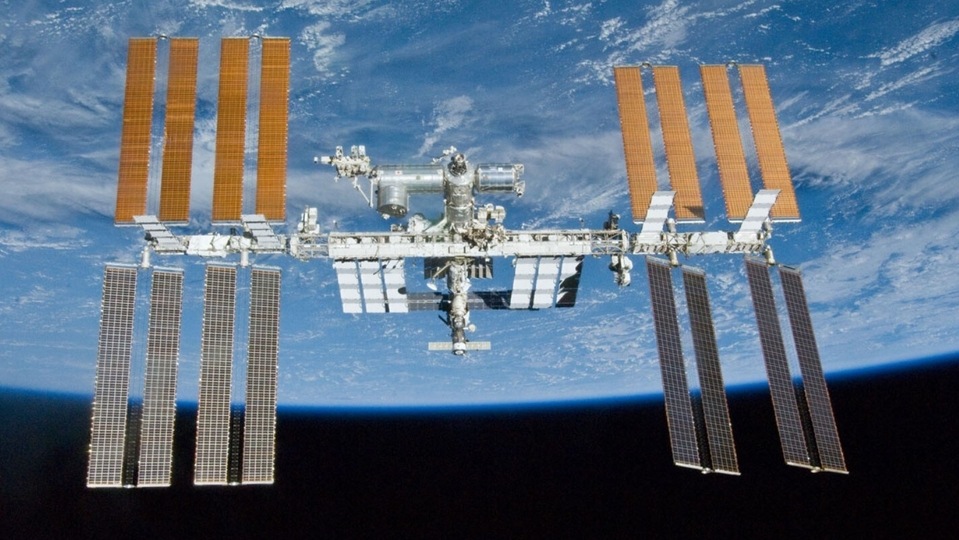
Let's us read what all is bundled in the SpaceX’s 26th commercial resupply mission for the ten astronauts camping in the space.
Tomatoes in Space
To supplement pre-packaged astronaut diet with fresh foods, scientists are sending a dwarf cherry tomato variety - Red Robin to space to investigate how it grows there. The crew already grows a variety of leafy vegetables at the ISS.
“We are testing tomatoes, looking at the impacts of light spectrum on how well the crop grows, how delicious and nutritious the tomatoes are, and the microbial activity on the fruit and plants,” Gioia Massa, a scientist associated with Nasa stated in a blog post.
A medical diagnostic kit
The supply also has a Moon Microscope kit for an in-flight medical diagnosis. It comprises a portable hand-held microscope and a small self-contained blood sample staining device. In case of illness, an astronaut can collect and stain a blood sample, take images with the microscope, and transfer data to the ground, using which flight surgeons will prescribe treatment.
Liquid resin for in-space construction
Because of gravity, large objects used in large-scale construction deforms on Earth. However, microgravity condition in space permit development of longer and thinner structures without this deformity.
Nasa is sending liquid resin packed inside a Nanoracks Black Box to examine viability at in-space construction. “Our method reduces the time to produce key parts needed for daily mission use and it may support future space construction of large structures like trusses and antennae...,” says Ariel Ekblaw, a scientist associated with Massachusetts Institute of Technology.
On- demand nutrition
As supplying sufficient nutrition to maintain crew health on future long-duration space missions can pose a challenge, the US space agency is sending a kit to test its capability to produce such compounds on-demand.
“BioNutrients-2 tests a system for producing key nutrients from yogurt, a fermented milk product known as kefir, and a yeast-based beverage. It employs a smaller system with a heated incubator that promotes growth of beneficial organisms,” the Nasa blog post reads.
More solar power source
Nasa is also sending second of three packages of Roll Out Solar Array technology. These solar panels roll out like a rug or a yoga mat by stored kinetic energy. Using this, ISS can expand its power-production capacities. The second set is expected to provide a 20-30% boost in energy for space station research and operations.
The Falcon Goggles
As we pursue future space exploration, astronauts need to be prepared for three different kind of gravity fields: weightlessness at the time of departure from Earth, the gravity of another planet, and Earth’s gravity in return journey. These transformations can disturb spatial orientation, head-eye and hand-eye coordination, balance, and locomotion. This can be dangerous for missions, as some crew members can be affected by space motion sickness.
To research on this, the supply will also consist of the Falcon Goggles hardware that will capture high-speed video of a astronaut’s eyes. This precise data on ocular alignment and balance will be transferred on ground for further study.


