E-Paper



Stop buying RO filters blindly: The 2-minute test to find what water purifier your home needs and top recommendations
Most Indian homes don’t actually need an RO purifier. This 2-minute water test could save you money, reduce wastage, and protect essential minerals in water.

 Prefer HTon Google


Our Picks
FAQs
Our Picks
| Product | Rating | Price |
|---|---|---|
KENT Supreme Plus Alkaline+Copper RO Water Purifier | RO+UV+UF+Alk +Cu+TDSControl+UV LED Tank|Advanced ROTech for SabseShudh Paani |Auto Flush| 8L|20LPH| Ideal for Borewell/Tanker/MunicipalWater|BlackView Details  | ₹15,099 | |
 | ||
Pureit Revito Prime RO+MF+Mineral+UV in-Tank | 7 stage | 8L Capacity | Upto 70% Water Saving | Suitable for Borewell, Tanker & Municipal Water | DURAViva | BlackView Details | ₹15,999 | |
| ||
Native M1 Pro Water Purifier by Urban Company | Smart Real-Time Tracking | 10-Stage RO+UV+Copper+Alkaline+Mineraliser | No Service for 2 Years | India's Only 2-year Unconditional WarrantyView Details | ₹15,999 | |
| ||
Aquaguard Delight Aquasaver RO+UV+UF+MC Tech | 2-year filter life | With Mega Sediment filter | 2 Free cleaning service | 60% Higher Water Recovery | 9-Stage Purification | India’s No.1 Purifier*View Details | ₹10,999 | |
| ||
Livpure Allura Prime Water Purifier RO+UV+UF+Copper+Alkaline | Zero Cost for 2 Yrs - Filters Included | 10 Stage Advanced Purification | In Tank UV Sterilisation | 7 LtrView Details | ₹11,499 | |
| ||

Research-Backed Choices
Every product we recommend is chosen through a combination of Primary Research and Secondary Research.

Whenever you go to buy an RO water purifier, the sales pitch sounds like: “More stages, more filters, more purification, more safety.”
But here is the uncomfortable truth most brands will never tell you: an RO purifier is not always the healthiest or smartest option for your home.
In many Indian households, especially those receiving treated municipal water, installing a heavy-duty RO system can actually waste water, increase maintenance costs, and strip away essential minerals like calcium and magnesium from your drinking water.
In other words, thousands of people are paying more for purification they may not even need. That is why experts increasingly recommend testing your water source before blindly choosing a purifier. And surprisingly, you can do a quick home diagnosis in under two minutes.
The big myth: “More purification means better water”
For years, consumers have been conditioned to believe that more filtration stages automatically mean safer drinking water. That is not always true.
RO, or Reverse Osmosis, was originally designed for areas with extremely high TDS (Total Dissolved Solids), industrial contamination, heavy metals, or saline groundwater. It is a powerful purification method, but also an aggressive one.
An RO membrane removes dissolved impurities by forcing water through an ultra-fine membrane. Along with contaminants, it also removes naturally occurring minerals present in water.
The issue becomes important when people use RO systems for already-treated municipal water with low TDS levels.
Several health experts and global studies, including observations referenced by the World Health Organization, have discussed concerns around long-term consumption of demineralized water. Water with extremely low mineral content may not provide beneficial minerals naturally present in drinking water.
That means if your water is already relatively clean, using RO could be overkill.
The 2-minute water test: What your water actually needs
Before spending ₹10,000 to ₹25,000 on a purifier, do these three quick checks.
Check 1: The white scale test
Look closely at your kettle, taps, showerhead, or kitchen sink. Do you notice white crusty deposits or chalky buildup? That is usually a sign of hard water and high mineral concentration. Hard water generally indicates elevated TDS levels, common in borewell water or tanker supply.
If you constantly see scaling on appliances, your water may genuinely require RO purification. But if your utensils, taps, and appliances remain relatively clean, your water may already have moderate TDS levels that do not necessarily need RO treatment.
Check 2: The source scan
Your water source tells you almost everything.
Here is the simplest rule most purifier buyers ignore:
Borewell water: Often requires RO because groundwater usually contains high TDS, dissolved salts, and possible heavy metals.
Tanker water: Usually inconsistent in quality and often benefits from RO purification.
Municipal or corporation water: Frequently already treated and disinfected. In many cases, UV or UF purification is enough.
This is where many urban households make a costly mistake. Families receiving treated municipal water often buy expensive RO systems simply because marketing convinced them “RO is premium.”
Check 3: Buy a TDS meter
If there is one gadget that can save you thousands of rupees, it is a simple digital TDS meter. These pocket-sized devices are inexpensive, widely available online, and can instantly tell you the TDS level of your water.
TDS stands for Total Dissolved Solids. It measures the concentration of dissolved substances in water.
Here is a simple reference guide most experts follow:
Below 150 ppm: Very low TDS
150–300 ppm: Good drinking water
300–500 ppm: Acceptable
Above 500 ppm: RO generally recommended
A TDS reading gives you clarity that advertisements cannot.
If your water reads 180 ppm and comes from a treated municipal supply, buying a heavy-duty RO purifier could simply mean wasting water and money.
Understanding the purification technologies: Which purifier actually fits your home?
Most people confuse purifier technologies because brands combine multiple terms in advertisements. But each technology solves a different problem.
RO: The nuclear option
RO is best viewed as the strongest purification solution. It is ideal when:
- TDS exceeds 500 ppm
- Water tastes salty or metallic
- Borewell water is used
- Heavy metal contamination is suspected
But RO also has downsides:
- Wastes large amounts of water
- Requires electricity
- Increases maintenance costs
- Removes beneficial minerals
That means RO should be used only when genuinely necessary.
UV: The shield
UV purification uses ultraviolet light to kill bacteria and viruses. It works best when:
- Municipal water supply is already treated
- TDS is low to moderate
- Biological contamination is the primary concern
UV systems do not significantly alter mineral composition, which makes them suitable for many city households.
UF: The sieve
UF, or Ultra Filtration, acts like a physical membrane filter. It helps remove dust, sediments, suspended particles, some cysts, and microorganisms. UF systems often work without electricity and are commonly used in gravity-based purifiers.
For households with relatively clean water and low TDS, UF can sometimes be sufficient.
The hidden costs nobody talks about
This is where the “RO for everyone” narrative begins to fall apart.
1. Massive water wastage
Traditional RO systems can reject 2 to 3 litres of water for every 1 litre purified. In cities already struggling with water shortages, this becomes a serious issue. Many households unknowingly waste hundreds of litres every month simply because they installed an unnecessary RO system.
2. Higher Maintenance Bills
RO membranes are expensive compared to UV lamps or basic UF filters. Membrane replacement, servicing, and periodic sanitisation add recurring expenses that many buyers underestimate.
3. The “dead water” concern
One major criticism of excessive RO purification is that it can create ultra-low mineral water if not properly remineralised. Some modern purifiers now include mineral boosters or TDS controllers to address this issue, but not every model performs equally well.
That is why blindly chasing “maximum purification” can sometimes create a new problem instead of solving one.
5 best water purifiers for all needs
1. KENT Supreme Plus Alkaline
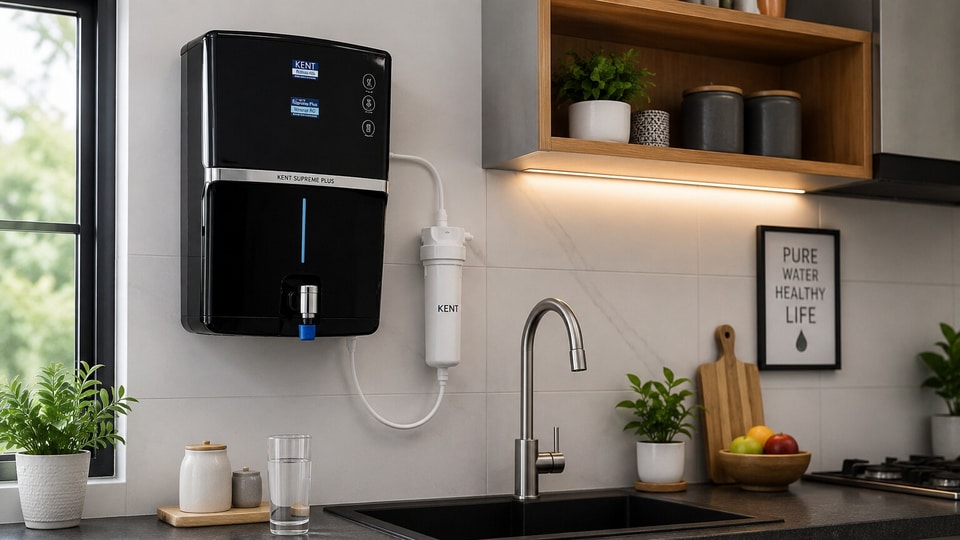
The KENT Supreme Plus is designed for homes dealing with mixed water sources like borewell, tanker, and municipal supply. It combines RO, UV, and UF purification with alkaline and copper enrichment to improve taste and mineral balance.
The purifier also features Auto Flush technology to reduce membrane scaling and maintain purification efficiency over time. Its TDS Control system helps retain essential minerals while purifying high-TDS water effectively.
Specifications
Reasons to buy

Suitable for high TDS and mixed water sources
TDS controller helps retain essential minerals
Reason to avoid

Higher water wastage compared to UV/UF purifiers
Regular RO membrane maintenance can be expensive
Why buy this water purifier?
Buy this purifier if your home receives borewell or tanker water with high TDS levels and you want advanced purification with mineral retention and multiple safety layers.
What are buyers saying on Amazon?
Buyers praised the water purifier for its water taste, easy usage, and quick installation. However, some users reported reliability issues and mixed after-sales service experiences.
2. Pureit Revito Prime RO+MF+Mineral+UV in-Tank | 7 stage | 8L Capacity | Upto 70% Water Saving | Suitable for Borewell, Tanker & Municipal Water | DURAViva | Black

Our Principles
Full Transparency
Every product review clearly lists the Pros and Cons, giving you a balanced view.
Brand Confidence
We focus on products from brands with a proven reputation and long-standing market trust.
The Pureit Revito Prime focuses on solving one of the biggest RO concerns—water wastage. With up to 70% water saving, this purifier is suitable for homes using borewell, tanker, or municipal water. Its 7-stage purification combines RO, MF, and UV sterilisation while enriching water with calcium and magnesium.
The in-tank UV LED keeps stored water protected, while SmartSense indicators alert users before filter expiry for uninterrupted purification performance.
Specifications
Reasons to buy
High water-saving efficiency compared to traditional RO purifiers
Mineral enrichment helps improve taste and water quality
Reason to avoid
Replacement filters can increase long-term maintenance costs
Requires electricity for purification and UV sterilisation
Why buy this water purifier?
Buy this purifier if you need RO-level purification for high TDS water but want lower water wastage, mineral-rich drinking water, and smart maintenance alerts for convenience.
What are buyers saying on Amazon?
Buyers appreciated the water purifier for its good build quality, value for money, and smooth installation experience. Many customers praised the water quality and service support, though opinions on taste, noise levels, and long-term performance remained mixed among users.
3. Native M1 Pro Water Purifier by Urban Company | Smart Real-Time Tracking | 10-Stage RO+UV+Copper+Alkaline+Mineraliser | No Service for 2 Years | India's Only 2-year Unconditional Warranty
The Native M1 Pro stands out with its smart monitoring features and low-maintenance design. This 10-stage purifier combines RO, UV, copper, alkaline, and mineraliser technologies to handle borewell, tanker, and municipal water.
Its real-time app tracking shows TDS levels, filter health, and water consumption. The biggest highlight is the promise of no servicing for two years, backed by a 2-year unconditional warranty on filters and electrical components.
Specifications
Reasons to buy
Smart app monitoring with real-time TDS and filter tracking
Low maintenance with no service required for two years
Reason to avoid
Higher upfront price compared to standard RO purifiers
Requires app connectivity for accessing advanced features
Why buy this water purifier?
Buy this purifier if you want advanced smart features, minimal maintenance, real-time water quality tracking, and comprehensive purification with mineral enrichment for all water sources at home.
What are buyers saying on Amazon?
Buyers praised the water purifier for its reliable performance, water taste, and overall value for money. Customers also appreciated the quick installation, responsive service, and consistent TDS reduction for cleaner drinking water.
4. Aquaguard Delight Aquasaver RO+UV+UF+MC Tech | 2-year filter life | With Mega Sediment filter | 2 Free cleaning service | 60% Higher Water Recovery | 9-Stage Purification | India’s No.1 Purifier*
The Aquaguard Delight Aquasaver is designed for households dealing with mixed water sources and high TDS levels. Its 9-stage purification combines RO, UV, and UF technologies with Mineral Charge support to retain essential nutrients like calcium and magnesium.
The purifier also focuses on reducing water wastage with up to 60% higher water recovery. Features like the Mega Sediment Filter and long 2-year filter life help improve durability and reduce maintenance frequency.
Specifications
Reasons to buy
Better water recovery compared to older RO purifiers
Long filter life with additional sediment protection
Reason to avoid
Smaller storage capacity for larger families
RO maintenance costs can still be higher than UV/UF systems
Why buy this water purifier?
Buy this purifier if your home uses high-TDS water and you want strong multi-stage purification with better water-saving performance, mineral retention, and long-lasting filter support.
What are buyers saying on Amazon?
Buyers appreciated the water purifier for its reliable performance, good filtration quality, and value for money. Many customers praised the installation experience and improved water taste, while opinions on after-sales service were mixed among users.
5. Livpure Allura Prime Water Purifier RO+UV+UF+Copper+Alkaline | Zero Cost for 2 Yrs - Filters Included | 10 Stage Advanced Purification | In Tank UV Sterilisation | 7 Ltr
The Livpure Allura Prime offers a balanced mix of advanced purification and low-maintenance ownership. Its 10-stage purification combines RO, UV, UF, copper, and alkaline technologies to handle borewell, tanker, and municipal water effectively.
The purifier also features in-tank UV sterilisation to keep stored water safe from bacteria and microorganisms. A major highlight is the 24-month free maintenance package, including filters, making it suitable for users seeking predictable long-term costs.
Specifications
Reasons to buy
Two years of free maintenance reduces ownership costs
Copper and alkaline enhancement improve water quality and taste
Reason to avoid
Storage capacity may feel limited for large families
RO purification can still lead to some water wastage
Why buy this water purifier?
Buy this purifier if you want advanced multi-stage purification with copper and alkaline enhancement, plus low maintenance costs through included filter replacements and two-year service coverage.
What are buyers saying on Amazon?
Buyers praised the water purifier for its excellent purification performance, sleek design, and improved water taste. Customers also appreciated the smart app support and overall value for money, with some highlighting helpful installation benefits like a complimentary TDS meter.
Top 3 features of the best water purifiers for you
| Water Purifier | Capacity | Purification | Special Feature |
|---|---|---|---|
| KENT Supreme Plus Alkaline+Copper RO | 8 Litres | RO+UV+UF+Alkaline+Copper | Auto Flush with TDS Control |
| Pureit Revito Prime | 8 Litres | RO+MF+Mineral+UV | Up to 70% Water Saving |
| Native M1 Pro by Urban Company | 7 Litres | RO+UV+Copper+Alkaline+Mineraliser | Smart Real-Time App Tracking |
| Aquaguard Delight Aquasaver | 6.2 Litres | RO+UV+UF+MC Tech | Up to 60% Higher Water Recovery |
| Livpure Allura Prime | 7 Litres | RO+UV+UF+Copper+Alkaline | 24-Month Free Maintenance |
Similar stories for you
The Research & Expertise
I’ve been covering home appliances and water purification technologies for several years and have closely tracked how water purifiers have evolved in Indian homes, from basic UV filters to advanced RO systems with copper enrichment, alkaline enhancement, smart monitoring, and water-saving technologies.
For this guide, I researched multiple RO, UV, and UF water purifiers across different budgets and household needs from brands like KENT, Aquaguard, Pureit, Livpure, Urban Company and more.
I compared purification technologies, TDS control, water recovery rates, maintenance costs, storage capacity, filter life, smart features, and suitability for borewell, tanker, and municipal water. I also analysed buyer reviews, long-term usage feedback, and after-sales service experiences.
Disclaimer: At Hindustan Times, we help you stay up-to-date with the latest trends and products. Hindustan Times has an affiliate partnership, so we may get a part of the revenue when you make a purchase. We shall not be liable for any claim under applicable laws, including but not limited to the Consumer Protection Act, 2019, with respect to the products. The products listed in this article are in no particular order of priority.