E-Paper



Can couples share intimate pics on ‘WhatsApp-killer’ Arattai app? Zoho founder answers
A user questioned if Zoho employees access customer data, prompting Zoho founder Sridhar Vembu to answer.

 Prefer HTon Google


Arattai, a messaging app developed by Zoho, has skyrocketed in popularity over the past couple of weeks. The app works similarly to Meta-owned WhatsApp, allowing users to send messages, images, videos and documents, initiate voice and video calls, share stories, and manage channels.
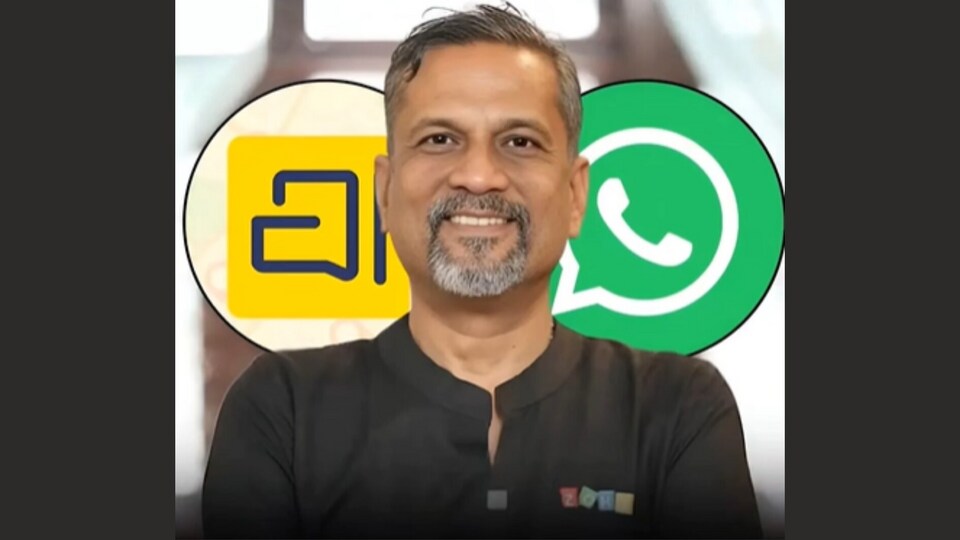
In fact, some have even hailed this homegrown app as “WhatsApp killer”. While Arattai is known to be a “spyware‑free” messenger app, which makes it a good choice for privacy-conscious users, it does currently lack one privacy feature – tech experts have noted that it provides end-to-end encrypted calling, but not end-to-end encrypted messaging.
What is end-to-end encrypted messaging?
End-to-end encrypted (E2EE) messaging is a method of communication where only the sender and the intended recipient can read the messages — no one else, not even the messaging service provider.
X user questions Zoho founder
So with the issue of privacy in focus, an X user questioned Zoho founder Sridhar Vembu about Arattai’s privacy protections.
The user, named Ravi, asked Vembu whether a husband and wife could share “intimate pictures” with each other over Arattai. He asked specifically whether anyone working at Zoho would have access to the pictures.
Ravi was responding to a post where Vembu addressed the topic of privacy, claiming that “secret lovers” could use the messaging app without worrying about privacy concerns. However, “secret rebels” — people using the app for illegal or anti-national activities — could not expect to be free of legal repercussions, the Zoho founder said.
“Forget secret lovers. Can a husband and wife exchange intimate pictures between them? Who all at Zoho have access to these pictures? Straight forward answer please,” X user Ravi asked Vembu.
Zoho founder answers
Sridhar Vembu answered this question by admitting that “end to end encryption” is not yet available on Arattai. However, he claimed that it would be available soon.
Vembu added that his business is based on the trust that Zoho employees would not access customer information.
“I said this clearly. Our entire SAS business is based on the trust that we DO NOT access customer data and we do not use it for selling stuff to them,” he replied. “End to end encryption is a technical feature and that is coming. Trust is far far more precious and we are earning that trust daily in the global market.”
“We will continue to fulfill that trust of every user of our product everywhere,” added the founder of Zoho.
Sridhar Vembu’s clarification
Vembu faced some backlash for his response. Several people pointed out that his answer, essentially, amounted to saying that Zoho employees should be trusted not to access customer data, but there is no guarantee that they won’t.
“So, if I get it correctly, you DO NOT access the data while you CAN access the data right?” one user asked.
However, Vembu clarified that data is stored in an “encrypted disc” to which employees do not have access.
“The data is stored in encrypted disk storage like a cloud service. No employee has access to it. When end to end encryption is rolled out, that cloud storage will be removed. It will only be there on the device,” he replied.