
 E-Paper



Canada to pick new PM today: Who are top contenders for Liberal Party leadership?
Canada's new PM race: Four candidates—Carney, Freeland, Gould, and Baylis—but only Carney and Freeland are seen as serious contenders for the leadership.

 Prefer HTon Google


Canada’s Liberal Party will elect a new leader on Sunday to succeed Justin Trudeau as prime minister and take on the challenges posed by US President Donald Trump.
Trudeau, who has led the Liberals since 2013 and became prime minister in 2015, announced his resignation in January following poor polling and internal dissent. His departure triggered a leadership race, with the new leader set to assume the role of prime minister.
Four candidates qualified for the race—Mark Carney, Chrystia Freeland, Karina Gould, and Frank Baylis—but only Carney and Freeland are considered serious contenders.
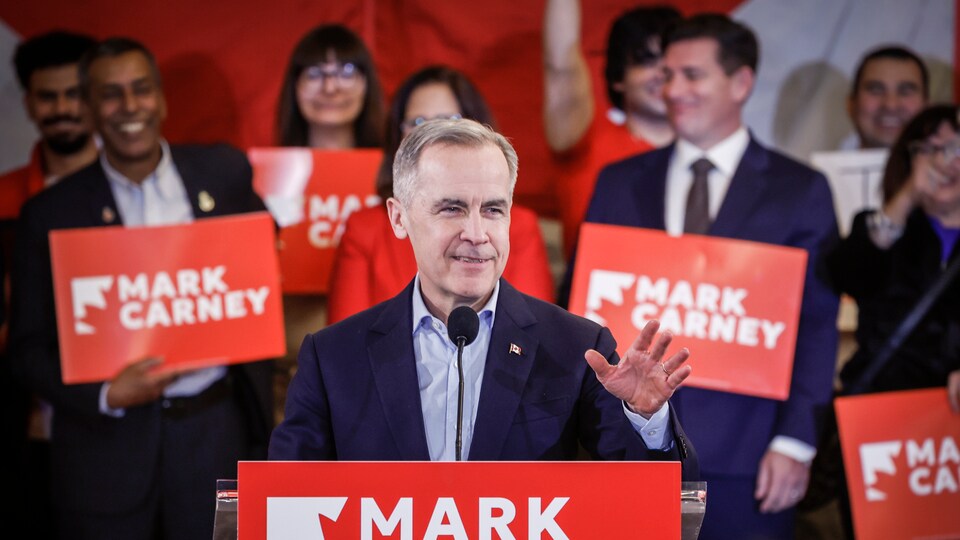
The front-runner, Mark Carney, is a former Bank of Canada governor who later served as the first non-British governor of the Bank of England. His main challenger, Chrystia Freeland, was Trudeau’s finance minister until she resigned in December with a strongly critical letter that played a role in his decision to step down.
Both candidates have focused their campaigns on countering the perceived threats posed by Trump’s policies.
The new Liberal leader will be chosen in a secret vote by approximately 140,000 party members, and the result will be announced on Sunday. The new prime minister is expected to call for an election soon, or opposition parties could force one through a no-confidence vote this month.
Who are the top contenders?
Mark Carney: Mark Carney, 59, is the frontrunner to win the Liberal leadership vote on Sunday and succeed Justin Trudeau as Canada’s prime minister. A former Goldman Sachs banker, Carney has gained strong backing from Liberal members, including much of Trudeau’s cabinet, positioning himself as the best candidate to guide the country through what many see as its most significant crisis in decades—the threat of a US-led trade war under President Donald Trump.
Carney is widely respected for his experience in handling economic crises. As governor of the Bank of Canada, he played a key role in helping the country avoid the worst of the 2008 financial crisis. Later, he became the first non-British citizen to lead the Bank of England, earning bipartisan praise for his leadership during economic turbulence.
Polls indicate that Carney is seen as the most trusted politician to manage Canada’s economic challenges and relations with Trump. If he wins the leadership race, he will immediately become the country’s prime minister and face a crucial decision—when to call the next federal election.
While the next election is scheduled for October, the prime minister has the power to dissolve Parliament and call a snap election at any time. Some speculate that Carney might move quickly—possibly within days of taking office—to secure a strong mandate amid rising concerns over US tariffs and economic tensions.
Chrystia Freeland: The other key contender in the Liberal leadership race is former deputy Prime Minister Chrystia Freeland. In December, Justin Trudeau informed Freeland that he no longer wanted her as finance minister but offered her the chance to stay on as deputy prime minister and continue leading US-Canada relations. Instead, she resigned soon after, releasing a scathing letter criticizing the government—a move that ultimately contributed to Trudeau’s decision to step down.
According to Nelson Wiseman, professor emeritus at the University of Toronto, three factors made the leadership race heavily favour Mark Carney. Freeland’s close ties to the unpopular Trudeau, Carney’s strong efforts to secure backing from Liberal MPs, and Trump’s tariff threats all played a role.
“Liberal backbenchers feared losing their seats and knew that Carney was more electable as their leader than Freeland,” Wiseman explained.
Freeland campaigned on her past success in dealing with Trump, highlighting her role in negotiating the new North American trade agreement during his first term. Meanwhile, Carney emphasized his crisis-management experience and argued that Trump’s approach this time is different.
Karina Gould: Gould is the youngest woman to serve as a minister in Canada, CNN reported. She has positioned herself as part of a “generational shift” in the country’s politics and emphasised that the Liberal Party “needs to embrace this shift too” when she launched her campaign in January.
Gould has proposed raising corporate taxes on large companies earning over $500 million annually, aiming to push them to reinvest in business and productivity or face higher tax rates.
If elected, her main priority would be resolving Canada’s trade dispute with the US before calling a general election. Like her rivals, she has taken a firm stance against Trump.
Frank Baylis: According to CNN, Baylis, a businessman from Montreal, previously served as a lawmaker from 2015 to 2019. In February, he introduced a proposal to develop two pipelines that would transport natural gas to Europe and Asia, aiming to reduce dependence on the US
Baylis has warned against Canada's economy being overly reliant on a single country and stressed the importance of diversifying trade partners.
(With inputs from agencies)


