E-Paper



China blocks India-US move at UNSC to sanction LeT leader Shahid Mahmood
According to US authorities, Mahmood has had a significant role in LeT’s overseas operations, including in Bangladesh, Myanmar, Syria and Turkey

 Prefer HTon Google


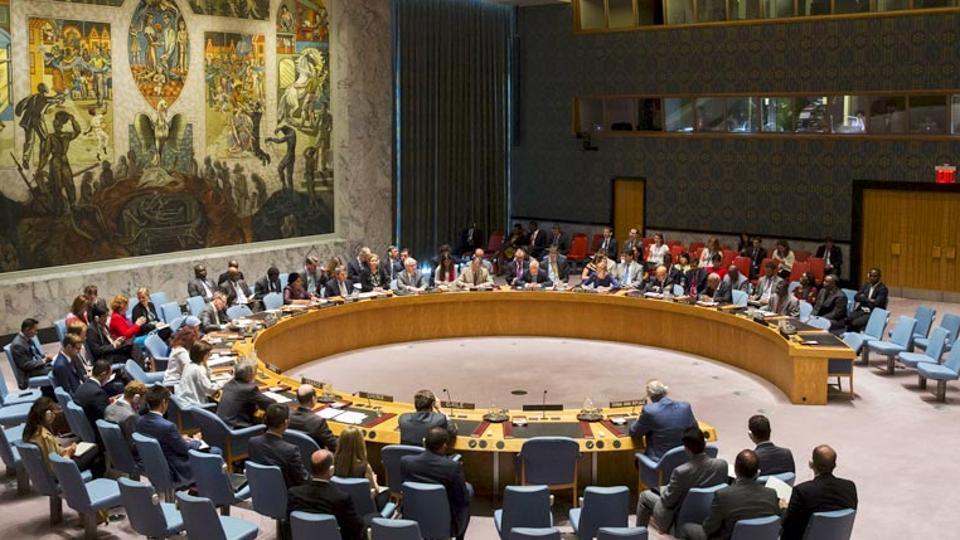
China has blocked a joint move by India and the United States to sanction Lashkar-e-Taiba (LeT) leader Shahid Mahmood at the United Nations Security Council (UNSC), the fourth time it has resorted to such an action since June this year.
Mahmood was declared a “specially designated global terrorist” by the US treasury department in December 2016, and India and the US had proposed his listing under the 1267 Al Qaeda Sanctions Committee of the UN Security Council. According to US authorities, Mahmood has had a significant role in LeT’s overseas operations, including in Bangladesh, Myanmar, Syria and Turkey.
As a permanent member of the Security Council, China used a so-called “technical hold” to stop the listing of Mahmood as a global terrorist, people familiar with the matter said on Wednesday.
This was the same measure used by China to block India-US proposals to designate LeT leader Abdul Rehman Makki in June, Jaish-e-Mohammed (JeM) leader Abdul Rauf Azhar in August, and LeT operative Sajid Mir in September.
A “technical hold” can last for up to six months at a time under the Security Council’s procedures, and it effectively blocks terrorist designation proposals until the measure is withdrawn.
Also Read:At UNSC, Jaishankar hits out at China on terror listing
China’s move came even as UN secretary-general Antonio Guterres participated in a ceremony in Mumbai to pay tribute to victims of the terrorist attacks in India’s financial hub in November 2008 that was carried out by a 10-member team of the LeT. Guterres described terrorism as “absolute evil” and the Mumbai attacks as “barbaric”, and said all countries must collectively combat the menace.
While listing Mahmood as a global terrorist in 2016, the US treasury department said the Karachi-based LeT leader had been affiliated with the group since 2007 and had served during 2015-16 as vice chairman of the Falah-e-Insaniyat Foundation (FIF), which has been designated as a front for the LeT by the US and the UN.
Mahmood was also “part of LeT’s overseas operations team led by Sajid Mir”, the US treasury department said in a statement in 2016.
“While part of LeT’s operations team, Mahmood’s areas of responsibility included Saudi Arabia and Bangladesh. Additionally, in August 2013, Mahmood was instructed to forge covert links with Islamic organisations in Bangladesh and Burma, and as of late 2011, Mahmood claimed that LeT’s primary concern should be attacking India and America,” the statement said.
Since 2012, Mahmood routinely travelled overseas and “worked with international organisations on behalf of LeT to conduct business for the group in FIF’s name”. While acting as the head of FIF in Karachi, Mahmood went to Bangladesh to “distribute funds to a Burmese migrant camp for the purpose of facilitating LeT recruitment”.
In August 2012, Mahmood, while in-charge of the Sindh chapter of FIF, “led a LeT delegation to Burma, and in mid-2014, he travelled to Syria and Turkey and was subsequently appointed to lead FIF efforts in both countries”. Mahmood also travelled to Bangladesh and Gaza on behalf of FIF, the statement added.
Responding to China blocking efforts by India and its partners to sanction Pakistan-based terrorists at the UNSC, external affairs minister S Jaishankar told a news conference in September that the listing of terrorists is done because these individuals are a threat to the entire international community.
“So, it is not something which countries necessarily do in pursuit of a narrow national agenda. If somebody blocks listing, particularly in cases where the merits of going ahead are very apparent, I think they do so frankly at peril to their own interests and to their own reputation,” he said at the time.
Chinese ambassador Sun Weidong has contended that UN Security Council members have the right to use a “technical hold” on terrorist listing applications under the rules of the 1267 Al Qaeda Sanctions Committee. The Chinese side “needs more time to evaluate the relevant listing applications” and this was being done in line with relevant rules and procedures, he told reporters recently.