E-Paper


Trump's secret plane swap echoes Clinton's 2000 Pakistan ruse: Why this time the press was kept in the dark
Trump's security maneuver during a trip to Turkey involved moving to an unmarked plane amidst an Iranian threat, but unlike Clinton's operation in 2000.

 Prefer HTon Google


A secret operation that moved President Donald Trump from an aircraft disguised as Air Force One to an unmarked plane during a recent trip to Turkey has drawn comparisons with a similar security maneuver used by President Bill Clinton in Pakistan in 2000, but the two operations differed sharply in how the White House handled the press.
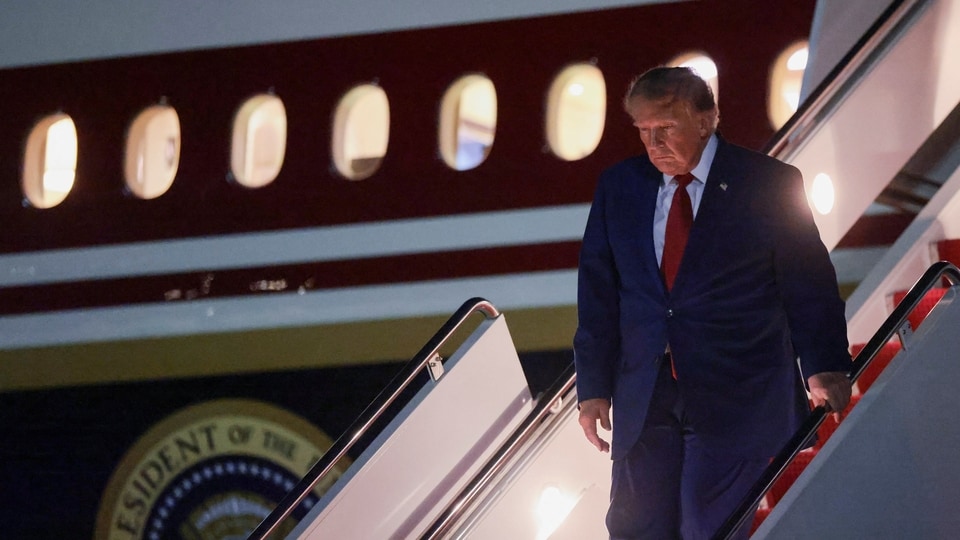
As per The Washington Post report, Trump was secretly transferred last month from a plane marked as Air Force One to a smaller, unmarked Air Force aircraft after a credible Iranian threat. The switch took place at an airport in Turkey, with security personnel using a catering truck as part of the operation. Reporters traveling with Trump were instructed to keep their window shades closed and were not told that the president had been moved to another aircraft.
The secrecy surrounding the operation has raised concerns among journalists about whether the White House put members of the traveling press pool at risk without informing them.
Clinton’s 2000 Pakistan decoy operation
As pet The Washington Post, Clinton’s White House used a similar deception during his March 2000 visit to Pakistan.
At the time, a decoy aircraft carrying the markings of Air Force One landed in Islamabad in view of the media. A Secret Service agent who resembled Clinton emerged from the aircraft, while the real president arrived separately on an unmarked plane.
But there was a crucial difference: at least one journalist knew the plan in advance.
Susan Page, then a White House reporter for USA Today and president of the White House Correspondents’ Association, was summoned by White House press and security officials before the India-to-Pakistan flight. She was briefed off the record about the decoy aircraft, the president’s location and the security measures being taken because of the dangers surrounding the trip.
Page had kept the details confidential for more than 25 years. She told the Post that she decided to discuss the episode now because the original off-the-record agreement had been in place for more than a quarter-century and the deception became apparent when Clinton emerged from the unmarked aircraft.
Trump’s press pool was kept in the dark
The circumstances surrounding Trump’s recent flight were different.
According to the Post’s report, journalists aboard the aircraft did not know that Trump had been transferred. They were told to keep the shades closed during the operation, while the president was secretly moved to another aircraft.
The secrecy has prompted questions about the safety of the journalists who remained aboard the original aircraft. Garrett Graff, a journalist and historian, told the Post that the episode appeared to represent an unprecedented breach between the White House and the press because the entire traveling press corps was allegedly kept unaware of the president’s location.
The details of the Iranian threat that prompted Trump’s operation have not been made public, making it difficult to assess the risks faced by the reporters who remained on the aircraft. Graff argued that the journalists may have been exposed to the same threat that prompted the security operation in the first place.
‘Level of distrust’ after secret operation
Former CNN Pentagon correspondent Barbara Starr said told the Post that journalists generally understand the security requirements surrounding presidential travel. But she said the episode could damage trust between the White House and the press.
The concern was underscored by the experience of journalists aboard Trump’s aircraft. Politico reporter Megan Messerly, who was the print pool reporter during the trip, also told the Post that the press had been told to keep its window shades closed. After the aircraft landed, she described the flight as uneventful.
The significance of the operation became clearer only after the Post published its report. White House reporters subsequently sought more information about what had happened, while journalists who had been on the flight expressed anger over the possibility that they had been exposed to a security threat without being given the opportunity to make an informed decision about their participation.
The comparison with Clinton’s 2000 Pakistan trip therefore turns on more than the use of decoy aircraft. Both presidents faced security concerns serious enough to prompt elaborate measures, but Clinton’s White House privately briefed at least one representative of the press corps, while Trump’s operation was kept secret from the journalists traveling with him.
That difference has become the central point of concern as questions grow over presidential security, press access and the risks borne by journalists covering the White House.