Fads come and go. Capes, codpieces and ruffs were all once standard garb in Europe, before falling out of favour. Occasionally new articles of clothing fall into favour, too—as in China today, where designer sun-protection face coverings known as “facekinis” are popularising a look previously favoured by bank robbers.
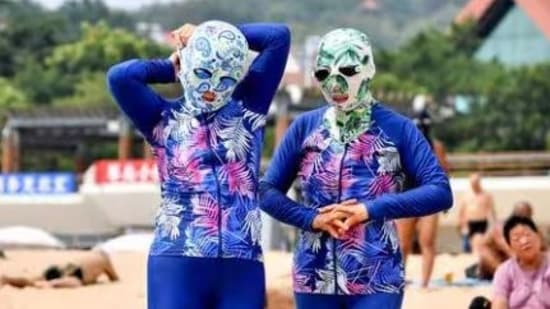
Facekinis form part of a thriving industry in China offering accessories to protect against ultraviolet (UV) rays. Unlike the surgical masks of the covid-19 pandemic, sun masks are made from a
Fads come and go. Capes, codpieces and ruffs were all once standard garb in Europe, before falling out of favour. Occasionally new articles of clothing fall into favour, too—as in China today, where designer sun-protection face coverings known as “facekinis” are popularising a look previously favoured by bank robbers.
Facekinis form part of a thriving industry in China offering accessories to protect against ultraviolet (UV) rays. Unlike the surgical masks of the covid-19 pandemic, sun masks are made from a washable synthetic fabric. Some cover only the lower face; others extend to the forehead, neck and chest. They range in price from a few dollars to nearly $50.
All told, sales of UV-wear in China reached around 80bn yuan ($11bn) last year. Sales of facekinis, which are targeted at women, rose by around 50% in the year to July, according to Daxue Consulting, a research firm. Those of UV sleeves, more popular among men, doubled.
Until recently, facekinis were mainly reserved for beaches and often worn by older women seeking to avoid a tan while swimming. The pandemic, and the widespread mask use it prompted, helped broaden their popularity. In the years since, facekinis have gone from cheap, poorly designed products for old folk to fashionable goods mainly bought by younger consumers. Now people want masks that match their office attire or outdoor gear, says Lai Ming Yii of Daxue Consulting. Many women see them as part of a skincare routine aimed at helping them maintain a fair complexion, she adds.
Companies are cashing in. Perhaps the biggest beneficiary from the trend has been Beneunder, established a dozen years ago in Shenzhen, which offers a line of masks and other UV gear. But many other Chinese apparel companies are also starting to sell similar products, including sportswear labels such as Anta and Li-Ning.
The Chinese Communist Party, however, does not approve of the look. People’s Daily, a party mouthpiece, recently lamented the rise of “sun-protection anxiety”, pointing to confusion over what is needed to protect one’s skin. Ruffs were clinging to necks for a century in Europe. China’s facekinis might not last as long.
To stay on top of the biggest stories in business and technology, sign up to the Bottom Line, our weekly subscriber-only newsletter.
One Subscription.
Get 360° coverage—from daily headlines
to 100 year archives.
Archives
HT App & Website