
 E-Paper



Donald Trump is a man in a hurry
The commando raid to snatch Nicolás Maduro, Venezuela’s thuggish ruler, followed by the installation of his deputy as an interim president was just a start.


 Prefer HTon Google


CLOCKS HAVE always run fast in Trumpworld. This year they have sped up as never before. Soon after President Donald Trump’s inauguration in January 2025, it was clear that his second administration would be more radical than his first. With this new year barely rung in, the signs are that 2026 may beat 2025 for urgency and aggression, especially in foreign policy.
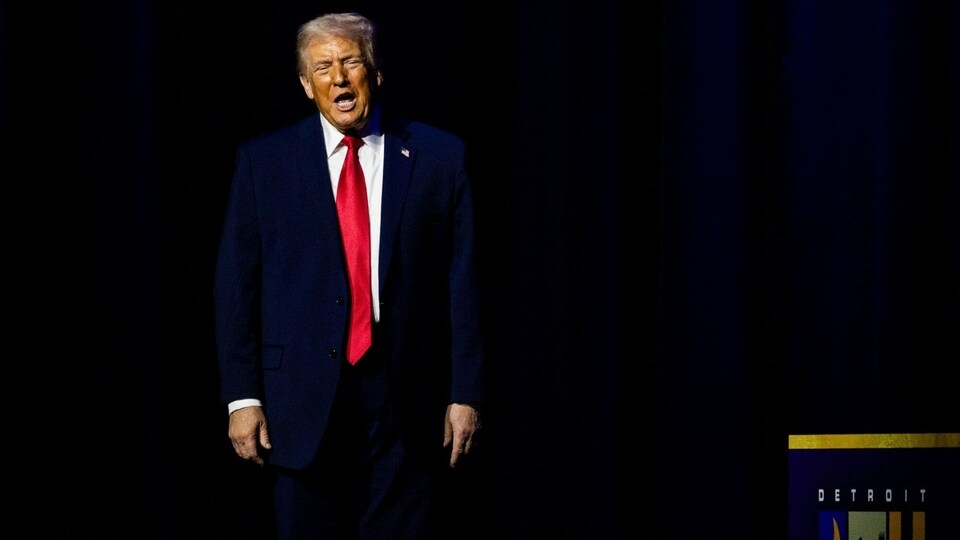
The commando raid to snatch Nicolás Maduro, Venezuela’s thuggish ruler, followed by the installation of his deputy as an interim president was just a start. Mr Trump swiftly issued vague but menacing warnings to test his country’s might on Colombia, Cuba and Mexico, and intensified his demands for America to own the Danish territory of Greenland. He has threatened “very strong” actions to punish Iran’s regime for killing protesters on the streets of the Islamic republic, including a purported plan to impose a 25% tariff on any country doing business with it.
On the face of it, Mr Trump’s global activism is hard to square with his previous promises to avoid “forever wars”, especially in the Middle East, generally pursue a narrower range of national interests and “stop racing to topple foreign regimes that we know nothing about”. Then there is the related question of Mr Trump’s appetite for risk. In Washington and other capitals policy experts are reviewing old assumptions that the president is mostly a bluffer, who talks of raining “fire and fury” on foes but has little wish to put American troops in harm’s way.
Mr Trump’s aides acknowledge the impatience of their 79-year-old boss to remake the world order. “President Trump is a man in a hurry” with a “bias for action”, his chief trade envoy, Jamieson Greer, told The Economist’s “Inside Geopolitics”, a streaming video show recorded on January 9th. If foreign governments are thrown off-balance by Mr Trump’s oft-changing economic demands, they should understand that an America First administration sees “value in uncertainty”, added Mr Greer.
If the quickened pace of Trumpian policymaking is an observable fact, assessing the president’s risk tolerance is a harder task. For one thing, to date he has been lucky. He was spared large-scale American casualties during military operations that he approved in his first and second terms, including the assassination by drone of Qassem Suleimani, a senior commander in Iran’s Islamic Revolutionary Guard Corps; lengthy but inconclusive air strikes against Houthi rebels in Yemen; the bombing of Iranian nuclear sites alongside Israeli forces; and the recent mission in Venezuela. That sort of luck is valuable to Mr Trump, who has a horror of seeing American body bags on television, his former aides have said. When American soldiers have been hurt, as scores were when Iran fired missiles at bases in northern Iraq to avenge the Suleimani killing in 2020, Mr Trump was at pains to play down their suffering. He dismissed brain injuries and concussions suffered by his troops as “headaches”, and cited the lack of American deaths as he called off planned retaliatory strikes on Iran.
But there is evidence that Mr Trump would rather not rely on fickle fortune. His preference, in every game that life throws at him, is to start with a winning hand. As Mr Trump began his presidential campaign, back when he was still his own chief foreign-policy adviser, his stated belief was that America should be more ruthless and selfish, and should avoid wars by amassing such firepower that enemies would flee without a shot. In an interview with this columnist in 2015, Mr Trump called for America to stop playing policeman in the Middle East and to simply “take the oil”. Then a businessman, he called himself “the most militaristic person” before clarifying that: “You have to know when to use the military. Or have it so strong that nobody is going to mess with you, which is my ultimate goal, to be honest with you.”
Mr Trump is hardly the first president to prefer quick wins over drawn-out conflicts. The first Gulf war in 1991 saw an American-led coalition swiftly reverse the Iraqi invasion of Kuwait, but leave Iraq’s dictator, Saddam Hussein, in place. The success of that spectacular and deliberately limited war prompted a rare moment of chest-thumping from the then president, George H.W. Bush. America had vanquished its fears of entering a Vietnam-style quagmire every time it sent troops overseas, he exulted: “By God, we’ve kicked the Vietnam syndrome once and for all.”
After the capture of Mr Maduro, Mr Trump recounted how he watched the mission in real time via soldiers’ body cameras. He bragged that no other country could pull off “the speed, the violence” of the raid. At the same time, Mr Trump sounds haunted by what could have gone wrong in Caracas. He told the New York Times that during the operation he feared a “disaster” of the sort that ended a hostage-rescue mission in Iran in 1980, leaving eight Americans dead and dooming Jimmy Carter’s re-election.
Donald Trump prefers easy wins
To predict how 2026 may unfold, much hinges on whether Mr Trump retains his old, risk-averse instincts, or believes that he has kicked what he might term the Carter syndrome. He sounds enthralled by American military prowess, and eager to test the proposition that foreign interventions are safer if driven by purely selfish, take-the-oil aims. Against that, his adventurism to date has been almost cost-free. A Middle East expert who served Republican and Democratic presidents notes that Mr Trump approved the bombing by America of Iran’s nuclear sites last year only after Israel had destroyed Iran’s air defences. The moment America suffers casualties, says the expert, “he is not someone who has a problem walking away”. The world is being sped up by a hubristic, glory-seeking president who scorns detail. Mr Trump may not grasp the risks he is running until it is too late.


