The Israeli Defence Forces have a formidable military record. Their air force pilots, for example, regularly defeat other elite air units in global match-ups. Mossad is rated as among the most effective and lethal intelligence agencies going around. But there are other elements of Israel’s defence skills, especially in technology, that are less well-known.
1. Talpiot: This is an Israel military training programme which recruits youngsters who show a combination of scientific and leadership ability. They provide the brainpower undergirding Israel’s military research and development success. Picked as high school graduates, Talpiot candidates are trained in physics and mathematics even while undergoing military training in all service branches. Each class is only 50-60 strong and the programme takes nine years to complete. A similar programme, Havatzalot, exists for Israeli military intelligence.
2. Krav Maga: The Israelis have their own martial arts. Krav Maga was invented by a German Jewish boxer after the Holocaust to help ordinary people resist physical capture. Designed to allow even old people to fight back, Krav Maga plays on a person’s natural instincts and urges a victim to use objects and the surrounding environment to help in the fight. It is not for the squeamish: Krav Maga fighers are expected to incapacitate if not kill their opponents and focus on the most vulnerable parts of the human being. Elements of Asian martial arts have been incorporated into the genre over the years.
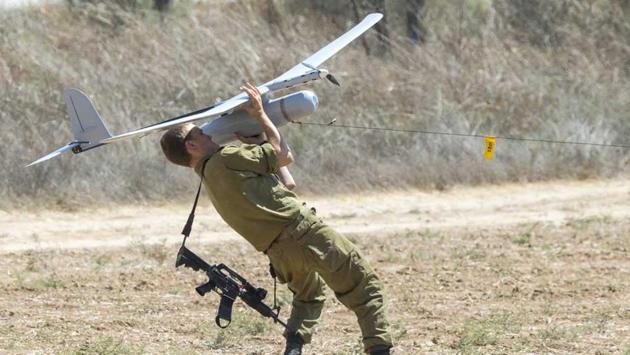
3. Drones: The first military use of unmanned aerial vehicles was by the Israeli military in the Yom Kippur War. Their inventor, Baghdad-born Israeli Abrahem Karem, later developed a series of drones including Amber, the precursor to the most famous US armed drone, the Predator. Karem is today settled in the US where he has earned the title “dronefather”. Tens of thousands of drones are now made by nearly 40 countries around the world and they are widely seen as the future of aerial combat. After the US, Israel is seen as the world’s foremost drone maker. India has bought so many that its fleet of Israeli-made drones is larger than Israel’s own fleet. Israel has also launched the Protector, an armed unmanned boat that protects the country’s coasts and can be used to fight fires.
{{/usCountry}}3. Drones: The first military use of unmanned aerial vehicles was by the Israeli military in the Yom Kippur War. Their inventor, Baghdad-born Israeli Abrahem Karem, later developed a series of drones including Amber, the precursor to the most famous US armed drone, the Predator. Karem is today settled in the US where he has earned the title “dronefather”. Tens of thousands of drones are now made by nearly 40 countries around the world and they are widely seen as the future of aerial combat. After the US, Israel is seen as the world’s foremost drone maker. India has bought so many that its fleet of Israeli-made drones is larger than Israel’s own fleet. Israel has also launched the Protector, an armed unmanned boat that protects the country’s coasts and can be used to fight fires.
{{/usCountry}}4. Anti-missile systems: The Israelis have developed a number of remarkable anti-missile defence systems. The Iron Dome, designed to protect towns from even low projectiles like mortars, has an interception rate of 87%. Israel is working on a number of anti-ballistic missile systems: the Arrow and David’s Sling plus the laser-based Iron Beam. But it has also perfected a number of smaller systems designed to protect individual tanks and ships. India is the main partner for the Barak anti-missile ship defence system. But Israel has also developed the Trophy anti-missile system which can be carried on and protects even individual tanks. The Trophy uses a network of tiny radars and projectiles.
5. Kidon: Literally the Hebrew word for “tip of the spear”, the kidon are Mossad’s famed trained assassination teams. Though they largely operate in West Asia, the kidon have struck across the world. On a few occasions, they have even kidnapped or killed on behalf of a third government when requested by the Israeli authorities. Senior Israeli officials privately speak of a success rate of above 80%, probably the most lethal in the world. The late Mossad chief, Meir Dagan, supposedly led a kidon team during his early career that killed over 200 targets.
Things you didn’t know about Israeli tech
Outside of the United States, the world of software exports was dominated by three ‘I’s: India, Israel and Ireland. Israel also matches India in the realm of generic pharmaceuticals and beats India hollow in the area of defence manufacturing and cybersecurity. Here are some of the less sexy aspects of Israel’s science and tech success.
1. Technion: The Israeli Institute of Technology is among the world’s foremost universities for science and technology. It has or had seven Nobel laureates among its wider faculty and is one of the reasons for Israel’s success in high-tech industry and innovation. The Technion is usually rated among the top 100 technology training institutes in the world. An unusual number of its graduates, for a non-American centre, are CEOs in Silicon Valley. One drawback is that its language of instruction is Hebrew.
2. Water recycling: Israel faced a major water crisis six years ago, triggering a huge degree of innovation in water technology. As a consequence, the country became a world leader in energy-efficient desalination technology. A quarter of Israel’s entire freshwater supply now comes from the sea. And the percentage of wastewater it recycles is a staggering 86% -- about four times more than the next highest country. Half the water used by Israeli farmers is from recycled wastewater. Prime Minister Narendra Modi’s primary interests in the country is its standing as a water superpower. Israeli diplomats say in talks with Modi, “Water is 50% of the conversation.”
3. Drip irrigation: Sometimes dubbed the Holy Grail of Israeli water technology, the idea of giving crops a few drops of water over a long period of time was the brainchild of Israeli water engineer Simcha Blass. He developed a whole new industry in 1965 at Kibbutz Hatzerim from his invention. The concept has now spread across the globe. In India, firms like Jain Irrigation have gone as far as to buy up Israeli companies in this sector to master the technology. Among the greatest buyers of Israeli drip irrigation equipment are the countries in the Arab world– however the “Made in Israel” tag is removed and substituted with a different country.
4. Silicon Wadi: Israel is a tiny country but it has more startups than Europe. The country’s fertile venture capital and startup culture is collectively called Silicon Wadi, playing on the Arab world for valley. Israel’s tech clusters are largely along the coastal plain, running from Haifa down to Tel Aviv. Many large tech firms, like IBM, have R&D centres in Israel to tap this entrepreneurial culture. Curiously, Israeli tech developers prefer to develop new products and ideas and sell them to large, often US, firms rather than setting up their own companies. While much bemoaned by Israeli officials, it is seen by some as a viable technology model for such a small country.