The Caribbean nation of Haiti was struck by a powerful earthquake which killed over 1,400 people and left 6,000 injured. The quake nearly wrecked some towns in the southwest in the latest disaster to befall the Western Hemisphere's poorest nation.
Haitians already were struggling with the coronavirus pandemic, gang violence, worsening poverty and the July 7 assassination of President Jovenel Moise.
What makes Haiti prone to quakes?
Earthquakes occur when tectonic plates in the Earth's crust move. Haiti sits near the intersection of two of them - the North American plate and the Caribbean plate.
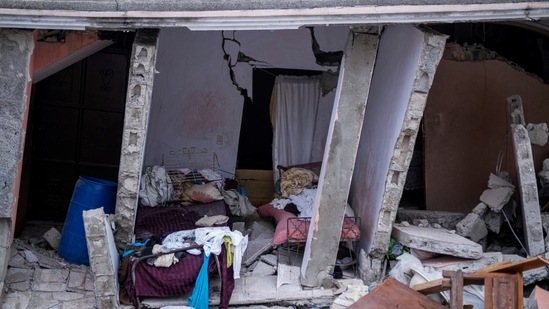
Officials said the magnitude 7.2 earthquake left more than 7,000 homes destroyed and nearly 5,000 damaged. Some 30,000 families have been left homeless.
The buildings in the country are designed to withstand hurricanes, not earthquakes.
What was the epicentre of Saturday's earthquake?
The quake that hit Haiti was centred 125km west of the capital Port-au-Prince. Hospitals, schools, offices and churches were destroyed or badly damaged.
This year's quake was stronger than the one that hit the country in 2010, but hit a less densely populated area.
{{/usCountry}}This year's quake was stronger than the one that hit the country in 2010, but hit a less densely populated area.
{{/usCountry}}PM declares emergency
Haiti's Prime Minister Ariel Henry declared a one-month state of emergency for the whole country and said the first government aid convoys had started moving help to areas where towns were destroyed and hospitals were overwhelmed.
"We must work together to provide rapid and effective responses to this extremely serious situation," Henry said on Sunday.
UNICEF Executive Director Henrietta Fore said humanitarian needs were acute, with many Haitians urgently needing healthcare, clean water and shelter. Children separated from their parents also needed protection, she said.
The 2010 earthquake
Haiti was struck by a 7.0 earthquake in January, 2010, which left more than 2,00,000 dead and Port-au-Prince and nearby cities in ruins.
More than 1.5 million Haitians were made homeless and 60 per cent of the country's healthcare system was destroyed.
In 2010, it had been more than a century since the last major earthquake had struck. This time, memories were fresh.