
 E-Paper



Fake Cops, Fake Judges: The Hollywood-Style Scam Poised to Go Global
Criminals have taken digital scams to a new level in India—and are looking elsewhere for victims.


 Prefer HTon Google


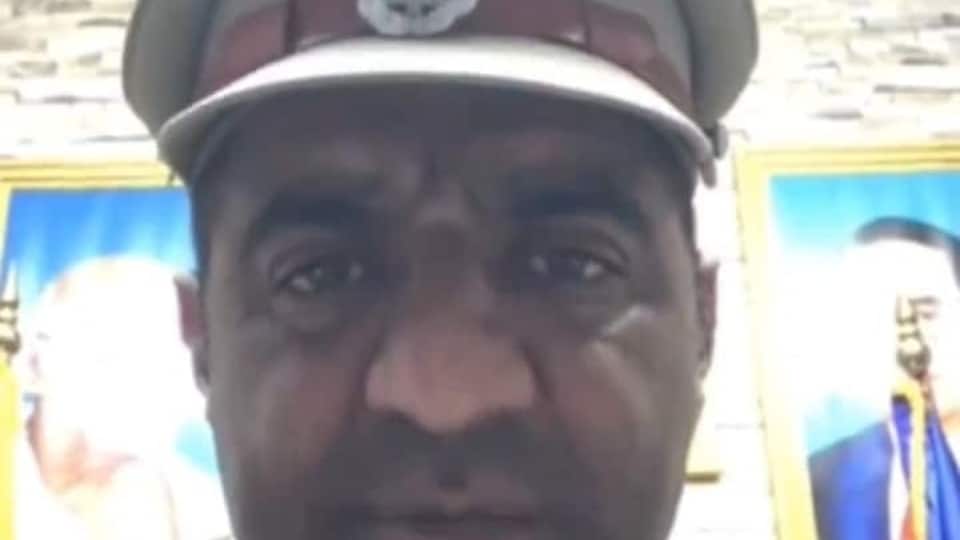
Last Christmas Eve, a 77-year-old woman in New Delhi got an unexpected call from what she thought was the police. Contacting her by WhatsApp video, the team of uniformed cops inside a police station said she was under arrest on suspicion of money laundering.
A few days later, she attended a virtual hearing before a Supreme Court judge, seated in his book-lined chamber.
It was all fake—elaborate stage sets designed to steal her money. Authorities worry similar scams could be coming soon to other countries, including the U.S.
In this case, the counterfeit cops instructed Dr. Indra Taneja, a retired pediatrician, to keep her phone and laptop cameras on nearly all the time, so they could monitor her every move. She was in danger, they said, from criminals who wanted to silence her testimony.
The actors said authorities needed to verify that all her assets were clean. So over 16 days, she transferred $1.6 million out of her accounts. Then the phony officers vanished—along with her money.
“It was so convincing,” said Taneja, a former assistant professor at Rutgers University’s medical school. “They did it so fast.”

Hollywood lessons
Her experience shows how digital scams are evolving as authorities struggle to stop them.
The Indian scam, now common across the country, involves Hollywood-level production that mimics the machinery of the state, tricking people with fake police stations and courtrooms. Victims are told they are under “digital arrest” for crimes such as money laundering or drug trafficking, and ordered to remain on camera for days or weeks while investigators supposedly verify their assets.
The scams have started appearing in U.S. immigrant communities, experts say, though they haven’t spread widely in Western countries, in part because of a shortage of scammers proficient in American or other Western accents.
Authorities say it is likely only a matter of time before they spread further. Stage sets modeled after the Federal Bureau of Investigation, Royal Canadian Mounted Police and law enforcement agencies in the U.K. and Australia have been found inside scam centers in Cambodia, according to Jason Tower, a senior expert at the Global Initiative Against Transnational Organized Crime.
“It’s basically like a global supermarket of fake police stations,” he said of recent findings in abandoned scam compounds. “It’s just incredible in terms of the numbers and how specific they are.”
The fake-police scam has ensnared tens of thousands of people in India, authorities say. They say the schemes prey on fear of the legal system and the social stigma that comes with being associated with criminal investigations, trapping even highly educated professionals.
“This kind of sophistication is phenomenal,” said Pronab Mohanty, head of cybercrimes and narcotics for India’s Karnataka state police. “This is a whole different ballgame.”
Familiar script
From 2021 to 2025, Indians lost nearly $6 billion to digital arrest scams, according to Surya Kant, the chief justice of India’s Supreme Court. The country’s top court in February ordered banks and law enforcement agencies to step up investigations. Billboards and posters warning the public not to fall prey have appeared nationwide.
The cons tend to follow a similar script. A scammer dressed in a police uniform, sitting in an office with the emblem of a law enforcement agency, calls the victim on WhatsApp. The fake cop switches on the video and begins hurling accusations of criminal activity.
Soon comes a “digital arrest,” followed by strict rules: keep a video call running at all times or check in regularly. Under virtual house arrest, victims are pressured into transferring money for fines, bail payments or funds temporarily held for an official audit.
Some victims have sold homes or liquidated retirement portfolios. One Bangalore-based technology executive was placed under fake digital arrest for a full year and bilked out of $3.4 million, police said. Scammers often do research to target the affluent and highly educated. Many victims are elderly.
Frederick D’Sa, an 83-year-old retired Indian army colonel, said the Mumbai policewoman who he thought arrested him last October over WhatsApp for allegedly funding terrorists was entirely believable.
She always appeared to call from a police station, dressed in a crisp khaki uniform and cap, he said. Sometimes a junior constable walked into the frame and saluted her.

“She spoke very nicely in English,” D’Sa said. “She’s definitely educated. She’s not from the roadside.”
The Bengaluru resident rushed to the bank seven times in three days to sell off his mutual funds. He transferred more than $60,000 to several accounts that he was told were linked to the central bank for auditing.
The policewoman frightened him so much with warnings of severe legal consequences that he avoided telling his daughters or bank managers.
“They make you go mad,” said D’Sa, who was able to recover about $6,500 but never caught the scammers. “You do not know what to do. You’re helpless.”
Elaborate soundstages
A few operations have been busted in India. But investigators say most of the elaborate digital arrest scams originate in sprawling crime hubs in Cambodia and Myanmar, where scammers assemble the digital sets and reach out by video, making it hard for Indian police to stop them.
Law enforcement in several countries have said the soundstages get even small details right, which indicates they are designed by people who have studied the real versions.
In Cambodia, authorities recently took reporters on a tour of an abandoned scam center and showed the remnants of movie-like sets designed to resemble Indian police stations. In one room, an emblem of the Greater Mumbai Police hung behind a desk flanked by Indian flags. A police cap lay atop a cabinet, while a crumpled uniform sat beside a computer.
Stacks of forms carefully documented each victim’s personal information and assets, including bank balances and the ages and professions of family members.
Operations targeting Indians are often staffed by Indian nationals who themselves were lured into working in the scam compounds, said Mohanty, the Karnataka state police official. Indians who were later freed from compounds told police they sometimes received coaching in acting and regional accents to better impersonate law enforcement officers.
“It was like a magic show where the illusion is happening in front of us,” said R. Rao, a 45-year-old accountant from the southern city of Udupi who was a victim. “You know it’s not true, but you still fall for it.”
‘Like hypnotism’
Starting with a WhatsApp call in early January, Rao encountered a revolving cast of officials claiming to be from India’s telecom regulator, the Mumbai police, a financial crimes agency and the Supreme Court, all focused on proving he and his assets weren’t linked to money laundering.
Rao had stopped friends from falling for scams and advised clients against questionable financial dealings. But when a man who appeared to be a Mumbai police officer appeared on video, he and his wife followed every instruction.
They checked in every two hours with their location, reported all their assets and kept the drama secret from their two children. Following instructions, Rao took out a $22,000 loan using the family’s gold jewelry as collateral and wired the money over for auditing. He borrowed another $16,000 from his brother-in-law to post bail.
Rao at times felt something was off. But the confidence of the scammers, and their ready answers to every question, convinced him it was real. “It was like hypnotism,” said Rao, who never recouped any funds. “They were perfect actors.”
Instilling fear
Taneja’s case involved a three-man team, masquerading as police officers, who warned her and her husband they were in danger. She was accused of helping to launder money for a businessman, and they said he might order the couple killed if he learned she was cooperating with investigators. Even her children in the U.S. weren’t safe.
“They scared, scared, scared me,” she said. “They said, ‘We need to keep you under surveillance to protect you.’”
They required her camera to remain on almost constantly inside her New Delhi home. When she stepped outside, she rang the station, tucked the phone in her pocket and kept the call active. At night they allowed her to switch off the camera to sleep.
On Dec. 26, they instructed her to wear a white shirt for a hearing before a Supreme Court judge. He appeared on-screen in a black robe with a white collar, seated at a desk surrounded by books.
“He said, ‘You have to cooperate with us, otherwise you will be arrested,’” Taneja said. At one point, the judge even scolded the officers for being too lenient with her.
Over the 16 days, Taneja grew fond of the officers who rotated shifts at the fake station. She began calling them her children. They, in turn, called her “mother.”
At night she read Hindu religious texts with the youngest officer, who asked her to send him passages she found especially moving.
“They became like family members,” she said. “They said, ‘Ma’am, we want to clear it up as fast as possible. We are working day and night for you.’”
She sold investments and withdrew funds from eight accounts. Several transfers were about $200,000 each.
On Jan. 10, she called the officers repeatedly, but no one answered. Eventually one called back to say that she and her husband had been completely cleared. He instructed her to visit the nearest police station to begin the refund process.
Officers there were at first confused, then alarmed by the amount she had transferred. Taneja gave police details of the bank accounts she sent the money to, and the real authorities were able to recover about $220,000. But they never located the scammers and the rest of the money was lost.
Taneja still struggles to understand how she and her husband fell under the scammers’ spell for over two weeks. “We thought the police were trying to save us,” she said.
Write to Shan Li at shan.li@wsj.com


