
 E-Paper



How Vladimir Putin, Volodymyr Zelensky view Ukraine war for 2024
Neither side has made significant gains this year and analysts say Russia and Ukraine lack resources to mount any serious offensive -- for now.

 Prefer HTon Google


Russian leader Vladimir Putin and Ukrainian President Volodymyr Zelensky have both held press conferences wrapping a difficult year of fighting in Ukraine and laying out military objectives for 2024.
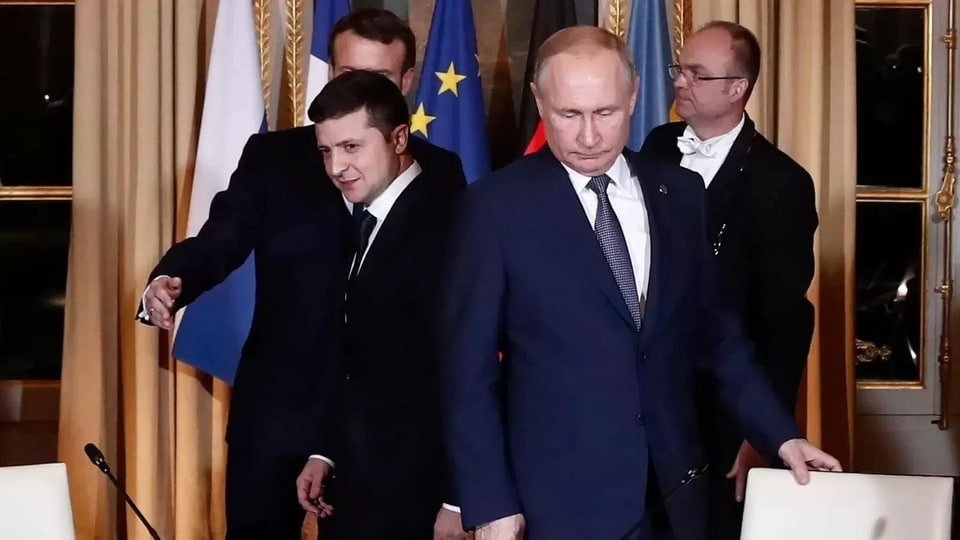
Here is what we can expect from the grinding conflict next year, in the leaders' own words:
When will it end?
Many in Moscow expected Russia to quickly capture Kyiv in 2022, but nearly two years later -- and with Russian elections approaching -- a bullish Putin used the stage last week to promise "victory will be ours".
"There will be peace when we achieve our goals," he said, avoiding any timeframe.
Zelensky said "no one knows" when the fighting will end but appeared less optimistic: he acknowledged that 2024's presidential elections in the United States -- a key military supplier and ally -- could impact the course of the war.
Will the front line move?
Neither side has made significant gains this year and analysts say Russia and Ukraine lack resources to mount any serious offensive -- for now.
But Putin praised Russian troops for "improving" their positions along most of the front and observers say Moscow's troops were making gains towards Avdiivka, a war-battered industrial hub in the east.
Ukraine now wants to entrench as effectively as Russian forces have along the front, but have also gained a foothold on the east bank of the Dnipro river into Russian-held territory.
Putin dismissed these gains, telling reporters Ukrainian forces were being ordered into "extermination" from Russian forces.
No negotiations
Both Moscow and Kyiv have dismissed the option of resolving the war through negotiations.
Zelensky has ruled out talks with Russia as long as Putin remains in power, and said at his briefing that there had been no requests from Moscow for talks.
"I see only arrogance and murder in their rhetoric," Zelensky told reporters.
Putin routinely claims that Moscow is open to negotiations but he said during his televised briefing that peace would only be achieved when Ukraine was "de-militarised" and "de-Nazified".
Rebuilding the armies
Analysts say that with neither side able to mount large-scale offensives, Moscow and Kyiv will work on reconstituting their militaries.
Zelensky said he wants Ukraine to produce one million drones -- a key weapon for the war -- and also develop domestic production of arms and ammunition.
But he also said he had rejected -- for now -- a request from the army to add as many as 500,000 civilians to the military.
Putin, who is aiming to curry favour with Russians ahead of the March vote, ruled out during his press conference any fresh mobilisation of Russians next year.
He said that Moscow had voluntarily recruited 486,000 men for the army in 2023 and that efforts to build up the military next year would accelerate.
And he promised to bolster Russia's defence capabilities, with the economy turned towards the war effort and the Kremlin shrugging off the impact of sweeping Western sanctions.
Meagre victories
In a costly year for both sides in which neither made significant territorial gains, both Zelensky and Putin were left with little good news to offer allies and fatigued citizens at home.
Zelensky said that Ukraine's military had scored "a big victory" on the Black Sea, where Kyiv has launched successful strikes on Russian warships and secured maritime trading routes.
He also held his press conference against the back drop of a large EU flag, after the bloc agreed earlier this month to formally open membership talks with Kyiv.
That was a largely symbolic victory though, since Brussels remains divided on billions of euros in fresh aid for Kyiv, with Washington wavering, too.
Putin, whose military gained several small towns in the east this year, survived an armed revolt from the Wagner mercenary group.
He praised Russian society for rallying around the war effort, as the Kremlin passed legislation outlawing any criticism of the conflict.


