Famine relief is meant to save lives, but a shipment can carry a lot more than just food. According to the Ethiopian Biodiversity Institute, a weed is believed to have entered Ethiopia by accident through food aid shipments. The plant is spreading rapidly, causing a drop of up to 90% in forage production in some areas.
Help that arrived in a moment of crisis
In the 1980s, Ethiopia relied on foreign aid, with the United States being one of the contributing nations. The scale of the effort is apparent in a 1987 paper from the U.S. Agency for International Development that sits in the State Department’s historical record. Dated October 30, 1987, it says the Ethiopian government and the United Nations estimated that approximately five million people would require emergency assistance in 1988. That relief would involve some 950,000 metric tons of imported food.
The paper also detailed what the U.S. had approved so far. That was 115,000 metric tons of emergency food, valued at $37 million, including transport, storage, and handling costs. The distribution was to be handled by four American private voluntary organizations. It never mentions parthenium. Still, it gives us an idea of how much food was coming into the country at that time.
Deep Dive
Is it proven that U.S. food aid introduced parthenium to Ethiopia in the 1980s?
How can introduced species spread invasive plants into new areas?
Why can controlling an invasive species also affect native wildlife?
A weed that may have hitched a ride
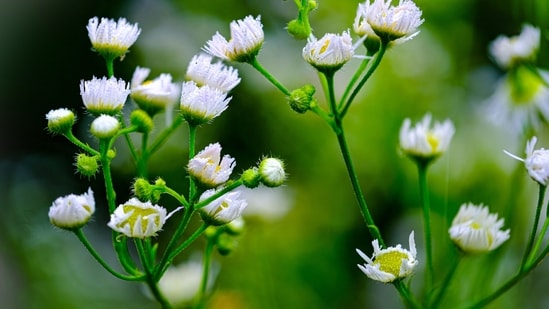
So where does parthenium come in? The Ethiopian Biodiversity Institute says the weed, known scientifically as Parthenium hysterophorus, is believed to have been introduced accidentally in food aid shipments. The institute does not identify the country that sent the food and does not give a year. Weeds are not mentioned in the 1987 paper. Thus, neither source proves that U.S. food aid introduced parthenium to Ethiopia in the 1980s.
{{/usCountry}}So where does parthenium come in? The Ethiopian Biodiversity Institute says the weed, known scientifically as Parthenium hysterophorus, is believed to have been introduced accidentally in food aid shipments. The institute does not identify the country that sent the food and does not give a year. Weeds are not mentioned in the 1987 paper. Thus, neither source proves that U.S. food aid introduced parthenium to Ethiopia in the 1980s.
{{/usCountry}}What we can say is fairly simple. In the late 1980s, large amounts of relief food were moving into Ethiopia, and a government institute believes food aid is how this weed got here. That's a good place to start a story, but it is still a belief and not an established fact.
What it does to grazing land
The institute describes parthenium as foremost among Ethiopia’s invasive plants. However, it also lists mesquite, water hyacinth, and Lantana camara as causing major problems. It states that parthenium is spreading rapidly and causing a fall in forage production by up to 90% in some places. Forage refers to the plant material eaten by livestock. This is a worst-case figure for some areas, not an average across the country.
The institute also points out that the effect of the weed on natural habitats has not been assessed. However, it clearly poses a major threat to rangelands, open lands used for grazing. Some of the other invaders on its list came in other ways. Mesquite was deliberately introduced as an agroforestry species in the Awash River Basin, and Lantana was primarily deliberately introduced as an ornamental shrub. Among the invaders described, parthenium is the one that, as far as the institute believes, arrived by accident.
Why this story still matters
Every day the world moves food, plants and goods across borders, and tiny seeds can hitch a ride unnoticed. That doesn’t mean the sending of aid was a mistake. The 1987 paper says people were starving and the U.S. quickly acted to help. It does, however, suggest that checking what comes with supplies and spotting new plants early are some habits worth having.